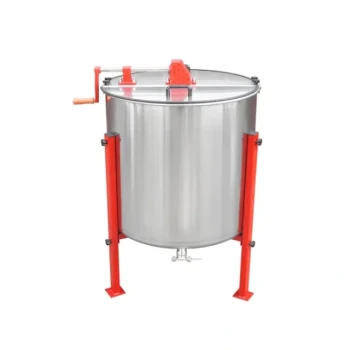
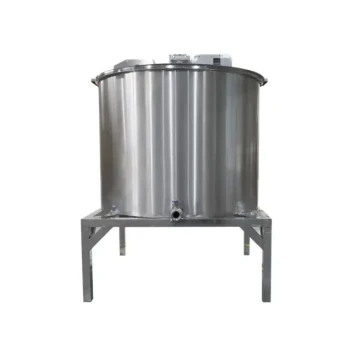
The honey extraction process involves five distinct mechanical stages designed to separate pure honey from the hive structure. It begins with clearing bees from the frames using air or brushes, followed by uncapping the wax seals. The process continues with centrifugation to spin the honey out, filtration to remove solid debris, and finally, decanting to allow the honey to settle and clear.
Core Takeaway While manual methods exist, the standard extraction process relies on centrifugal force to harvest honey without destroying the honeycomb. This preserves the wax structure for the bees to reuse, maximizing future efficiency.
Preparing the Hive for Harvest
Clearing the Bees
Before any honey can be harvested, the frames must be cleared of bees to ensure safety for both the apiarist and the colony. The primary reference highlights using a blower to gently move bees away from the hive components. Supplementary methods include using smoke to calm the bees or a bee brush to manually sweep remaining stragglers off the comb.
Uncapping the Cells
Bees seal their cured honey behind a thin layer of wax. Uncapping is the removal of this wax layer to expose the liquid honey inside. This is typically achieved using a heated uncapping knife, fork, or specialized machine that slices the wax cappings off the comb, allowing the honey to flow freely.
The Extraction Phase
Centrifugation
This is the core mechanical phase of the process. The uncapped frames are placed into a honey extractor, which is a drum-like device containing a rotating basket. The machine spins the frames rapidly, generating centrifugal force that flings the liquid honey out of the cells and onto the walls of the drum, leaving the wax comb structure intact.
Filtration
Once the honey flows to the bottom of the extractor, it contains small impurities such as bits of wax, propolis, or pollen. Filtration involves passing the liquid through a strainer or sieve. This step removes these solid particles to ensure the honey is smooth and clean.
Finishing the Product
Decanting and Settling
The final stage before bottling is decanting. The filtered honey is placed in a storage tank or airtight container to rest. During this period, remaining air bubbles and very fine impurities float to the surface. This top layer is then skimmed off, leaving clear, high-quality honey ready for packaging.
Understanding the Trade-offs: Centrifugation vs. Pressing
While the process above describes the standard centrifugal method, it is important to understand alternative approaches mentioned in supplementary sources.
Preserving the Comb vs. Low Equipment Cost
The centrifugal method is favored because it saves the wax comb, allowing bees to refill it immediately, which yields more honey.
The pressing method involves crushing the comb and squeezing honey through a cloth (like calico).
- The Upside: It requires very simple, inexpensive tools like a screw press.
- The Downside: It destroys the honeycomb, forcing bees to rebuild the wax from scratch, which consumes significant energy and reduces the next honey harvest.
Making the Right Choice for Your Goal
Select your extraction method based on the scale of your operation and your long-term goals for the colony.
- If your primary focus is maximum yield and efficiency: Prioritize the centrifugation method, as preserving the drawn comb allows bees to focus on honey production rather than wax building.
- If your primary focus is low initial cost for a micro-harvest: Consider the pressing method, utilizing simple filtration cloths, understanding that you will sacrifice the comb structure.
Efficiency in extraction comes from proper preparation, ensuring the honey is warm enough to flow, and allowing sufficient time for the final product to settle.
Summary Table:
| Stage | Key Action | Primary Equipment Used | Benefit |
|---|---|---|---|
| 1. Clearing | Remove bees from frames | Blower, bee brush, or smoke | Ensures safety and purity |
| 2. Uncapping | Remove wax seals | Uncapping knife or machine | Exposes honey for extraction |
| 3. Centrifugation | Spin honey out of cells | Honey extractor (centrifuge) | Preserves wax comb for reuse |
| 4. Filtration | Remove solid debris | Strainer or sieve | Ensures smooth, clean honey |
| 5. Decanting | Allow honey to settle | Storage tank or settling tank | Removes air bubbles and impurities |
Scale Your Honey Production with HONESTBEE
Are you looking to optimize your apiary's output? HONESTBEE provides commercial apiaries and distributors with professional-grade solutions across the entire extraction spectrum.
From high-capacity honey-filling machines and specialized hive-making equipment to essential consumables and honey-themed cultural merchandise, we offer the tools you need to maximize efficiency and preserve your wax structures.
Take your beekeeping business to the next level—contact us today for wholesale inquiries and expert equipment solutions!
Related Products
- Electric 8 Frame Honey Spinner Extractor Equipment for Beekeeping
- 6 Frame Manual Stainless Steel Honey Extractor Beekeeping Equipment
- Electric Double Wall Honey Filtering Machine Purifier Equipment for Honey Processing Plant
- HONESTBEE 2 Frame Manual Acrylic Honey Extractor Beekeeping Equipment
- 0.5T Capacity Honey Dehumidifier Dryer with Vacuum Heating and Thickening Filtering Machine
People Also Ask
- What are the advantages of an electric honey extractor? Boost Efficiency and Scale Your Honey Production
- What are the characteristics of electric honey extractors? Boost Your Apiary Efficiency with Automated Technology
- What are the disadvantages of using an electric honey extractor? Weighing Cost, Power, and Comb Safety
- What are the features of an electric honey extractor? Boost Your Apiary's Productivity with Motorized Efficiency
- What are the technical advantages of electric honey extractors? Maximize Yield and Protect Your Bee Colony