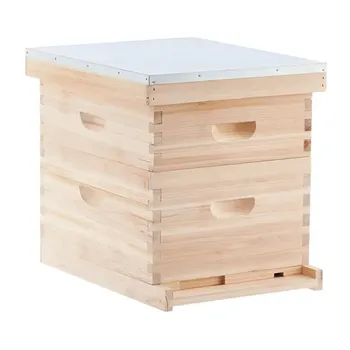
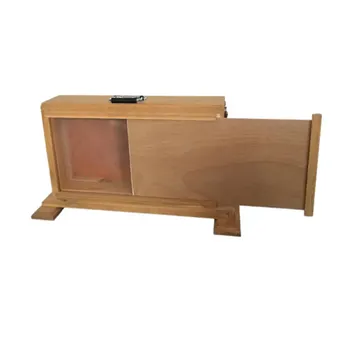
Standard Langstroth hives are larger, modular, and typically designed for ten full-size frames, while Apis cerana hives use smaller chambers and frames scaled to the colony’s body size. A standard Langstroth brood box commonly uses frames of approximately 440 mm × 228 mm, with a top bar around 475 mm long, making it suitable for populous colonies such as Apis mellifera. Smaller-species designs, including Jeolikote and ISI patterns, reduce the frame and box dimensions; Jeolikote hives generally hold seven frames, while ISI hives hold ten smaller frames.
The key difference is not frame count alone: overall chamber volume, frame dimensions, and bee-space clearances must match the target species. Oversized equipment can make smaller colonies difficult to keep warm, while undersized equipment can cause larger colonies to become overcrowded.
How Standard Langstroth Hives Are Built
Larger Chambers and Full-Size Frames
Standard Langstroth hives use relatively large brood and super boxes. Each chamber is commonly configured for ten frames, providing substantial space for brood rearing, pollen, nectar, and capped honey.
The larger frame format supports the population density and growth rate of Apis mellifera, including commonly managed Italian strains. It also provides the capacity required for commercial honey production.
Vertical, Modular Construction
A standard Langstroth hive normally consists of stacked rectangular boxes. Brood chambers, supers, bottom boards, covers, and framed combs follow standardized dimensions within a compatible equipment system.
This modularity allows beekeepers to add supers as the colony expands. It also supports interchangeable components, routine inspections, and efficient harvesting.
Compatibility With Commercial Equipment
Full-size Langstroth frames are well suited to commercial handling systems. Standardized frames can integrate with centrifugal extractors, uncapping equipment, transport pallets, and other apiary machinery.
For distributors and commercial operators, this compatibility is a major capacity advantage because it reduces handling time and simplifies equipment sourcing across multiple apiaries.
How Smaller-Species Hives Differ
Reduced Box Dimensions
Hives designed for Apis cerana use smaller brood chambers and supers. The reduced internal volume better matches the smaller body size and generally lower population density of the colony.
This design helps the bees occupy and regulate the hive more effectively. The colony is not forced to maintain an unnecessarily large empty space.
Smaller Frame Dimensions
Smaller-species hive frames may measure approximately 250 mm × 144 mm to 300 mm × 195 mm, depending on the local hive pattern. These dimensions are substantially smaller than the common full-size Langstroth brood frame.
The smaller frame reduces the amount of comb the colony must build and maintain. It also makes the available brood and honey-storage area more proportionate to the colony’s needs.
Different Frame Capacities
Frame count varies between smaller hive standards:
- Jeolikote hives: commonly hold approximately seven frames.
- ISI hives: commonly hold ten frames of a reduced size.
- Other smaller standards: may use around seven frames with different body and frame dimensions.
Therefore, a ten-frame ISI hive should not be treated as equivalent in capacity to a ten-frame Langstroth hive. The physical size of each frame and the total chamber volume are the more meaningful measures.
Tighter Bee-Space Clearances
Smaller-species hives may use tighter clearances, with some smaller standards using approximately 6 mm of bee space. Bee space is the functional gap that allows bees to move between frames and hive surfaces without filling the gap with comb or excessive propolis.
The correct clearance makes frames easier to remove and helps preserve comb structure during inspection. Equipment should be manufactured to the relevant hive standard rather than adjusted by frame count alone.
Capacity Differences in Practical Use
Brood-Rearing Capacity
A standard Langstroth chamber offers more comb area per frame and more total volume across ten frames. This supports the larger brood nests typically produced by Apis mellifera.
A smaller Apis cerana hive provides less absolute brood capacity but is more appropriately scaled to the colony. The objective is usable colony space, not the largest possible box.
Honey-Storage Capacity
Full-size Langstroth supers can store significantly more honey when managed by a strong colony. This makes them better suited to high-output operations and larger harvesting workflows.
Smaller-species hives provide lower storage capacity per box. However, the bees may use that space more efficiently because the chamber is closer to their natural colony requirements.
Expansion Capacity
Langstroth systems expand vertically by adding compatible supers. This creates a clear path for scaling colony space during strong nectar flows.
Jeolikote, ISI, and similar systems can also be expanded, but only with equipment that matches their specific frame dimensions and internal clearances. A Langstroth super cannot be assumed to fit a smaller-species hive.
Why Species Matching Matters
Temperature Regulation
Smaller colonies can struggle to regulate temperature in an oversized chamber. Excess unused space increases the area the bees must defend and warm, particularly during cool periods or when colony populations are low.
A correctly scaled hive allows the colony to maintain a more manageable internal environment. This is one of the principal reasons smaller native bees should not automatically be placed in full-size Langstroth equipment.
Comb Utilization
When the hive volume matches the colony, bees can distribute brood, pollen, nectar, and honey across the available comb more effectively. This supports orderly inspections and reduces unused areas within the hive.
An oversized hive may leave substantial space unoccupied, while an undersized hive can constrain brood expansion and honey storage.
Colony Growth and Overcrowding
The opposite mismatch also creates problems. Larger Apis mellifera colonies placed in smaller boxes can reach overcrowding quickly, increasing management pressure and potentially limiting production.
The correct configuration should therefore be selected according to both species and expected colony strength, not species name alone.
Understanding the Trade-offs
Higher Capacity Versus Better Proportion
Langstroth equipment offers greater absolute capacity, stronger standardization, and easier integration with commercial extraction systems. Its larger dimensions are an advantage when the target colony can occupy and exploit that space.
Smaller-species equipment offers lower absolute capacity but better proportional fit. This can improve colony management where Apis cerana or another smaller bee species is the primary target.
Seven Frames Versus Ten Frames
A seven-frame Jeolikote hive may be more compact and easier to manage, but it provides fewer frames per chamber. A ten-frame ISI hive increases frame count while retaining smaller frame dimensions.
Frame count alone does not establish production capacity. Frame surface area, box depth, internal volume, and the number of usable chambers must all be considered.
Standardization Versus Regional Compatibility
Standard Langstroth components are widely recognized and often easier to source, replace, transport, and combine with processing equipment. This benefits wholesalers, distributors, and commercial beekeepers seeking one compatible product range.
Smaller hive patterns may be more appropriate for local bee strains and established regional practices. Their commercial value depends on maintaining consistent dimensions across the supplier network.
Common Specification Errors
A frequent mistake is comparing a seven-frame smaller hive directly with a ten-frame Langstroth hive without accounting for frame size. Another is mixing frames, supers, or covers from incompatible standards.
Suppliers should specify inside box dimensions, frame dimensions, top-bar length, frame count, and bee-space clearance for every hive model. These details prevent purchasing errors and reduce fulfillment problems.
Choosing the Right Configuration
The most reliable selection process begins with the target bee species, expected colony population, and intended harvesting method. Product catalogs should distinguish full-size Langstroth equipment from reduced-size ISI, Jeolikote, Newton, and other regional patterns.
- If your primary focus is commercial Apis mellifera production: Choose standardized ten-frame Langstroth brood boxes and supers for maximum colony capacity, modular expansion, and extractor compatibility.
- If your primary focus is Apis cerana or other smaller species: Choose reduced-volume equipment with species-appropriate frame dimensions and tighter clearances to support temperature control and comb utilization.
- If your primary focus is regional distribution: Stock clearly identified hive standards, including frame measurements and internal box dimensions, so customers can order compatible replacement components.
- If your primary focus is fast order fulfillment: Use a supplier with a broad, coordinated product range covering boxes, frames, covers, bottom boards, and compatible accessories within each hive standard.
The right hive is the one whose structural dimensions and usable capacity match both the bee species and the beekeeper’s operating model.
Summary Table:
| Feature | Standard Langstroth Hive | Smaller-Species Hive (e.g., Apis cerana) |
|---|---|---|
| Typical Frames per Brood Box | 10 | Jeolikote: 7; ISI: 10 (reduced size) |
| Frame Dimensions | ~440 mm × 228 mm; top bar ~475 mm | ~250 mm × 144 mm to 300 mm × 195 mm |
| Chamber Volume | Larger, supports populous colonies | Smaller, proportionate to colony size |
| Bee-Space Clearance | Standard (typically 6-8 mm) | Tighter (may be ~6 mm) |
| Pros | High capacity, modular expansion, compatible with extractors and commercial equipment | Better temperature control, efficient comb use, fits smaller colonies |
| Cons | Too large for smaller colonies; can cause heating issues | Lower storage capacity; regional standards may limit compatibility |
| Best Suited For | Commercial Apis mellifera production | Apis cerana and other smaller species |
Ready to optimize your beekeeping equipment? HONESTBEE offers a comprehensive wholesale range of beehives, frames, and accessories for both Langstroth and smaller-species standards. As a one-stop supplier for commercial apiaries and distributors, we provide premium trading services, rapid response times, and ultra-fast delivery. Whether you need full-size Langstroth supers or species-specific Jeolikote hives, our expertise ensures you get the right fit. Contact us today to discuss your requirements and benefit from our dedicated service and efficient order fulfillment. Let’s grow your business together!
Related Products
- High-Performance Langstroth Bee Hives for Global Professional Beekeeping
- Langstroth Honey Bee Box Hive Boxes for Different Depths
- Australian Langstroth Beehive Boxes for Beekeeping Wholesales
- Long Langstroth Style Horizontal Top Bar Hive for Wholesale
- Professional Observation Hive: The Ultimate Portable Solution for Beekeeping Education, Exhibitions, and Colony Displays
People Also Ask
- What structural differences should commercial apiary operators consider when selecting between Langstroth hives and Top Bar hives for standardized honey production? Langstroth for standardized honey production
- 8-Frame vs 10-Frame Langstroth Hives: Which Is Right for Your Beekeeping?
- How do Langstroth hives compare to Top Bar hives for beekeeping? Choose the Best for Your Apiary
- What are the structural and yield differences between traditional primitive beehives and modern standard wooden hives (such as Langstroth hives) for commercial honey producers? Discover why modern hives boost yield and efficiency.
- Why is the adoption of modern movable-frame hives, such as Langstroth hives, advantageous over traditional hive equipment for commercial apiaries? Key Benefits for Scalable Beekeeping