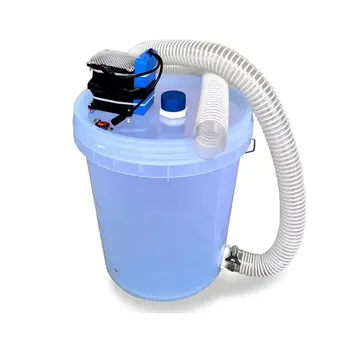
The primary technical advantages of using a portable vacuum suction device are the preservation of biological sample integrity and the ability to rapidly collect statistically significant sample sizes. By utilizing a pneumatic approach, this method minimizes physical handling, thereby drastically reducing the physiological stress response in bees compared to manual capture techniques.
Core Insight: The method of capture directly impacts the quality of your data. While manual collection is simple, it often induces stress that skews biological baselines; vacuum suction neutralizes this variable, ensuring that pathogen testing reflects the true health of the hive rather than the trauma of the collection event.
Preserving Sample Integrity for Pathogen Testing
Minimizing the Stress Response
Manual collection methods often trigger an acute stress response in forager bees. This physiological change can alter the biological markers researchers intend to study.
Pneumatic suction offers a non-destructive alternative that captures bees without the physical trauma associated with hand nets or forceps. By reducing this stress, the sample remains biologically stable.
Ensuring Reliable Data
For pathogen testing to be accurate, the subject must be as close to its natural state as possible.
The reduced handling time and lack of physical crushing ensure that the tissues and fluids required for subsequent testing remain intact. This directly leads to more reliable data regarding the colony's disease load.
Operational Efficiency and Representative Sampling
Rapid Collection of Large Numbers
Statistical significance in hive studies requires a sample size that accurately represents the colony population.
Vacuum devices allow for the rapid capture of large numbers of returning foragers directly at the hive entrance. This speed enables the collection of comprehensive samples in a fraction of the time required for manual methods.
Consistency and Standardization
Manual catching styles vary by operator, which can introduce bias into the sample.
A vacuum device provides a consistent, mechanical method for collection. This uniformity ensures that samples taken from different hives or by different technicians are comparable.
Safety and Versatility in the Field
Enhanced Safety for the Operator
Working with potentially aggressive hives or defensive foragers poses safety risks.
Suction devices allow for the removal or collection of bees with minimal contact. This distancing protects the beekeeper or researcher from stings while maintaining control over the sample.
Accessing Hard-to-Reach Locations
Fieldwork often involves environments that are not ideal for standard beekeeping tools.
Portable vacuum units allow for the safe capture of swarms in difficult locations, such as chimneys, recesses, or high tree branches. This versatility is essential when samples must be retrieved from wild or feral colonies in structural voids.
Understanding the Trade-offs
Equipment Dependence and Calibration
While superior for data quality, vacuum sampling introduces a dependency on hardware.
Unlike manual collection, which requires only simple containers, this method requires power sources and maintenance. Furthermore, the suction pressure must be correctly calibrated; incorrect settings could inadvertently damage the specimens, defeating the purpose of non-destructive capture.
Making the Right Choice for Your Goal
The decision to use a vacuum device should be driven by your specific requirements for data quality and operational speed.
- If your primary focus is Biological Accuracy: Use vacuum suction to minimize stress markers and ensure the validity of pathogen sensitivity tests.
- If your primary focus is Sample Size: Use this method to quickly gather large, statistically representative groups of foragers without prolonged hive disturbance.
- If your primary focus is Safety: Rely on pneumatic capture to manage aggressive colonies or retrieve bees from hazardous, hard-to-reach structures.
Standardizing your collection method is the first step toward securing high-fidelity data.
Summary Table:
| Feature | Vacuum Suction Method | Manual Collection Method |
|---|---|---|
| Sample Integrity | High (minimizes stress & physical trauma) | Low (prone to crushing & stress response) |
| Speed & Efficiency | Rapid collection of large populations | Slow; labor-intensive |
| Data Reliability | High; standardized & repeatable | Variable; influenced by operator bias |
| Operator Safety | High; minimal contact with defensive bees | Lower; increased sting risk |
| Best Used For | Pathogen testing & large-scale research | Casual observation & small samples |
Elevate Your Beekeeping Operations with HONESTBEE
Precision in sampling is the foundation of a healthy apiary. At HONESTBEE, we empower commercial apiaries and distributors with high-performance beekeeping tools and machinery designed for professional-grade results.
Whether you need advanced collection devices, specialized hive-making machinery, or honey-filling solutions, our comprehensive wholesale portfolio has you covered. Partner with us to access essential industry consumables and premium hardware that streamline your workflow and protect your colony's health.
Ready to scale your production and improve data accuracy? Contact us today to explore our full range of professional beekeeping equipment!
References
- Lioba Hilsmann, Ricarda Scheiner. Towards a Stable Host–Parasite Relationship Between Honey Bees and <i>Varroa</i> Mites Through Innovative Beekeeping. DOI: 10.1111/1462-2920.70101
This article is also based on technical information from HonestBee Knowledge Base .
Related Products
- Portable Electric Bee Vacuum with Lithium Battery and 20L Collection Bucket
- Full Set Beekeeping Electronic Bee Venom Collector Machine Device for Bee Venom Collecting
- High Performance Cordless Electric Bee Shaker for Beekeeping
- Removable Plastic Pollen Trap With Ventilated Tray for Bees Pollen Collector
- HONESTBEE Collapsible Tiered Bee Swarm Catcher for Beekeeping
People Also Ask
- What are the advantages of using portable bee vacuums for sampling honey bees? Optimize Nosema Detection Efficiency
- Who is qualified to use a bee vacuum? Essential Safety and Experience Requirements for Effective Bee Relocation
- What potential problems can occur when using a bee vacuum? Prevent Colony Mortality and Ensure Safe Bee Removal
- What are the benefits of using a bee vacuum? Safely Remove & Preserve Honey Bee Colonies
- Why do people use bee vacuums? A Humane Solution for Live Bee Removal