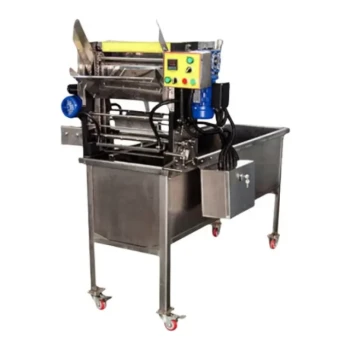
Automated honey filling machines provide superior control over dosing precision and hygiene standards compared to manual operations. specifically for large-scale chestnut honey production, automation effectively manages the product's high viscosity to prevent air incorporation during bottling. This preserves the honey's transparency and sensory quality while significantly increasing throughput and ensuring consistent packaging weights.
While manual filling relies on human estimation and exposes the product to the environment, automated systems utilize closed-loop mechanics to handle viscous fluids. The core advantage is not just speed, but the ability to maintain the physical integrity of a premium unifloral product like chestnut honey while meeting strict international trade standards.
Managing High Viscosity and Product Integrity
Preserving Visual and Sensory Quality
Chestnut honey is characterized by high viscosity and specific physical properties that make it difficult to handle manually. Automated machines are designed to manage this thickness without agitating the fluid excessively. By stabilizing the flow, the equipment reduces air incorporation during the filling process, which is critical for maintaining the honey's natural transparency and premium sensory profile.
Mitigating Physical Handling Issues
High-viscosity liquids often suffer from "wall-clinging" and overflow issues when poured or dispensed by hand. High-performance filling machines utilize precision metering systems and pneumatic or servo-driven piston technologies to force the honey through the system efficiently. This technology counteracts the honey's resistance to flow, ensuring a smooth fill without the mess or inconsistency associated with manual ladling or gravity filling.
Vacuum Anti-Drip Systems
To further manage the sticky nature of chestnut honey, industrial-grade machines often feature vacuum anti-drip systems. These mechanisms cut the flow cleanly after each cycle. This prevents product trailing on the bottle rim, which ensures a clean package and reduces the labor required to clean bottles post-filling.
Achieving Commercial Precision and Compliance
Metrological Weight Consistency
For large-scale production, consistency is a regulatory requirement, not just a preference. Automated flow control ensures that the net weight of every packaging unit is highly consistent. This capability allows producers to meet strict international trade metrological compliance standards, which is virtually impossible to achieve continuously with manual filling.
Minimizing Product Loss
Manual transfer of honey from storage to retail packaging often results in spillage or residue left in transfer vessels. Automated lines connect directly to large storage tanks via closed piping. This high-efficiency workflow significantly reduces the time required for transfer and minimizes product loss, directly impacting the bottom line.
Elevating Hygiene Standards
Eliminating Secondary Contamination
Manual filling inherently exposes the product to open air and human contact. Automated machines utilize closed-loop piping systems and enclosed hygienic designs. This effectively blocks the risk of secondary microbial contamination from the environment or operators, which is a critical safeguard for food safety.
Extending Shelf Life
By minimizing contact between the honey and external air, automation helps preserve the product's stability. This reduced exposure is essential for maintaining the safety and shelf life of products with specific moisture contents. It ensures that the final retail product meets the hygiene standards required for major distribution channels.
Understanding the Trade-offs
Operational Complexity and Maintenance
While automation solves physical handling issues, it introduces mechanical complexity. These machines utilize sophisticated components like servo drives and metering systems that require regular calibration and skilled maintenance. Moving to automation shifts the labor requirement from manual filling to technical machine operation and maintenance.
Sanitation Protocols
The same closed-loop systems that protect the honey during filling must be rigorously cleaned to prevent cross-contamination between batches. Unlike simple manual tools, automated lines require Clean-in-Place (CIP) protocols or detailed disassembly for cleaning, which can be time-consuming if not managed efficiently.
Making the Right Choice for Your Goal
Transitioning to automation is a strategic decision that impacts quality control and scalability.
- If your primary focus is Product Quality: Automation is the superior choice because it minimizes air bubbles and preserves the visual transparency and texture of high-viscosity chestnut honey.
- If your primary focus is Regulatory Compliance: The precision metering of automated systems is required to guarantee the weight consistency necessary for international export and retail standards.
- If your primary focus is Hygiene: The closed-loop design of automated fillers provides the only reliable method to eliminate human contact and environmental contamination risks.
Automation transforms chestnut honey production from a labor-intensive craft into a standardized, sanitary, and commercially viable industrial process.
Summary Table:
| Feature | Manual Filling | Automated Filling Machine |
|---|---|---|
| Precision | Variable (Human Estimation) | High (Servo/Piston Metering) |
| Hygiene | Open-air Exposure Risk | Closed-loop Sanitary System |
| Viscosity Handling | Prone to Air Bubbles & Mess | Vacuum Anti-drip & Smooth Flow |
| Consistency | High Weight Variance | Metrological Trade Compliance |
| Throughput | Low/Labor Intensive | High/Scalable Output |
| Product Loss | Significant Residue/Spillage | Minimized via Direct Piping |
Scale Your Honey Business with HONESTBEE Professional Solutions
Transitioning from manual labor to industrial automation is the key to unlocking global markets. HONESTBEE specializes in empowering commercial apiaries and distributors with high-performance beekeeping machinery and tools.
Our comprehensive range of honey-filling machines is specifically engineered to handle the high viscosity of premium honey, ensuring visual transparency, weight consistency, and total hygiene compliance. Beyond machinery, we provide a full spectrum of hive-making equipment, specialized hardware, and honey-themed cultural merchandise to support every facet of your enterprise.
Ready to elevate your production standards and maximize efficiency?
Contact our technical experts today to find your perfect equipment solution!
References
- Eric Gehring, Marco Conedera. Impact of the Asian Chestnut Gall Wasp, Dryocosmus kuriphilus (Hymenoptera, Cynipidae), on the Chestnut Component of Honey in the Southern Swiss Alps. DOI: 10.1093/jee/tox338
This article is also based on technical information from HonestBee Knowledge Base .
Related Products
- Fully Automatic Honey Filling Packaging Machine for Processing Line
- Automatic Honey Filling and Filtering Machine for Beekeeping Bottle Filling
- Precision Durable Efficient HONESTBEE Rotary Honey Filling Machine
- Precision Automated Packaging Turntable Honey Spoon Filling Sealing Packing Machine
- Semi Automatic Small Honey Bottle Filling Machine Honey Filler
People Also Ask
- Why are fully automatic honey filling and packaging lines essential? Boost Your Honey's Market Value and Quality
- What is a fully-automatic honey filler? Streamline Your Production with High-Precision Automation
- How do automated honey filling and packaging machines affect profitability? Boost Margins with HONESTBEE Technology
- How do automated honey filling and packaging machines contribute to the market value of honey products? Maximize Your ROI
- How do industrial-grade automated honey filling and packaging machines mitigate the risk of physical contamination?