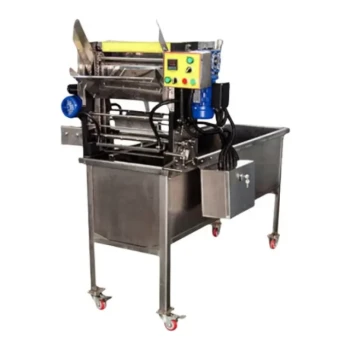
Automated honey-filling machines fundamentally transform the post-harvest phase by replacing variable manual labor with standardized industrial precision. These systems offer distinct technical advantages: they ensure high measurement accuracy, maintain strict hygiene through closed-loop operations, and are specifically engineered to manage the challenging viscosity of forest honey without maximizing waste.
By decoupling the filling process from manual intervention, producers secure product consistency and safety. The central value of this technology is its ability to adhere to rigorous market compliance standards while managing large-scale throughput that manual processing cannot match.
Enhancing Precision and Reducing Waste
Precise Metering Control
Manual filling often leads to inconsistent product weights, resulting in either regulatory non-compliance or revenue loss through overfilling.
Automated systems utilize precision metering to guarantee that every unit meets exact commercial net weight standards. This quantitative control minimizes raw material loss, ensuring that yield is maximized.
Managing High Viscosity
Forest honey is characterized by varying and often high levels of viscosity, which complicates manual pouring.
Industrial-grade machines are designed to mitigate common physical challenges such as overflow and wall-clinging. By mechanically controlling the flow, these systems accelerate the packaging process regardless of the honey's thickness.
Maintaining Strict Hygiene Standards
The Closed-Loop Environment
Contamination is a primary risk during the transition from bulk storage to retail packaging.
Automated machinery operates within a closed production environment. This design physically isolates the honey from the surrounding atmosphere, significantly lowering the risk of exposure to environmental bacteria or airborne microorganisms.
Eliminating Secondary Contamination
Human contact is the most common vector for introducing pathogens into food products.
By automating the filling stage, producers remove the need for manual handling of the product. This reduction in human intervention drastically reduces the risk of secondary contamination, providing the hardware support necessary to meet international food safety standards.
Operational Efficiency and Scalability
Handling Seasonal Surges
Honey production, particularly in forest environments, is often seasonal and subject to rapid spikes in volume.
Automated fillers significantly increase the rate of production, allowing apiaries to handle seasonal production surges without the need for temporary labor. This speed ensures fresh honey is processed and sealed quickly, preserving quality.
Transitioning to Commercial Operations
For producers aiming to move beyond small-scale beekeeping, manual packaging is a bottleneck.
Automation provides the scalability required for modern commercial operations. It standardizes the workflow, allowing for a predictable output that aligns with the requirements of retail and distribution channels.
Understanding the Operational Trade-offs
While the advantages are clear, implementing automation introduces new operational dynamics.
Standardization is a prerequisite. Unlike manual filling, where a human can visually adjust for debris, automated machines require honey to be properly filtered upstream to prevent clogging.
Furthermore, this move represents a shift from variable labor costs to fixed capital investment. The technology is a critical hardware component for scaling, but it requires a commitment to maintaining a professional, industrial-grade workflow rather than an artisanal, ad-hoc process.
Making the Right Choice for Your Goal
To maximize the return on investment in filling automation, align the technology with your specific production objectives.
- If your primary focus is Market Access: Prioritize machines with closed-loop systems to ensure the hygiene certification required for premium and international retail entry.
- If your primary focus is Scalability: Select equipment with high-speed metering to effectively manage seasonal harvest spikes and reduce reliance on manual labor.
Automation is not just about speed; it is the technical bridge between traditional beekeeping and a compliant, globally competitive enterprise.
Summary Table:
| Feature | Manual Filling | Automated Filling |
|---|---|---|
| Weight Precision | Variable/Manual Adjustment | High-Precision Metering (±1%) |
| Hygiene Level | High Risk (Human Contact) | Strict (Closed-Loop System) |
| Viscosity Management | Slow & Labor Intensive | High-Speed Mechanical Control |
| Scalability | Limited by Labor Force | High Throughput for Seasonal Surges |
| Waste Reduction | Common Overfilling/Spills | Minimal Loss/Clean Cut-off |
Elevate Your Beekeeping Enterprise with HONESTBEE
Transitioning from artisanal methods to industrial precision is the key to global market competitiveness. HONESTBEE specializes in empowering commercial apiaries and distributors with the high-performance hardware needed to scale.
Our comprehensive wholesale range includes:
- Advanced Machinery: High-precision honey-filling and hive-making machines.
- Beekeeping Essentials: A full spectrum of professional tools and equipment.
- Industrial Consumables: Every essential item to keep your production line running smoothly.
- Cultural Merchandise: Unique honey-themed products to diversify your brand.
Whether you are looking to eliminate bottlenecks in your packaging process or upgrade your entire facility, our team is ready to provide the technical expertise and equipment you need.
Contact HONESTBEE Today for a Professional Consultation
References
- Griazkin AV, Feklistov PA. Potential of forest melliferous resources of northwest Russia. DOI: 10.15406/hij.2018.02.00082
This article is also based on technical information from HonestBee Knowledge Base .
Related Products
- Fully Automatic Honey Filling Packaging Machine for Processing Line
- Automatic Honey Filling and Filtering Machine for Beekeeping Bottle Filling
- Precision Durable Efficient HONESTBEE Rotary Honey Filling Machine
- Semi Automatic Small Honey Bottle Filling Machine Honey Filler
- Precision Automated Packaging Turntable Honey Spoon Filling Sealing Packing Machine
People Also Ask
- Why are fully automatic honey filling and packaging lines essential? Boost Your Honey's Market Value and Quality
- What is a fully-automatic honey filler? Streamline Your Production with High-Precision Automation
- How do automated honey filling and packaging machines affect profitability? Boost Margins with HONESTBEE Technology
- How do automated honey filling and packaging machines contribute to the market value of honey products? Maximize Your ROI
- How do industrial-grade automated honey filling and packaging machines mitigate the risk of physical contamination?