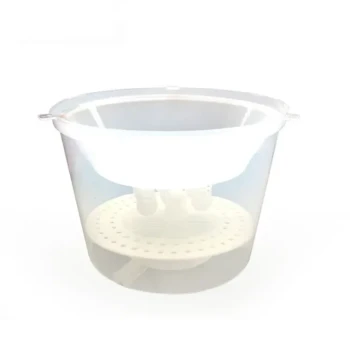
Beehive pollen traps provide a systematic, non-invasive mechanism for accurately monitoring regional flora. By intercepting pollen pellets from returning foragers at fixed intervals, these devices generate authentic physical data regarding local plant usage without disrupting the biological rhythm of the colony.
Core Insight: Unlike visual field surveys which rely on estimation, pollen traps yield physical samples that serve as irrefutable proof of plant utility. This data is essential for constructing temporal distribution maps that visualize exactly when and how intensely specific regional plants are utilized as resources.
The Technical Mechanics of Monitoring
To understand the value of pollen traps, one must look at how they transform biological activity into quantifiable data.
Non-Invasive Interception
The primary technical advantage is the ability to collect data without harming the source. Pollen traps are designed to strip pollen pellets from the legs of returning bees as they enter the hive.
This process captures the resource without disrupting the colony's normal foraging activities. It allows for long-term study without the observer effect skewing the results.
Establishing Temporal Distribution
Regional flora changes rapidly with the seasons. Pollen traps allow researchers to collect data at fixed intervals (e.g., daily or weekly).
This continuous sampling creates a timeline of resource availability. It allows you to map the "dynamic potential" of the region—tracking exactly when specific plants bloom and when bees stop utilizing them.
Analytical Capabilities
Beyond the collection method, the physical samples provided by these traps offer specific analytical advantages for determining plant value.
Authentic Sample Verification
The data collected is not theoretical; it is physical. The traps provide authentic physical samples that can be subjected to laboratory analysis.
This allows for precise morphological analysis to identify plant species with absolute certainty, rather than relying on visual identification of flowers in the field which bees may or may not be visiting.
Quantifying Resource Output
Pollen traps allow for the accurate quantification of actual pollen output. You can weigh the samples to determine the biomass provided by specific plants.
This metric is crucial for determining the overall value of a honey source. A plant may bloom abundantly, but if the trapped pollen volume is low, its actual value to the apiary is limited.
Understanding the Trade-offs
While pollen traps are powerful tools for monitoring, they introduce specific variables that must be managed to maintain data integrity and colony health.
sampling Frequency vs. Colony Nutrition
To maintain the "non-invasive" status mentioned in technical literature, traps cannot be left active indefinitely.
Over-trapping deprives the hive of protein required for brood rearing. Effective monitoring requires a schedule of intermittent use to balance data collection with colony sustainment.
Mechanical Impedance
While designed to be non-disruptive, the physical presence of a trap slightly alters the entrance geometry.
Poorly fitted traps can slow down foraging traffic or cause pollen congestion. Technical implementation requires precise hardware fitment to ensure the data reflects natural foraging rates rather than artificial bottlenecks.
Making the Right Choice for Your Goal
Whether you are mapping a region for conservation or optimizing commercial honey production, the application of this data varies.
- If your primary focus is Regional Mapping: Prioritize consistent sampling intervals to build a complete temporal map of all flowering resources throughout the season.
- If your primary focus is Commercial Yield: Focus on the quantitative weight of the samples to identify which specific plants drive the highest biomass production for your hives.
By converting the daily foraging activity of bees into measurable data, pollen traps bridge the gap between botanical potential and actual apicultural utility.
Summary Table:
| Technical Advantage | Description | Monitoring Benefit |
|---|---|---|
| Non-Invasive Collection | Strips pollen pellets without disrupting colony rhythm | Enables long-term, objective biological study |
| Temporal Mapping | Sampling at fixed daily or weekly intervals | Tracks seasonal resource availability & blooming shifts |
| Physical Verification | Provides authentic samples for lab morphology | Ensures 100% accurate identification of plant species |
| Biomass Quantification | Weighable samples of actual pollen output | Measures the real commercial value of honey sources |
Maximize Your Apiary’s Potential with HONESTBEE
Understanding your regional flora is the first step toward a high-yield season. At HONESTBEE, we empower commercial apiaries and distributors with the high-precision tools needed to turn biological activity into actionable data.
Our comprehensive wholesale range includes:
- Specialized Monitoring Hardware: High-fitment pollen traps and hive-making machines.
- Industrial Machinery: Professional-grade honey-filling and processing equipment.
- Essential Consumables: A full spectrum of beekeeping tools and hardware.
- Cultural Merchandise: Unique honey-themed retail products for your brand.
Whether you are scaling a commercial operation or supplying the industry, HONESTBEE delivers the quality and expertise you deserve. Contact us today to explore our wholesale solutions and see how our equipment can optimize your honey production.
References
- Tesfa Mossie, Hayat Worku. Identification and characterization of honeybee flora in Jimma Zone, Ethiopia. DOI: 10.4314/jaes.v8i1.2
This article is also based on technical information from HonestBee Knowledge Base .
Related Products
- Removable Plastic Pollen Trap With Ventilated Tray for Bees Pollen Collector
- 30 cm Plastic Entrance Hole Bee Pollen Trap and Collector
- Black Plastic Beetle Barn Hive Beetle Trap for Beehives
- Plastic Bee Pollen Trap Strips Comb Catcher Collector
- Reusable Clear Small Hive Beetle Traps for Beehives Beetle Trapping Tools
People Also Ask
- What are the design principles and advantages of pollen traps in the collection of bee pollen? Boost Your Apiary Yield
- What is the function of professional pollen traps in evaluating honey plants? Quantifying Pollination and Crop Potential
- What functions do pollen traps serve for bee bread production? Optimize Your Raw Material Collection
- What maintenance and pest prevention measures should be taken for pollen traps? Protect Your Hive and Harvest Quality
- How does the use of pollen traps in honeybee hives enhance crop fertilization? Boost Your Yield Through Induced Activity