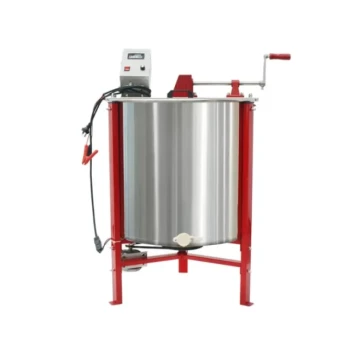
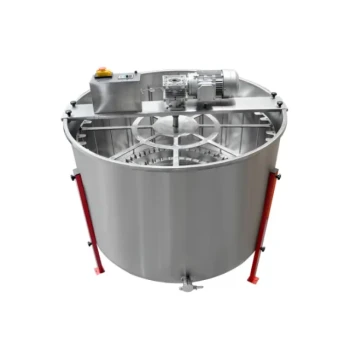
The primary technical advantage of using a centrifugal honey extractor is the preservation of the honeycomb's structural integrity. Unlike traditional pressing methods that crush the wax to release honey, centrifugal extractors utilize high-speed rotation to spin the honey out while leaving the comb intact. This non-destructive process allows the empty combs to be immediately returned to the hive for reuse, significantly altering the biological workflow of the bee colony.
Core Takeaway The efficiency of honey production is biologically limited by the bees' need to produce wax. By using centrifugal force to extract honey without destroying the comb, you eliminate the energy-intensive burden of wax secretion, allowing the colony to redirect its labor entirely toward foraging and increasing total honey yield.
The Mechanics of Non-Destructive Extraction
The shift from pressing to centrifugal extraction represents a move from destructive harvesting to sustainable reuse.
Separation via Centrifugal Force
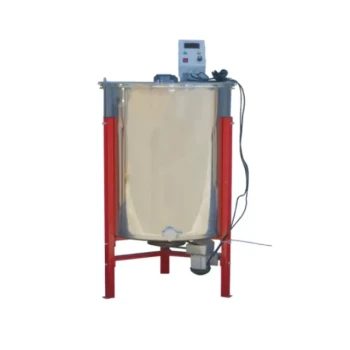
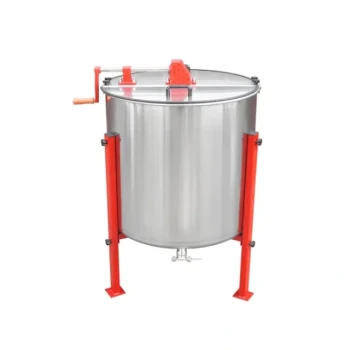
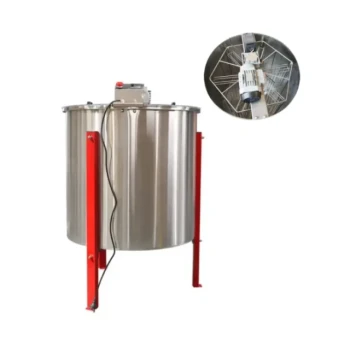
The extractor operates by spinning the frames at high speeds. This generates sufficient centrifugal force to pull the mature honey out of the cells.
Structural Preservation
Because the force is applied physically without compression, the physical structure of the honeycomb remains undamaged. In traditional pressing, the wax is destroyed and must be filtered out, whereas centrifugal extraction leaves the wax frame ready for immediate re-introduction to the hive.
Biological and Operational Efficiency
The technical benefits of the machinery translate directly into biological advantages for the bee colony, which in turn drives production metrics.
Eliminating Wax Secretion
Bees require significant energy and time to secrete wax and build new combs. By returning intact empty combs to the hive, you save the bees from this metabolic cost.
Redirection of Labor
When bees do not need to rebuild their nest, they can redirect their energy. Labor is shifted from construction to foraging and honey production.
Shortened Production Cycles
The ability to reuse combs shortens the interval between harvests. This leads to a faster turnover and continuous productivity during the peak flowering season, maximizing the total volume of output.
Quality and Safety Assurance
Beyond volume, centrifugal extraction offers distinct advantages regarding the chemical and physical quality of the final product, particularly in industrial settings.
Material Hygiene and Safety
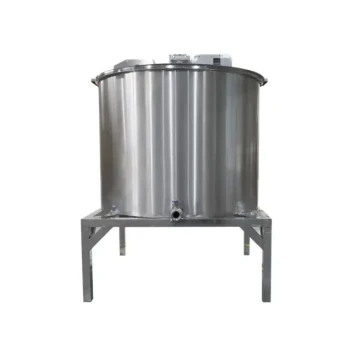
Industrial centrifugal extractors are typically constructed from stainless steel. This meets rigorous food safety standards and prevents contamination that might occur with porous or degrading materials used in traditional pressing.
Meeting Export Standards
The mechanized process reduces environmental contact. This containment ensures that the honey's physical, chemical, and biological safety indicators meet the strict requirements necessary for international export.
Preservation of Organoleptic Properties
By avoiding the heat or oxidation often associated with slower, manual processing, centrifugal extraction preserves the honey's specific floral aromas and physicochemical properties.
Comparison: Pressing vs. Centrifugal
It is important to understand the specific limitations of the traditional method to fully appreciate the centrifugal advantage.
The Cost of Compression
Traditional compression and filtration methods inevitably destroy the wax structure. This creates a cycle where the hive must constantly "reset" its infrastructure after every harvest, capping potential yield.
The Scalability Factor
While pressing may suffice for micro-scale operations, it fails to meet the production turnover required for commercial viability. Centrifugal extraction is the only method that supports high-yield, continuous commercial production.
Making the Right Choice for Your Goal
Centrifugal extraction is the industry standard for specific technical reasons. Here is how those reasons align with production goals:
- If your primary focus is maximizing yield: You must prioritize centrifugal extraction to allow for comb reuse, which minimizes bee energy waste and maximizes foraging time.
- If your primary focus is export compliance: Rely on industrial centrifugal equipment to minimize environmental contact and ensure consistent hygiene standards using stainless steel components.
By decoupling honey harvesting from comb destruction, you transform the extraction process from a biological setback for the hive into a sustainable loop of continuous production.
Summary Table:
| Feature | Centrifugal Extraction | Traditional Pressing |
|---|---|---|
| Comb Integrity | Preserved (Reusable) | Destroyed (Crushed) |
| Bee Energy Cost | Low (Bees focus on foraging) | High (Bees must rebuild wax) |
| Production Speed | High (Rapid turnover) | Low (Slow manual process) |
| Hygiene Standard | High (Stainless steel/Food grade) | Variable (Potential contamination) |
| Scalability | Ideal for commercial apiaries | Limited to small-scale use |
| Aroma Preservation | Excellent (Minimal oxidation) | Moderate (Higher air/heat exposure) |
Maximize Your Apiary's Productivity with HONESTBEE
Transitioning from traditional methods to advanced centrifugal extraction is the key to scaling your honey production. HONESTBEE specializes in supporting commercial apiaries and distributors with high-performance beekeeping machinery and tools.
Our value to your business:
- Commercial-Grade Machinery: From high-capacity honey extractors and filling machines to hive-making equipment.
- Complete Supply Chain: A full spectrum of beekeeping tools and essential industry consumables.
- Growth-Oriented Solutions: We help you reduce biological labor costs for your bees, ensuring faster harvest cycles and export-ready quality.
Ready to upgrade your honey processing capabilities? Contact us today for a wholesale consultation and see how our hardware and industry expertise can grow your brand.
References
- Getachew Worku Alebachew, Tewabe Mihret Eshetie. Assessment of Beekeeping Practices of Youth Groups in Eastern Amhara, Ethiopia. DOI: 10.1080/0005772x.2019.1637191
This article is also based on technical information from HonestBee Knowledge Base .
Related Products
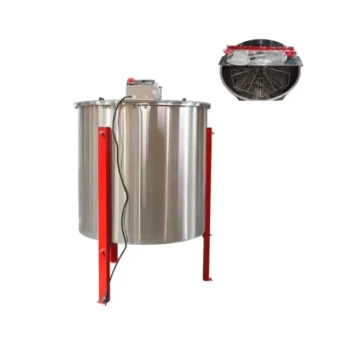
- electric honey extractor honey centrifuge 3 frame honey extractor stainless steel honey frame extractor
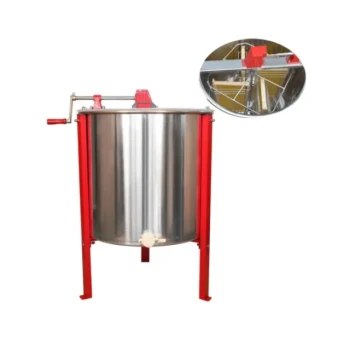
- Manual Hand Crank 4 Frame Honey Extractor Centrifuge for Beekeeping
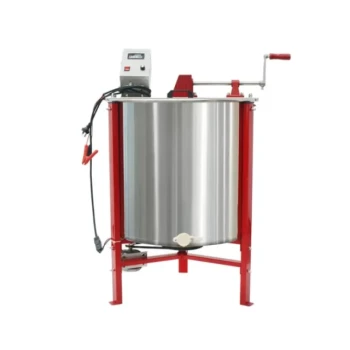
- Professional 4 Frame Self Reversing Electric Honey Extractor for Beekeeping
- Electric 4 Frame Tangential Honey Extractor
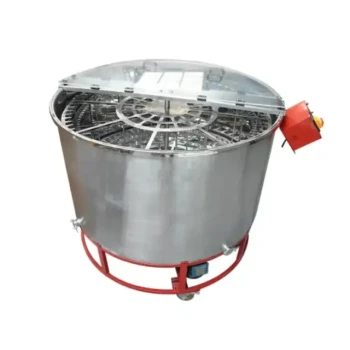
- 24 Frame Honey Extractor Commercial Radial Honey Frame Extraction Machine
People Also Ask
- What are the characteristics of electric honey extractors? Boost Your Apiary Efficiency with Automated Technology
- What are the disadvantages of using an electric honey extractor? Weighing Cost, Power, and Comb Safety
- What are the advantages of an electric honey extractor? Boost Efficiency and Scale Your Honey Production
- What are the technical advantages of electric honey extractors? Maximize Yield and Protect Your Bee Colony
- How does an electric honey extractor affect the quality of honey? Preserve Flavor & Purity with Precision Extraction