A modern ten-frame hive, technically referred to as a Langstroth hive, is a modular vertical structure designed for manageability and standardization. It typically consists of a hive stand, a bottom board with an entrance reducer, stacked hive bodies containing suspended frames, and a two-part roofing system comprising an inner and outer cover.
The modular design of the ten-frame hive allows beekeepers to expand the colony's space upward as needed while inspecting individual components without destroying the bees' work.
The Vertical Architecture
To understand the hive, it is best to visualize it from the ground up. Each component plays a specific role in protecting the colony or facilitating the beekeeper's work.
The Foundation and Entrance
The assembly begins with the hive stand, which elevates the structure off the ground to protect against dampness and pests.
Directly on top of the stand sits the bottom board. This serves as the floor of the hive and the primary landing pad for the bees.
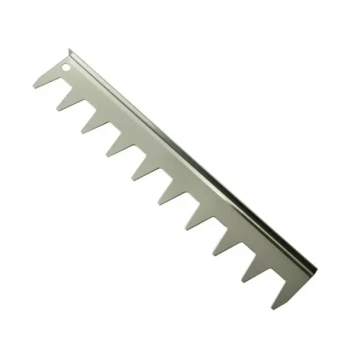
inserted into the entrance of the bottom board is an entrance cleat or reducer. This device controls the size of the opening, helping the colony defend against robbers or regulating airflow during colder months.
The Living Quarters (Hive Bodies)
Resting on the bottom board are the hive bodies, also known as boxes. These are the main structural units where the bees live and store resources.
In a typical setup, the lower boxes serve as the brood nest where the queen lays eggs. Upper boxes, often called supers, are added for surplus honey storage.
Between the brood nest and the honey supers, you may choose to place a queen excluder. This is a grid sized specifically to allow worker bees to pass through while preventing the larger queen from moving up and laying eggs in the honey harvest.
The Roof System
The top of the hive utilizes a two-part cover system to manage the internal environment.
First, an inner cover is placed over the top hive body. This provides insulation and creates a necessary air gap, preventing the bees from gluing the heavy outer roof to the frames.
Finally, a telescoping outer cover fits over the top. This acts as the roof, shielding the colony from rain, wind, and harsh weather.
The Internal Engine: Frames
While the boxes provide the shell, the frames provide the internal structure where the colony builds its home.
Frame Anatomy
Each hive body contains suspended frames, which are rectangular wooden or plastic structures holding the foundation or comb.
A single frame is composed of a top bar, two end bars, and a bottom bar.
The top bars are designed to hang on the ledges of the hive body. They can be grooved or wedged to secure the foundation.
Bottom bars also vary in design to accommodate different foundation types. They may be split, solid, or grooved.
Dimensions and Standardization
Standard hive frames differ in height to match the depth of the hive body they occupy.
While the length is standardized at 17 5/8 inches, the height will vary (9 1/8, 7 1/4, 6 1/4, or 5 3/8 inches) depending on whether the box is a deep, medium, or shallow super.
Understanding the Trade-offs
While the ten-frame Langstroth hive is the industry standard, specific components introduce choices that affect management.
The Queen Excluder Debate
The use of a queen excluder is a common point of contention. While it guarantees honey supers remain free of brood, some beekeepers argue it acts as a "honey excluder" by slowing down worker bees or damaging their wings as they squeeze through.
Frame Compatibility
The variety of frame heights creates a logistical challenge. A frame sized for a deep box (9 1/8 inches) cannot be used in a medium super (6 1/4 inches), and vice versa. This requires the beekeeper to carefully manage inventory to ensure components match.
Optimizing Your Hive Setup
Your choice of specific components within the ten-frame system should align with your management goals.
- If your primary focus is harvesting pure honey: Utilize a queen excluder between the brood boxes and supers to ensure the frames you harvest contain no bee larvae.
- If your primary focus is interchangeability: Standardize your equipment by using the same depth for all hive bodies and frames (e.g., all mediums), allowing you to move frames anywhere in the stack.
Success with a ten-frame hive comes from understanding that every component, from the bottom board to the outer cover, is a tool for environmental control.
Summary Table:
| Component Category | Specific Part | Primary Function |
|---|---|---|
| Foundation | Hive Stand & Bottom Board | Protects against pests/dampness; provides colony entrance. |
| Living Quarters | Hive Bodies (Boxes) | Houses the brood nest and honey storage (supers). |
| Internal Structure | 10 Suspended Frames | Provides the framework for comb building and resource storage. |
| Access Control | Queen Excluder | Prevents the queen from laying eggs in honey supers. |
| Roofing System | Inner & Outer Covers | Provides insulation and protection from weather elements. |
Scaling Your Beekeeping Operation with HONESTBEE
Building a successful apiary requires precision-engineered equipment that stands the test of time. At HONESTBEE, we specialize in supporting commercial apiaries and distributors with high-quality, wholesale beekeeping solutions.
Our extensive portfolio includes:
- Advanced Machinery: Hive-making and honey-filling machines for high-volume production.
- Full-Spectrum Hardware: Durable Langstroth hive bodies, standardized frames, and protective gear.
- Industry Consumables: Everything your colony needs to thrive and produce.
- Cultural Merchandise: Unique honey-themed products to expand your retail range.
Whether you are expanding a professional fleet or sourcing for a distribution network, our team is ready to provide the specialized tools and wholesale expertise you need to succeed.
Contact HONESTBEE Today to Discuss Your Wholesale Requirements
Related Products
- Durable Plastic Frame Spacer
- Stainless Steel 9 Frame Hive Spacer Durable Precise for Commercial Beekeeping
- Long Langstroth Style Horizontal Top Bar Hive for Wholesale
- Rapid Bee Feeder White Plastic 2L Round Top Feeder for 8 or 10-Frame Bee Hives
- Wooden Bee Hive Frames for Beekeeping and Wholesale
People Also Ask
- Are plastic bee hive frames good? A Guide to Modern Durability vs. Natural Appeal
- Are plastic bee frames good? A Guide to Durability, Efficiency & Bee Acceptance
- What are the advantages of using Standard Langstroth 10-frame equipment? Scale Your Commercial Apiary Efficiency
- How do you clean plastic frames? A Gentle Guide to Preserving Your Frames
- How must plastic frames be prepared for bees? Expert Tips for 100% Acceptance & Success