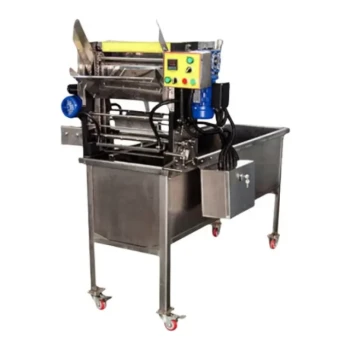
Automated honey filling production lines fundamentally transform export potential by replacing manual variability with industrial precision. These systems provide strict measurement control and a sterile packaging environment, directly addressing the hygiene and consistency demands of high-end international markets to ensure competitiveness.
Core Insight: Automation is not merely a production speed upgrade; it is a compliance engine. By eliminating secondary contamination and ensuring precise standardization, automated lines create the "physical foundation" required to obtain international certifications and build a premium brand reputation abroad.
Elevating Hygiene Standards for Global Compliance
Eliminating Secondary Contamination
In traditional manual workshops, human handling poses a constant risk of introducing bacteria or foreign particles.
Automated lines operate within a closed processing path, effectively isolating the honey from the external environment. This sterile approach eliminates the risk of secondary contamination, a critical requirement for food safety in export markets.
Meeting Strict Regulatory Demands
International trade requires rigorous health and quality certifications.
The technical assurance provided by automation ensures the physical stability of bee products. This process control is often the prerequisite for obtaining the necessary certifications to enter high-end retail sectors.
Achieving Precision and Standardization
Guaranteeing Weight Consistency
Manual filling frequently results in weight deviations, leading to either raw material waste (overfilling) or consumer distrust (underfilling).
Industrial-grade machines utilize high-precision volumetric control to ensure every bottle meets strict net weight trade standards. This consistency is vital for maintaining profitability and meeting the legal requirements of international commerce.
Mastering Viscosity and Flow
Honey is physically difficult to package due to its high viscosity and tendency to "string" or drip.
Automated systems employ precision flow control and vacuum anti-drip systems. These technologies enable fast, clean quantitative filling that manual methods cannot replicate without significant mess or waste.
Building Brand Value in High-End Markets
Professionalizing Product Appearance
Global consumers associate inconsistent packaging with lower quality.
Automated labeling and sealing ensure that the product's physicochemical indicators and external appearance remain uniform. This professional presentation is essential for brand building and allows products to command higher prices.
Extending Shelf Life and Trust
Airtight packaging is a key factor in preventing spoilage and fraud.
By integrating vacuum sealing, automated lines extend the product's shelf life. This reliability serves as the foundation for brand credit, proving to international buyers that the product is premium and safe.
Understanding the Trade-offs
The Shift from Artisanal to Industrial
Adopting automation requires a shift away from the flexibility of small-scale "workshop" production.
While manual methods allow for case-by-case adjustments, they lack the standardization required for large-scale export. The trade-off is that producers must commit to rigid process controls to achieve the "physical stability" that international markets demand, potentially sacrificing the "hand-packed" narrative for the sake of safety and consistency.
Making the Right Choice for Your Goal
To maximize your export competitiveness, align your technology choice with your specific market barriers:
- If your primary focus is Regulatory Compliance: Prioritize systems with closed processing paths and vacuum sealing to guarantee the sterile environment needed for health certifications.
- If your primary focus is Brand Positioning: Focus on machines with precision metering and anti-drip features to ensure the professional, consistent appearance required for high-end retail shelves.
Automation bridges the gap between local production and global standards, turning quality control into a competitive asset.
Summary Table:
| Feature | Manual Filling Methods | Automated Production Lines | Export Advantage |
|---|---|---|---|
| Hygiene Control | High risk of human contact & contamination | Closed-path, sterile processing | Meets strict international food safety standards |
| Filling Accuracy | Variable net weights (waste/dispute) | High-precision volumetric control | Ensures legal trade compliance & profit margins |
| Packaging Quality | Inconsistent labeling & sealing | Uniform, professional finishing | Builds premium brand trust in high-end markets |
| Efficiency | Slow, labor-intensive | High-speed, continuous output | Scales operations for large international orders |
| Product Integrity | Exposure to air & moisture | Vacuum sealing & anti-drip systems | Extends shelf life and maintains honey quality |
Elevate Your Beekeeping Business to Global Standards
Transitioning from manual processes to industrial precision is the key to capturing international markets. HONESTBEE specializes in empowering commercial apiaries and distributors with high-performance beekeeping machinery and tools.
Whether you need automated honey-filling machines to ensure sterile compliance or hive-making equipment to scale your operations, our comprehensive wholesale portfolio is designed to enhance your production efficiency and brand value. From specialized hardware to essential industry consumables, we provide the technical foundation for your success.
Ready to professionalize your production? Contact us today to discover how HONESTBEE can streamline your export journey with world-class equipment.
References
- Hua Yu, Cui Peng-bo. Research on the International Export Competitiveness of Honey – Taking Anhui Province as an example. DOI: 10.1051/shsconf/20151402015
This article is also based on technical information from HonestBee Knowledge Base .
Related Products
- Fully Automatic Honey Filling Packaging Machine for Processing Line
- Automatic Honey Filling and Filtering Machine for Beekeeping Bottle Filling
- Commercial Rotary Honey Filling Machine for Production
- Precision Automated Packaging Turntable Honey Spoon Filling Sealing Packing Machine
- Precision Durable Efficient HONESTBEE Rotary Honey Filling Machine
People Also Ask
- Why are fully automatic honey filling and packaging lines essential? Boost Your Honey's Market Value and Quality
- What is a fully-automatic honey filler? Streamline Your Production with High-Precision Automation
- How do automated honey filling and packaging machines affect profitability? Boost Margins with HONESTBEE Technology
- How do automated honey filling and packaging machines contribute to the market value of honey products? Maximize Your ROI
- How do industrial-grade automated honey filling and packaging machines mitigate the risk of physical contamination?