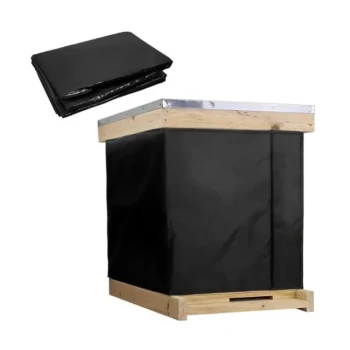
Infrared thermometers provide precise, non-contact surface temperature measurements that reveal the immediate thermal behavior of a beehive's exterior. Specifically, they deliver rapid data regarding heat distribution across hive covers and side walls, allowing technicians to assess how the structure responds to varying levels of solar exposure.
By capturing instantaneous surface data, infrared technology serves as a diagnostic tool to empirically verify the effectiveness of insulation materials and protective coatings in suppressing solar heat absorption.
The Mechanics of Thermal Evaluation
Instantaneous Surface Feedback
Infrared thermometers allow for the rapid acquisition of temperature data. Unlike traditional thermometers that require time to equilibrate, infrared devices provide immediate readings.
This speed enables operators to scan multiple hives or different sections of a single hive quickly. It captures a snapshot of thermal performance under specific environmental conditions.
Non-Invasive Monitoring
The primary advantage of this technology is its non-contact nature. You can evaluate the thermal characteristics of the hive without physically touching the structure or disturbing the colony inside.
This prevents the agitation of bees and maintains the integrity of the hive's internal environment during the assessment process.
Assessing Structural Performance
Mapping Heat Distribution
The data provided helps map heat patterns across critical structural zones, specifically the hive covers and side walls.
By identifying hot spots, technicians can determine which areas of the hive are most susceptible to solar gain. This distribution data highlights where thermal stress is most acute.
Verifying Insulation and Coatings
Infrared measurement visually demonstrates the performance of different materials. It quantifies how well specific coatings or insulation layers suppress solar energy absorption.
If a surface reads significantly cooler than a control surface under the same sun exposure, it confirms the material is effectively reflecting heat or insulating the structure.
Optimizing Hive Design
This data is essential for verifying structure optimizations. When a technician modifies a hive design to improve thermal regulation, the infrared thermometer provides the objective data needed to confirm if the physical changes achieved the desired insulation performance.
Understanding the Limitations
Surface vs. Internal Temperature
It is critical to remember that infrared thermometers only measure surface temperature, not the internal temperature of the colony.
A hot outer surface does not necessarily mean the interior is hot; in fact, highly effective insulation might result in a hot exterior (blocking heat entry) and a cool interior. Conversely, a warm exterior in winter could indicate heat leaking out of the hive due to poor insulation.
Solar Reflection Issues
Shiny or reflective surfaces (often used for heat rejection) can sometimes distort infrared readings.
Users must ensure they are measuring the actual temperature of the material surface rather than the reflection of the sun, which can lead to misinterpreted data regarding the material's efficiency.
How to Apply This to Your Project
To effectively utilize infrared data for beehive management, align your measurement strategy with your specific objective.
- If your primary focus is testing new materials: Compare surface readings of treated vs. untreated hives at peak sun exposure to verify the suppression of solar absorption.
- If your primary focus is routine maintenance: Scan hive walls and covers to identify unexpected heat distribution patterns that may indicate structural degradation or insulation gaps.
By distinguishing between surface heat absorption and internal thermal stability, you can make data-driven decisions that enhance colony health and hive longevity.
Summary Table:
| Metric Provided | Data Application | Benefit to Beekeeping |
|---|---|---|
| Surface Temperature | Instantaneous feedback on hive covers/walls | Rapid scanning without colony disturbance |
| Heat Mapping | Identifying hot spots and solar gain zones | Pinpointing structural areas prone to thermal stress |
| Material Verification | Quantifying solar absorption suppression | Empirically testing coatings and insulation efficiency |
| Design Optimization | Comparing modified vs. control structures | Objective data for verifying hive design improvements |
Maximize Your Apiary Efficiency with HONESTBEE
At HONESTBEE, we understand that thermal stability is key to colony health and honey yield. We cater to commercial apiaries and global distributors by providing a comprehensive wholesale ecosystem. Whether you need specialized hive-making machinery, precision honey-filling equipment, or advanced beekeeping tools, our portfolio is designed to enhance your operational performance.
Ready to scale your beekeeping business with industry-leading hardware and consumables? Contact us today to discuss how our high-performance equipment and professional-grade beehive solutions can bring superior value to your commercial operations.
References
- Maria de Fátima Pereira de Souza, Eva Mônica Sarmento da Silva. Desenvolvimento de abelhas melíferas em colmeias com diferentes cores e materiais de cobertura no semiárido brasileiro. DOI: 10.33448/rsd-v9i12.10890
This article is also based on technical information from HonestBee Knowledge Base .
Related Products
- Inner Beehive Cover for Beekeeping Bee Hive Inner Cover
- Professional Insulated Plastic Bee Hives
- Professional Insulated Winter Hive Wrap for Beekeeping
- Stainless Steel Round Beehive Air Vents for Ventilation
People Also Ask
- What is the purpose of the inner cover in a beehive? A Key to Hive Health & Easy Management
- What is the function and placement of an inner cover in a beehive? Essential Hive Management Guide
- What is the purpose of the inner and outer covers in a beehive? Essential for Hive Health & Management
- What is a beehive's inner cover and how is it used? Essential Guide for Hive Insulation and Ventilation
- What are the functions of the inner and outer covers on a beehive? Essential Guide for Hive Protection and Management