The necessity of industrial-grade stainless steel tanks lies in their ability to neutralize honey’s two most destructive natural properties: acidity and hygroscopy. Because honey is naturally corrosive and actively absorbs moisture from the air, using standard containers leads to heavy metal contamination and fermentation. Industrial-grade stainless steel provides the chemical inertia and airtight sealing required to prevent these reactions, ensuring the product remains safe, stable, and compliant with export standards.
Core Takeaway: Honey acts as a solvent and a sponge; without the correct barrier, it will degrade the container or spoil itself. Industrial-grade stainless steel (specifically AISI 304 or 316L) is the only material that offers the chemical inertness to stop metal leaching and the hermetic sealing required to prevent fermentation-inducing moisture absorption.
The Chemical Challenge of Storage
Combating Acidity and Corrosion
Honey is acidic by nature. When stored in ordinary metal containers, this acidity triggers a chemical reaction that corrodes the vessel walls.
This corrosion causes heavy metals to leach into the honey, compromising food safety and rendering the product unfit for consumption.
Industrial-grade stainless steel offers superior corrosion resistance, creating a chemically inert barrier that completely prevents this contamination.
Blocking Moisture Absorption (Hygroscopy)
Honey is highly hygroscopic, meaning it aggressively absorbs moisture from the surrounding environment.
If honey absorbs enough humidity, its water content rises to a level that allows dormant yeasts to activate, leading to rapid fermentation and spoilage.
Industrial tanks provide advanced airtight sealing capabilities that standard containers lack, physically isolating the honey from external humidity to maintain shelf stability.
Preserving Biochemical Integrity
Stabilizing Diastase Activity
Diastase activity is a critical biochemical marker used internationally to gauge honey freshness and quality.
Improper storage conditions can degrade enzymes, causing diastase levels to plummet and reducing the honey's commercial value.
Industrial stainless steel tanks maintain a stable internal environment, ensuring these biochemical properties remain intact during long-term storage.
Protecting Color and Flavor
Honey is susceptible to oxidation and off-odors, which can alter its flavor profile and darken its color.
The surface smoothness of high-grade stainless steel (often 304 or 316L) prevents the development of trapped residues that cause off-odors.
By sealing out contaminants and preventing oxidation, these tanks preserve the honey's original sensory profile, a requirement for premium export markets.
Operational Consistency and Hygiene
Homogenization for Market Consistency
Industrial-grade tanks often feature integrated heating and stirring systems designed to homogenize large batches.
This ensures consistent color, moisture content, and flavor across the entire yield, which is essential for large-scale exports.
Without this homogenization, different jars from the same harvest could vary significantly in quality, leading to inconsistent customer experiences.
Advanced Hygiene (CIP Compatibility)
Industrial tanks are designed to be compatible with Cleaning-In-Place (CIP) systems.
The high surface smoothness and chemical resistance allow for rigorous automated cleaning without degrading the tank material.
This capability is critical for passing organic inspections and adhering to Good Manufacturing Practices (GMP), effectively eliminating cross-contamination risks.
Understanding the Trade-offs
Capital Investment vs. Long-Term Value
Industrial-grade stainless steel represents a significant upfront capital expenditure compared to food-grade plastic or standard metals.
However, relying on cheaper alternatives introduces a high risk of total product loss due to fermentation or rejection at export borders due to metal contamination.
Maintenance and Infrastructure
These tanks often require supporting infrastructure, such as power for heating/stirring units and plumbing for CIP systems.
Operators must be trained to manage these systems; improper use of heating elements, for example, can inadvertently damage the honey's enzymes (HMF levels) despite the tank's quality.
Making the Right Choice for Your Goal
Select your equipment based on your specific commercial objectives:
- If your primary focus is Organic Certification: You must strictly use AISI 304/316L stainless steel to ensure chemical inertia and CIP compatibility for total cleanliness.
- If your primary focus is Export Markets: You need tanks with airtight sealing and temperature stability to preserve diastase activity and prevent heavy metal contamination.
- If your primary focus is Large-Scale Consistency: You require industrial tanks with integrated heating and stirring systems to homogenize batches for uniform color and moisture content.
Using industrial-grade stainless steel is not merely a storage choice; it is the fundamental defense against the chemical and biological degradation of your product.
Summary Table:
| Feature | Impact on Honey Quality | Why Industrial Stainless Steel (304/316L)? |
|---|---|---|
| Corrosion Resistance | Prevents heavy metal leaching from acidic honey. | High chemical inertia prevents metal-to-honey reactions. |
| Hygroscopic Shield | Blocks moisture absorption to stop fermentation. | Advanced hermetic sealing isolates honey from humidity. |
| Biochemical Stability | Protects diastase activity and enzyme levels. | Maintains a stable internal environment for long-term storage. |
| Sensory Preservation | Maintains original color, flavor, and aroma. | Smooth, non-porous surfaces prevent oxidation and off-odors. |
| Homogenization | Ensures batch consistency for moisture and color. | Integrated stirring and heating systems for uniform yields. |
| Hygiene Standards | Eliminates cross-contamination and bacterial risk. | CIP (Cleaning-In-Place) compatible for GMP compliance. |
Secure Your Honey’s Quality with HONESTBEE
Don't let acidity and moisture degrade your harvest. HONESTBEE provides professional-grade storage solutions designed specifically for the rigorous demands of commercial apiaries and global distributors.
Our Value to Your Business:
- Comprehensive Equipment Range: From high-capacity 304/316L stainless steel tanks to honey-filling machinery and hive-making equipment.
- Export-Ready Standards: Ensure your honey meets international diastase and purity requirements with our chemically inert storage systems.
- Wholesale Excellence: We supply the full spectrum of beekeeping tools, machinery, and industry consumables at scale.
Ready to upgrade your processing facility? Contact our expert team today to discuss custom equipment solutions for your apiary.
References
- Javier Becerril García, Francisco Iván Hernández Cuevas. Apicultura: su contribución al ingreso de los hogares rurales del sur de Yucatán. DOI: 10.22201/cephcis.25942743e.2020.15.2.76597
This article is also based on technical information from HonestBee Knowledge Base .
Related Products
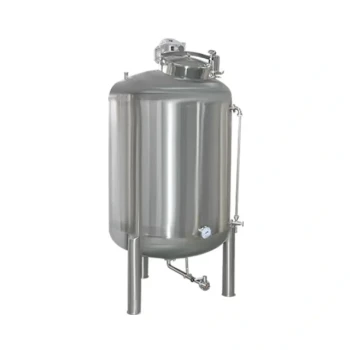
- Stainless Steel Honey Storage Tank with Lid for Honey
- Stainless Steel Honey Storage and Settling Tank with Double Strainer
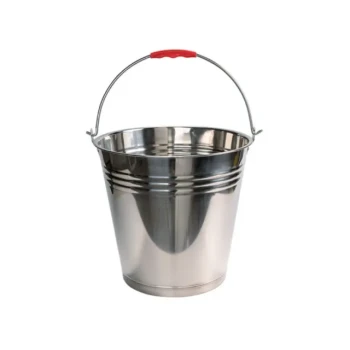
- Premium Stainless Steel Honey Tank Bucket Pail with Reinforced Handle and Polished Finish
- Heavy Duty Stainless Steel Honey Processing Machine Decrystallizing Tank
- Stainless Steel Honey Tank Stand for Honey Storage
People Also Ask
- What economic role do honey storage tanks play? Boost Your Revenue Through Strategic Inventory Management
- What roles do industrial honey storage tanks and filtration meshes play in processing? Ensure Purity & Consistency
- What is the purpose of a honey storage tank? Streamline Your Honey Processing for Quality & Efficiency
- What are honey storage tanks used for? Essential Features for Quality Preservation and Profit
- How do large honey storage tanks and gravity fall filling systems improve honey packaging efficiency and safety?