The crush and strain method is a foundational honey extraction technique that prioritizes simplicity and accessibility over specialized machinery. To execute this method effectively, you require a large tub, a large knife, a sturdy spatula or wooden spoon, cheesecloth, and clean jars with lids.
Core Takeaway The crush and strain method is the most accessible entry point for honey extraction, utilizing common kitchen tools to produce high-quality honey. However, it trades financial savings for increased labor and the destruction of the honeycomb, preventing the reuse of wax frames.
Essential Equipment Breakdown
Workspace Protection
Cardboard or Plastic Sheeting Honey extraction is inherently sticky and messy. Before beginning, you must cover your floors and work surfaces with disposable cardboard or plastic sheeting. This simple step prevents difficult cleanups and helps maintain a sanitary environment.
Processing Tools
The Large Tub You need a large, clean vessel to act as the central processing unit. This tub captures the honeycomb as you remove it from the frames and serves as the container where the crushing takes place.
The Large Knife A large knife is required to cut the entire honeycomb out of the wooden frame. Unlike mechanical extraction, which only removes the wax caps, this method involves cutting the comb free entirely.
The Crushing Tool A spatula or a sturdy wooden spoon is the "engine" of this method. You will use this tool to manually mash and pulverize the honeycomb inside the tub, physically breaking the wax cells to release the honey.
Filtration and Storage
Cheesecloth Once the comb is crushed, the mixture of honey and wax must be separated. Cheesecloth acts as the primary filter, allowing liquid honey to drip through while catching the wax particles and debris.
Jars with Lids After straining, the final product is transferred directly into storage containers. Clean glass jars with tight-fitting lids are the standard for preserving the harvested honey.
Understanding the Trade-offs
The Cost of Simplicity
Low Investment, High Labor This method is defined by its low barrier to entry. It avoids the medium-to-high investment cost of a centrifugal honey extractor or a honey press. However, it is significantly slower and more physically demanding than mechanical methods.
The Impact on the Hive
Comb Destruction The most critical technical implication of this method is the destruction of the wax frames. Because you crush the comb, you cannot return drawn comb to the hive for the bees to reuse. The bees must consume resources to rebuild the wax from scratch, which can delay future honey production compared to using a centrifugal extractor.
Making the Right Choice for Your Goal
This method is not universally applicable; it depends heavily on the scale of your operation and your budget.
- If your primary focus is low startup costs: Use the crush and strain method, as it utilizes tools you likely already own or can buy cheaply.
- If your primary focus is yield and speed: Invest in a centrifugal extractor to save labor and preserve the drawn comb for the bees.
The crush and strain method is the definitive choice for the hobbyist who values simplicity and product quality over speed and scalability.
Summary Table:
| Equipment Type | Tool Needed | Primary Purpose |
|---|---|---|
| Protection | Cardboard/Plastic Sheeting | Protects surfaces from sticky honey residue |
| Processing | Large Tub & Knife | Housing the comb and cutting it from frames |
| Extraction | Sturdy Spatula/Spoon | Manually crushing wax cells to release honey |
| Filtration | Cheesecloth | Separating liquid honey from wax and debris |
| Storage | Jars with Lids | Final containment and preservation of honey |
Scaling Your Apiary Beyond the Basics?
While the crush and strain method is perfect for beginners, growing operations need efficiency to thrive. HONESTBEE specializes in supporting commercial apiaries and distributors with professional-grade solutions.
From honey-filling machines and hive-making hardware to a complete spectrum of wholesale beekeeping tools and consumables, we provide the machinery that transforms manual labor into high-yield production.
Ready to upgrade your extraction process or stock your distribution line? Contact HONESTBEE today to explore our comprehensive wholesale offerings and discover how our expertise can streamline your honey production.
Related Products
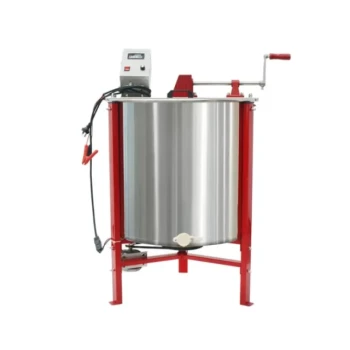
- Electric 8 Frame Honey Spinner Extractor Equipment for Beekeeping
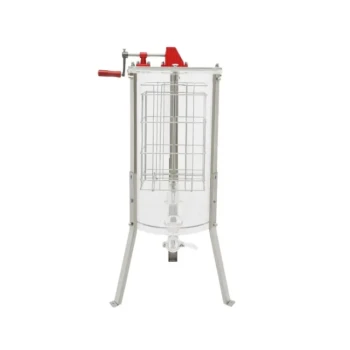
- HONESTBEE 2 Frame Manual Acrylic Honey Extractor Beekeeping Equipment
- Stainless Steel Manual 8 Frame Radial Honey Extractor Machine for Beehives
- Stainless Steel 3 Frame Manual Honey Extractor Spinner for Bee Honey Extraction
- HONESTBEE 8 Frame Electric and Manual Three Use Honey Extractor
People Also Ask
- What are the advantages of an electric honey extractor? Boost Efficiency and Scale Your Honey Production
- What are the characteristics of electric honey extractors? Boost Your Apiary Efficiency with Automated Technology
- What are the disadvantages of using an electric honey extractor? Weighing Cost, Power, and Comb Safety
- What are the features of an electric honey extractor? Boost Your Apiary's Productivity with Motorized Efficiency
- What are the technical advantages of electric honey extractors? Maximize Yield and Protect Your Bee Colony