The most common productivity constraint is not a lack of bee colonies—it is a lack of dependable, purpose-built equipment. Apiaries are most often constrained by shortages of hive tools, queen-management equipment, smokers, durable hive components, and honey-harvesting gear. When beekeepers must improvise, share, rent, or mix incompatible equipment, inspections slow down, colony management becomes less consistent, and expansion becomes difficult.
Distributors should offer complete, standardized beekeeping tool sets because equipment availability and compatibility directly determine apiary throughput. A coordinated product portfolio replaces improvised workflows with reliable, repeatable operations—from hive inspection and queen management to extraction and filling.
Which Equipment Shortages Constrain Apiary Productivity?
Hive tools and inspection equipment
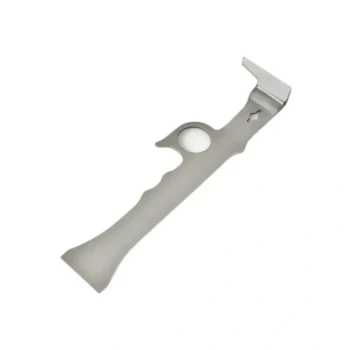
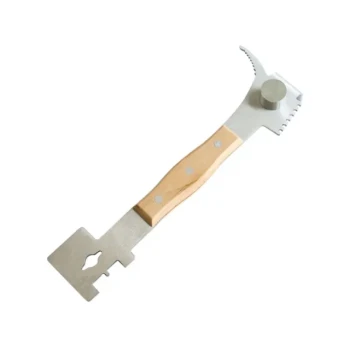
Reliable hive tools are essential for opening hives, separating components, inspecting colonies, and performing routine maintenance. Shortages often force beekeepers to use improvised tools or share a limited number of tools across teams.
This creates delays during inspections and increases the risk of damaging frames, hive components, or colonies. In larger apiaries, even small delays multiply across many hives and reduce the time available for critical seasonal work.
Queen catchers and queen-management tools
Queen catchers and related precision tools support controlled queen handling during inspections, replacement, breeding, and colony management. Without them, beekeepers may avoid or postpone modern queen-management practices.
The result is less consistent colony supervision and a lower ability to address queen quality or colony organization problems efficiently.
Queen excluders and hive-management components
Queen excluders, frames, supers, covers, and other hive components must work together as a system. When these components are unavailable or vary in specification, routine management becomes slower and interchangeability is lost.
This is especially disruptive for migratory or commercial operations, where equipment must be loaded, moved, inspected, repaired, and redeployed quickly.
Smokers and protective operating tools
Smokers are basic but operationally critical. A shortage of dependable smokers can interrupt inspections and make handling colonies less controlled.
Because smokers are frequently used and exposed to heat, smoke, and field conditions, poor durability can create recurring downtime and replacement costs.
Extraction and harvesting equipment
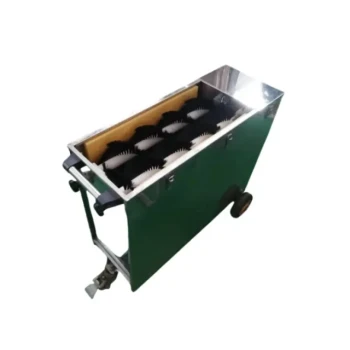
Harvesting gear, including extraction and honey-filling equipment, is another major bottleneck. If colonies produce honey faster than the apiary can process it, harvesting becomes a downstream constraint on overall productivity.
Reliable extraction and filling equipment helps convert field production into consistent, marketable products while supporting quality control and efficient order fulfillment.
Why Improvised and Shared Equipment Reduces Output
Workflow delays accumulate across the apiary
A single missing tool may delay one task; a shortage across an entire operation disrupts the workflow. Teams may need to wait for equipment, transport tools between apiaries, or reschedule inspections and harvesting.
These delays are particularly costly during peak nectar and pollen collection periods, when timely colony management has the greatest operational value.
Inconsistent tools create inconsistent procedures
Different tool designs, hive dimensions, and equipment specifications make it harder to establish uniform operating procedures. Beekeepers may perform the same task differently from one site or team to another.
Standardized hardware gives operators a common physical and procedural framework for inspections, maintenance, feeding, monitoring, and harvesting.
Poor durability increases total operating cost
Low-quality or improvised tools may appear inexpensive initially, but frequent breakage and replacement create hidden costs. Equipment failure also causes labor downtime at the moment when the tool is needed.
Commercially manufactured tools are intended to provide more consistent performance and longer service life, supporting more predictable maintenance planning.
Why Distributors Should Offer Complete Tool Sets
One-stop sourcing removes operational gaps
A complete portfolio allows customers to source hive tools, queen-management equipment, smokers, hive components, and harvesting systems through one supplier. This is more valuable than selling isolated products when a missing item can prevent an entire workflow from operating.
For distributors and wholesalers, one-stop sourcing also simplifies purchasing for commercial apiaries and reduces the customer’s need to coordinate multiple vendors.
Standardization improves interchangeability
Uniform frames, supers, covers, and related components can be used across compatible colonies and apiary locations. This simplifies maintenance, quarantine inspections, migratory loading, and equipment replacement.
Standardized equipment also makes it easier to connect hive operations with downstream extractors, filling machines, and other processing equipment.
Complete sets support predictable expansion
An apiary can scale more reliably when additional colonies, teams, and locations use the same equipment specifications. Operators can train staff against common procedures and deploy replacement components without redesigning the workflow.
For distributors, standardized sets make product selection easier and create a clear path from starter operations to commercial-scale supply.
Integrated equipment improves service value
A complete set allows distributors to sell a solution rather than a collection of unrelated products. Customers benefit from coordinated product recommendations, clearer technical support, and fewer compatibility problems.
This is where rapid response, professional expertise, and dedicated customer service become commercially important: the distributor helps the buyer maintain continuity from purchase through operation.
How Standardization Improves Commercial Apiaries
It supports uniform colony management
Standardized hives provide a consistent physical environment for monitoring, supplementary feeding, baiting, and other management practices. This gives commercial operators a more controlled basis for comparing colony performance and allocating resources.
Uniform tools also help transform complex field work into repeatable technical procedures.
It improves maintenance and reduces downtime
When components are interchangeable, operators can replace damaged frames, covers, supers, or hardware without searching for a unique substitute. Maintenance becomes faster and equipment remains in service longer.
This reduces downtime and helps commercial apiaries maintain consistent operating capacity.
It strengthens harvesting and product quality control
Standardized extraction, processing, and filling equipment supports more consistent handling of honey and other hive products. Consistency is important when products must meet defined customer, national, or international market requirements.
A coordinated equipment system also helps prevent harvesting capacity from becoming a bottleneck after successful colony production.
It enables more efficient resource planning
Complete machinery and tool systems help apiaries allocate labor and equipment according to colony conditions and seasonal production cycles. This is especially important during peak foraging and harvesting windows.
The goal is not simply to own more equipment, but to ensure that every critical stage has the appropriate tool available when required.
Understanding the Trade-offs
“Complete” does not mean one identical package for every buyer
A small apiary, migratory operation, and industrial honey farm have different equipment requirements. Distributors should offer modular sets based on colony count, operating method, harvesting volume, and expansion plans.
Over-supplying a small customer can tie up capital, while under-supplying a commercial customer recreates the original bottleneck.
Standardization requires compatibility discipline
Standardization only creates value when specifications are genuinely compatible. Distributors should clearly define dimensions, intended use, equipment interfaces, and replacement availability.
Selling visually similar but incompatible components can create more operational friction than selling fewer, clearly specified products.
Equipment alone does not guarantee productivity
Tools provide the physical foundation for efficient work, but output also depends on colony health, management skill, weather, forage availability, labor, and appropriate consumables. Equipment should therefore be positioned as part of an operating system rather than as a standalone productivity guarantee.
Inventory breadth must be matched by fulfillment reliability
A broad catalog has limited value if essential items are frequently unavailable or orders are slow to complete. Distributors need dependable stock planning, rapid quotations, efficient fulfillment, and responsive after-sales support.
For B2B customers, reliable delivery can be as important as product quality because a missing smoker, queen catcher, or replacement component may stop field work.
Making the Right Choice for Your Goal
A distributor’s best offer combines product completeness with technical guidance, compatibility assurance, and dependable delivery.
- If your primary focus is reducing apiary downtime: Offer coordinated sets that include essential inspection, queen-management, smoking, hive-component, and harvesting equipment.
- If your primary focus is supporting commercial expansion: Prioritize standardized, interchangeable components and modular packages that can scale across colonies, sites, and teams.
- If your primary focus is serving wholesalers and resellers: Build a full-spectrum portfolio with clear specifications, replacement availability, fast response times, and efficient order fulfillment.
- If your primary focus is improving honey-processing consistency: Combine compatible extraction and filling equipment with standardized hive-management hardware and appropriate technical support.
- If your primary focus is increasing customer retention: Provide one-stop sourcing, professional product recommendations, dedicated service, and dependable delivery rather than isolated low-cost items.
The right standardized tool set turns equipment availability from an operational weakness into a platform for consistent, scalable apiary productivity.
Summary Table:
| Equipment Category | Examples | Impact of Shortage | Solution |
|---|---|---|---|
| Hive Tools & Inspection | Hive tools, frame grips | Delayed inspections, frame damage | Provide durable, standardized hand tools |
| Queen Management | Queen catchers, marking kits | Poor queen handling, inconsistent breeding | Offer ergonomic, precision tools |
| Hive Components | Excluders, supers, frames | Slow management, non-interchangeable parts | Ensure compatible, uniform spec components |
| Smokers & Protection | Smokers, protective gear | Interrupted inspections, safety risks | Supply robust, easy-to-use smokers & gear |
| Extraction & Harvesting | Extractors, uncapping knives | Downstream bottleneck, inconsistent quality | Include complete processing equipment sets |
At HONESTBEE, we help distributors and commercial apiaries solve productivity constraints with a full-spectrum beekeeping supply chain. By offering complete, standardized tool sets—from hive management to extraction—we reduce downtime, improve interchangeability, and support predictable expansion. Our quick response, dedicated support, and ultra-fast delivery ensure your customers never face equipment shortages. Contact us today to streamline your portfolio and boost profitability. Get in Touch
Related Products
- HONESTBEE 15-in-1 Beekeeper Multi-Tool with Hammer and Pliers for Beekeeping
- Stainless Steel J Hook Hive Tool for Beekeeping
- Stainless Steel Queen Grafting Tool for Beekeeping and Bee Queen Grafting
- HONESTBEE Advanced Ergonomic Stainless Steel Hive Tool for Beekeeping
- Ergonomic Plastic Frame Spacer Tool for Rapid Hive Management Beekeeping
People Also Ask
- What is the recommended method for storing beekeeping tools? Expert Vertical Storage Solutions for Your Apiary
- How does a favorable microclimate interact with beekeeping tools? Boost Overwintering Success and Equipment Longevity
- Why is the treatment of beekeeping tools with high-concentration chemical disinfectants necessary for preventing AFB?
- What role do specialized beekeeping tools play in pest management? Enhance Apiary Health with Precision Tech
- How do specialized beekeeping tools and high-specification protective equipment assist in colony health management?