To winterize a beehive effectively, you must install hardware that serves three specific functions: pest exclusion, wind protection, and moisture ventilation. The essential components are mouse guards to seal the entrance against rodents, windbreaks or protective wraps to shield the colony from thermal shock, and ventilation shims or quilt boxes to manage internal humidity.
The greatest threat to a winter colony is often not the cold itself, but the combination of moisture and drafts. Your hardware choices must create a system that excludes pests and blocks wind while simultaneously allowing the hive to "breathe" to prevent condensation.
Hardware for Pest Exclusion
The Necessity of Mouse Guards
As temperatures drop, the warmth of the hive attracts rodents looking for a nesting site. You must install mouse guards at the hive entrance. Without this physical barrier, mice can enter, destroy the comb, and disturb the winter cluster, leading to colony failure.
Calibrating Mesh Size
While commercial guards are available, you can also utilize hardware mesh. It is critical that the mesh size is calibrated correctly. It must be small enough to block mice and shrews but large enough to allow bees to exit. Bees require this access for "cleansing flights"—brief trips outside to eliminate waste—during unseasonably warm winter days.
Managing Moisture and Ventilation
The Mechanics of Moisture Control
Bees generate heat by metabolizing honey, which produces moisture. If this warm, moist air hits a cold hive lid, it condenses and drips back onto the bees, which is often fatal. Hardware solutions must facilitate the escape of this moist air.
Top Ventilation Hardware
To create an exhaust for humidity, you can install a shim—a wooden ring approximately 1 to 2 inches tall—placed near the top of the hive. This shim should have a small upper entrance. Alternatively, you can use a quilt box filled with absorbent material or simply place small sticks under the outer lid to create a dedicated air gap.
Protection from Wind and Cold
Establishing Windbreaks
Reducing wind chill is vital for energy conservation. The primary recommendation is to move hives to a naturally protected location or install physical windbreaks nearby. If moving the hive is not possible, hay bales or fencing can serve as effective stationary wind blocks around the apiary.
Hive Wrapping Materials
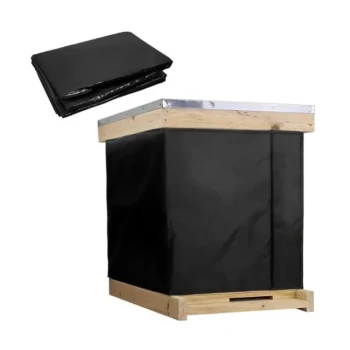
For direct insulation, hives can be wrapped in foam insulation boards or specialized bee wraps. A highly effective and accessible method is wrapping the hive in tar paper.
The Advantage of Tar Paper
Tar paper serves a dual purpose. First, it acts as a windbreak against the hive walls. Second, because it is dark-colored, it absorbs solar radiation on sunny days, providing passive heat. Crucially, tar paper is more breathable than plastic, reducing the risk of trapping moisture inside the hive.
Entrance Reduction
In addition to mouse guards, you should use entrance reducers. By physically shrinking the size of the opening, you limit the volume of cold air entering the bottom of the hive, making it easier for the colony to maintain its core temperature.
Understanding the Trade-offs
Insulation vs. Ventilation
There is a common pitfall in over-insulating a hive. If you wrap a hive too tightly in non-breathable materials (like plastic) without providing a top vent, you create a "sweat box." The hardware you select must balance thermal retention with airflow.
Timing of Installation
Installing hardware too early can lead to overheating; installing it too late risks rodent intrusion. Protective measures, particularly wrapping, are best applied around the time of the first hard freeze.
Making the Right Choice for Your Goal
To select the correct hardware configuration, assess your local climate and specific risks:
- If your primary focus is Pest Prevention: Prioritize properly sized metal mouse guards or hardware mesh that allows for cleansing flights.
- If your primary focus is Moisture Management: Install a quilt box or a shim with a top entrance to ensure humid air can escape.
- If your primary focus is Thermal Efficiency: Wrap the hive in tar paper to block wind and absorb heat without sacrificing breathability.
Success in winterizing comes from a holistic approach where pest guards, windbreaks, and ventilation work together to keep the colony dry and undisturbed.
Summary Table:
| Hardware Component | Primary Function | Key Benefit |
|---|---|---|
| Mouse Guards | Pest Exclusion | Prevents rodents from destroying comb and disturbing the cluster. |
| Ventilation Shims | Moisture Control | Allows humid air to escape, preventing fatal condensation drip. |
| Tar Paper / Wraps | Wind Protection | Provides a thermal barrier and absorbs solar heat while remaining breathable. |
| Entrance Reducers | Heat Retention | Minimizes cold air intake to help bees maintain internal temperatures. |
| Quilt Boxes | Insulation & Venting | Absorbs excess moisture while providing an extra layer of top insulation. |
Secure Your Apiary for Winter with HONESTBEE
Protecting your investment requires professional-grade equipment that balances insulation with airflow. HONESTBEE specializes in supporting commercial apiaries and distributors with a comprehensive wholesale range of beekeeping tools, hive-making machinery, and essential consumables.
Whether you need precision-engineered mouse guards, specialized hive-making hardware, or honey-processing machinery, we provide the industrial-strength solutions your business demands.
Ready to scale your beekeeping operations?
Contact HONESTBEE Today to discuss our wholesale offerings and discover how our global supply chain can benefit your business.
Related Products
- Professional Insulated Winter Hive Wrap for Beekeeping
- Steel Round Disc Entrance Reducer for Flexzion Bee Hive Nuc Box Gate
- Stainless Steel Honey Bee Smoker Hive and Honeycomb Smoker for Beekeeping
- Metal Bee Hive Stand Bee Box Stand for Beekeeping
- Precision Stainless Steel Frame Cleaner for Hive Grooves and Corners
People Also Ask
- What are the steps to properly wrap a beehive for winter? Ensure Your Colony Survives the Cold
- When is the best time to wrap a beehive for winter? A Guide to Perfect Winterization Timing
- How do professional insulation wraps provide protection for bee colonies? Optimize Winter Survival & Energy Efficiency
- What are the technical benefits of using winter wraps for beehive insulation? Boost Colony Survival & Hive Health
- What are the benefits of using insulated covers for hives? Ensure Colony Survival and Health