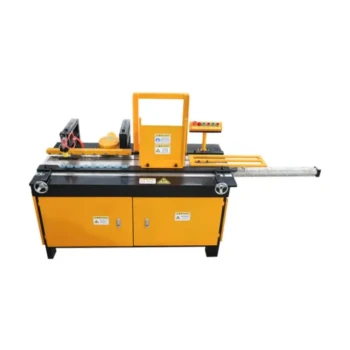
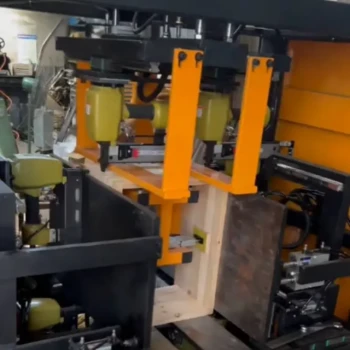
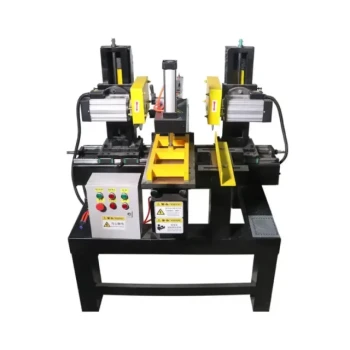
For large-scale migratory beekeeping, the essential setup combines precision hive-making machinery with standardized, transport-ready hardware. The machinery must produce interchangeable hive bodies, frames, covers, and bottom boards with consistent dimensions, strong joints, and durable finishes. The hardware must then secure stacked colonies, provide ventilation during transit, resist vibration and weather, and support rapid loading, unloading, inspection, and maintenance.
Core takeaway: Migratory apiaries need a standardized equipment system, not isolated hive products. Precision manufacturing enables interchangeable components, while heavy-duty transport hardware protects colonies and reduces handling, repair, and fulfillment costs at scale.
Why Standardization Is the Foundation
Interchangeable hive components
Every hive body, frame, bottom board, and cover should follow consistent dimensions and tolerances. This allows replacement parts to move across apiaries and regions without extensive adjustment.
Standardization is especially important when operations manage thousands of colonies. It supports faster repairs, simpler inventory planning, and more efficient mechanized handling.
Secure stacking during transport
Hive boxes must stack accurately and remain stable when exposed to vibration, loading impacts, rough roads, and repeated movement. Consistent box dimensions help create uniform transport stacks and reduce shifting.
Strong corner joints, rigid walls, and compatible fastening points are essential for maintaining structural integrity over repeated journeys.
Compatibility with mechanized management
Uniform hive and frame dimensions support forklifts, loaders, pallets, extraction systems, and other commercial handling equipment. Dimensional variation can slow operations and create gaps, misalignment, or unsafe loads.
Standardized frames are also important for large-scale inspection, colony rotation, and mechanized honey-processing workflows.
Essential Hive-Making Machinery
Precision wood-cutting equipment
Industrial table saws, panel saws, or CNC cutting systems produce accurately sized hive bodies, covers, bottom boards, and frame components. Dimensional accuracy is the first requirement for interchangeable parts.
The machinery should support repeatable production across different box sizes and component specifications.
Planing, moulding, and profiling machinery
Planers and moulders bring timber to uniform thickness and create repeatable edges, rebates, handles, grooves, and other profiles. Consistent surfaces improve box assembly and reduce gaps between components.
These machines also help prepare materials for standardized frame rests and secure stacking interfaces.
Finger-joint and corner-joint equipment
Finger-joint or other reinforced corner-joint machinery is valuable for producing hive boxes that withstand repeated lifting and transport. Strong corners reduce splitting, racking, and box deformation.
The selected jointing system should match the material, adhesive process, production volume, and expected exposure to moisture.
Drilling, routing, and machining systems
Drilling and routing equipment creates consistent entrances, ventilation openings, handholds, frame rests, fastening points, and hardware recesses. CNC routing can improve repeatability when production volumes are high.
These details must be positioned consistently so that boxes, covers, bottom boards, and migration screens remain compatible.
Frame assembly machinery
Frame production requires accurate cutting, groove or wedge preparation, assembly, and fastening. Semi-automatic or automated frame assembly equipment can improve throughput and reduce variation in frame geometry.
A reliable frame system helps prevent poor fit, comb distortion, and excessive movement during transport.
Nailing, stapling, and fastening equipment
Pneumatic or automated fastening systems accelerate hive-body and frame assembly while producing consistent fastening patterns. Fastener placement should provide sufficient joint strength without splitting the wood.
For commercial operations, equipment should be selected around production volume, maintenance availability, and compatibility with the chosen fastener type.
Sanding and surface-finishing equipment
Sanding systems prepare hive surfaces for coatings and remove sharp edges that can interfere with handling. Finishing equipment may include spray, dipping, or brushing systems, depending on the coating process.
Coatings should improve weather resistance without compromising colony safety. Drying and curing capacity must be included in production planning.
Quality-control and measurement equipment
Calipers, gauges, templates, squareness fixtures, moisture meters, and inspection benches are essential for maintaining production tolerances. Quality control should cover component dimensions, joint strength, frame fit, coating quality, and ventilation openings.
For B2B supply, documented inspection standards and batch traceability help distributors and commercial apiaries manage repeat orders confidently.
Standardized Beekeeping Hardware Required
Heavy-duty hive boxes
Migratory boxes should use durable wood or suitable composite materials with strong corner joints, rigid walls, and reliable handholds. They must tolerate repeated stacking, lifting, vibration, and exposure to changing weather.
Boxes should be supplied in consistent specifications so damaged units can be replaced without disrupting the broader apiary system.
Strong, transport-stable frames
Frames need accurate dimensions, secure assembly, and sufficient rigidity to prevent comb movement or collapse during long-distance transport. Poorly fitting or weak frames increase colony stress and damage risk.
Frame specifications should remain consistent across all production batches and replacement orders.
Ventilated migration covers and screens
Migration covers or screens must allow adequate airflow while preventing bee escape and maintaining stack security. Ventilation is particularly important when colonies are transported in warm conditions or remain confined for extended periods.
The design should avoid openings that permit excessive movement, rain intrusion, or contact between adjacent colonies.
Ventilated bottom boards
Bottom boards should combine structural strength with controlled ventilation. They must support the hive body, tolerate handling, and help reduce overheating during transit.
Ventilation features should be compatible with the cover, hive body, and transport method rather than treated as a separate component.
Hive straps and fastening systems
Heavy-duty straps, buckles, clamps, and compatible fasteners should secure individual hives and complete stacks. They must resist tension, abrasion, weather exposure, and repeated installation.
A standardized fastening system shortens loading time and reduces the risk of unsecured boxes during road transport.
Secure covers and anti-shift features
Covers should fit accurately and resist lifting or displacement under vibration. Recesses, locking interfaces, cleats, or compatible straps can help prevent movement between stacked components.
Hardware should be easy to inspect and replace without requiring special tools whenever possible.
Handling and loading equipment
Commercial migratory operations commonly require forklifts, loaders, hive carriers, pallets, and other equipment for moving stacked colonies. Hive dimensions and hardware should be designed around the lifting method used by the operator.
Compatibility between hive bases, pallets, vehicle decks, and lifting attachments improves loading speed and reduces manual handling.
Vehicle and recovery hardware
Long-distance apiaries may operate on rough or muddy access roads. Heavy-duty winches, towing equipment, tie-down systems, and recovery accessories can help extract vehicles and protect loads when sites are difficult to access.
These items support logistics reliability but do not replace proper route planning, vehicle capacity checks, or safe load-securing procedures.
Protective gear and hive consumables
Commercial supply programs should also cover bee suits, gloves, veils, smokers, hive tools, replacement fasteners, wire, foundation-related components, and maintenance materials.
A one-stop product portfolio reduces procurement complexity and helps apiaries maintain consistent specifications across multiple locations.
Features That Matter to Distributors and B2B Buyers
Consistent product specifications
Suppliers should provide clear dimensions, material descriptions, joint details, hardware compatibility, and packaging information. Consistent specifications make it easier for wholesalers and resellers to build dependable product lines.
The most useful suppliers can reproduce the same components across repeat orders rather than treating every shipment as a new design.
Scalable production capacity
Machinery should support both standard stock items and larger contract orders. Production planning must account for cutting, assembly, finishing, curing, inspection, packing, and dispatch capacity.
A supplier’s quoted production volume is meaningful only when it is supported by sufficient machinery, labor, quality control, and raw-material availability.
Efficient order fulfillment
Migratory operations often require equipment before a narrow pollination or nectar-flow window. Fast response times, accurate order confirmation, consolidated shipping, and reliable packaging directly affect operational readiness.
Distributors should prioritize suppliers that can coordinate complete equipment packages rather than shipping unrelated components with inconsistent specifications.
Export-ready packaging and documentation
Hive components should be packed to prevent warping, impact damage, moisture exposure, and hardware loss during transit. Labels and packing lists should identify sizes, quantities, batches, and compatible parts.
Clear documentation reduces receiving errors and speeds warehouse distribution.
Understanding the Trade-offs
Wood versus composite materials
Wood offers familiar handling characteristics and is widely used for hive components, but it requires moisture control, finishing, and inspection for warping or splitting. Composite materials may improve consistency or weather resistance, but they can involve different costs, tooling, repair methods, and market acceptance.
The correct choice depends on climate, transport frequency, customer preference, and available maintenance capability.
Automation versus flexibility
Automated machinery improves throughput, repeatability, and labor efficiency. However, it may require higher capital investment and can be less economical when product specifications change frequently.
Semi-automated equipment may be more practical for suppliers serving multiple hive standards or smaller regional markets.
Ventilation versus environmental protection
More ventilation can reduce overheating during transport, but poorly designed openings may expose colonies to rain, drafts, pests, or excessive disturbance. Migration covers and bottom boards should balance airflow with protection.
Ventilation performance must be evaluated together with stacking design, travel duration, climate, and vehicle conditions.
Heavy-duty construction versus transport weight
Stronger boxes and hardware generally improve durability, but excessive weight increases handling demands, vehicle load, and fuel consumption. Components should be robust enough for repeated migration without adding unnecessary material.
The goal is a durable system optimized for the complete transport chain, not simply the heaviest possible hive.
Standardization versus regional requirements
A single standardized product line simplifies inventory and mechanized handling. However, hive dimensions, climate conditions, transport practices, and customer preferences can differ by market.
Suppliers should maintain a controlled range of compatible standards rather than offering uncontrolled variations that undermine interchangeability.
Common Pitfalls to Avoid
Mixing incompatible hive dimensions
Combining boxes, frames, covers, or bottom boards from different specifications can create gaps, unstable stacks, and inefficient maintenance. Product catalogs should clearly identify compatible component families.
Treating ventilation as an afterthought
A strong box without appropriate migration ventilation may still expose colonies to overheating during confinement. Ventilated covers and bottom boards should be designed as part of the complete hive system.
Underestimating repeated transport stress
Equipment that performs adequately in a stationary apiary may fail after repeated lifting, vibration, and loading. Commercial products should be evaluated for joint strength, fastening durability, stack stability, and weather exposure.
Focusing only on manufacturing output
High production volume does not guarantee usable equipment. Dimensional inspection, material quality, coating consistency, packaging, and after-sales replacement availability are equally important.
How to Apply This to Your Sourcing Strategy
The most effective procurement approach is to source a compatible equipment system rather than individual hive items.
- If your primary focus is large-scale colony transport: Prioritize heavy-duty stackable boxes, reinforced frames, ventilated migration covers and bottom boards, straps, and loader-compatible dimensions.
- If your primary focus is manufacturing efficiency: Invest in precision cutting, profiling, jointing, frame assembly, fastening, finishing, and measurement equipment with repeatable production controls.
- If your primary focus is distributor or wholesale supply: Build a full-spectrum portfolio of standardized hive components, transport hardware, protective gear, consumables, replacement parts, and export-ready packaging.
- If your primary focus is rapid order fulfillment: Select suppliers with scalable production, documented specifications, reliable inventory planning, responsive communication, and consolidated shipping capabilities.
- If your primary focus is long-term operating durability: Evaluate joint strength, material quality, moisture resistance, ventilation design, fastener performance, and replacement-part compatibility.
A standardized, transport-ready equipment platform gives migratory beekeeping operations the durability, speed, and operational control needed to scale confidently.
Summary Table:
| Category | Key Features |
|---|---|
| Hive-Making Machinery | Precision cutting, jointing, assembly, and finishing equipment for standardized components |
| Beekeeping Hardware | Heavy-duty boxes, frames, ventilation, straps, and transport-compatible accessories |
| Operational Support | Quality control, documentation, and training for consistent production and use |
Optimize your migratory beekeeping operation with HONESTBEE.
As a premier wholesale supplier, we provide a comprehensive range of standardized hive-making machinery and transport-ready hardware. Our full-spectrum product portfolio, backed by rapid response, expert support, and ultra-fast delivery, ensures your large-scale operations run smoothly. Whether you need precision machinery or durable hive components, our one-stop sourcing and OEM/ODM support guarantee supply reliability and high margins. Contact us today for tailored solutions and bulk pricing.
Related Products
- High-Efficiency Pneumatic Bee Hive Making Machine for Rapid Box Assembly
- Beehive Handle and Frame Rest Cutting Machine: Your Specialized Hive Machine
- Mini Desktop Bee Hive Frame Forming Making Machine
- Automatic High-Speed Bee Hive Box Stapling Machine
- Beehive Machine Double End Saw for Precision Hive Component Manufacturing
People Also Ask
- How does the introduction of professional beehive-making machinery benefit sustainable beekeeping? Scale Your Apiary
- Why is specialized beehive-making machinery critical for low-defense breeding? Enhance Selection with Precision Tools
- How does the introduction of specialized beehive making machinery contribute to increasing the scale of regional beekeeping industries?
- What is the importance of specialized beehive making machinery in a circular bio-economy? Build Local Sustainability
- Why is specialized beehive-making machinery essential? Scale Your Apiary with Precision Industrial Standards