An efficient commercial honey line requires more than an extractor. The essential setup combines movable frames with beeswax foundation, bee-removal tools, uncapping equipment, a food-grade centrifugal extractor, filtration, storage, controlled heating, and bottling machinery. For high-volume operations, automated filling and packaging equipment provides the speed and consistency required for commercial distribution.
Core takeaway: Design the line as a continuous workflow—from clearing bees and uncapping frames to extraction, filtration, storage, and filling. Food-grade stainless-steel equipment, compatible capacities, and careful temperature control are the foundations of efficient, scalable honey processing.
Build the Line Around a Logical Workflow
Start with movable frames and foundation
Movable comb frames allow operators to remove honey-filled combs, process them efficiently, and return the intact comb to the colony.
Standardized beeswax foundation sheets guide bees to build uniform comb within the frames. This improves frame compatibility and supports repeatable commercial harvesting.
Clear bees before extraction
Bee-removal equipment should be used before supers or frames enter the processing area. Common options include bee escapes, fume boards, and bee brushes.
This step reduces bee interference during uncapping and helps protect operators, equipment, and the surrounding work area.
Uncap the honeycomb
The first mechanical processing stage is removing the wax cappings that seal mature honey inside the cells.
Essential equipment includes:
- Uncapping trays or tanks for supporting frames and collecting cappings
- Manual or electrically heated uncapping knives
- Cappings scratchers or uncapping rollers for difficult areas
- Cappings collection containers for subsequent beeswax recovery
For higher throughput, a dedicated stainless-steel uncapping machine can reduce manual labor and create a more consistent feed into the extractor.
Select the Correct Honey Extraction Equipment
Use a centrifugal honey extractor
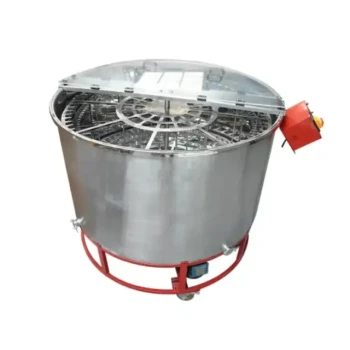
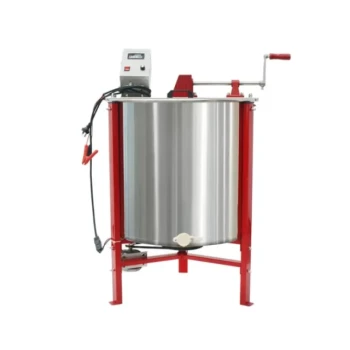
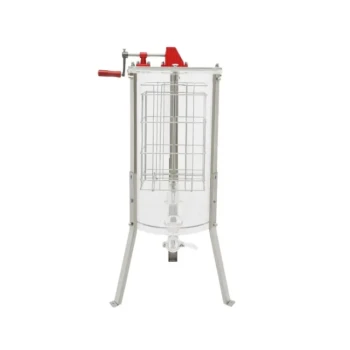
The centrifugal honey extractor is the central machine in a commercial extraction line. It uses rotational force to remove liquid honey from uncapped cells while preserving the wax comb.
Preserving the comb is commercially important because intact frames can be returned to colonies for reuse, reducing the need to rebuild comb after every harvest.
Choose radial or tangential extraction
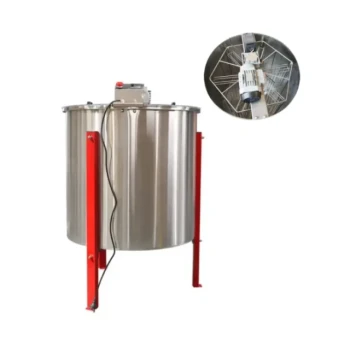
Radial extractors position frames around the outer wall and can process multiple frames efficiently, making them suitable for higher-volume operations.
Tangential extractors expose one side of each frame at a time and may require turning the frames during extraction. They can be practical for smaller operations or specific frame configurations.
The correct choice depends on frame size, expected harvest volume, available labor, and the desired level of automation.
Match extractor capacity to the line
An extractor should not become the bottleneck between uncapping and filtration. Its frame capacity and discharge rate should be compatible with the uncapping equipment, storage tanks, filters, and filling machines.
For commercial buyers and distributors, capacity matching is as important as the individual machine specification because an oversized extractor cannot compensate for undersized downstream equipment.
Add Filtration, Heating, and Storage
Filter raw honey before storage
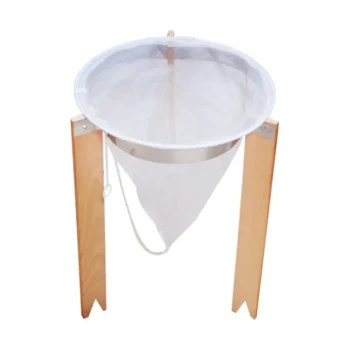
Freshly extracted honey commonly contains wax particles and other solid material. Fine honey strainers, sieves, or multi-stage filtration units remove these materials before the honey enters storage or packaging.
Filtering improves appearance and product consistency, but the filtration system should be selected according to the honey type and the desired level of processing.
Control viscosity with heating equipment
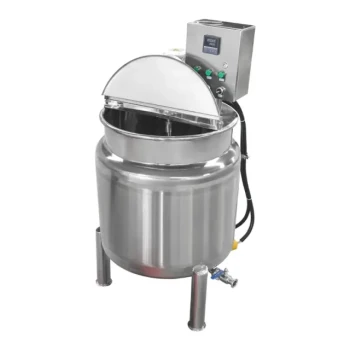
Honey becomes more difficult to transfer and fill when its viscosity is high. Heating cabinets, hot-water systems, or steam-based equipment can help manage viscosity and support smooth processing.
Heat must be controlled carefully. Excessive heating can compromise honey quality, so the heating system should provide even, adjustable temperature management rather than uncontrolled high heat.
Recover beeswax efficiently
A wax melter or cappings-processing system allows operators to recover beeswax from removed cappings and residual comb material.
For larger operations, steam or hot-water boilers may supply heat for wax processing and other controlled heating tasks. These systems should be integrated with appropriate safety controls and food-production hygiene procedures.
Use dedicated food-grade storage tanks
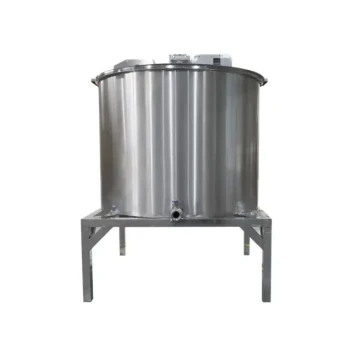
Filtered honey should move into food-grade storage tanks or bottling tanks equipped with suitable outlet valves.
Stainless-steel construction is generally preferred for commercial processing because it supports sanitation, corrosion resistance, durability, and easier integration with filling equipment.
Complete the Bottling and Packaging Stage
Install a controlled filling system
A bottling bucket with a honey gate may be adequate for smaller operations. Commercial facilities typically benefit from a dedicated filling tank and automated honey-filling machine.
Automated fillers improve portion consistency, reduce handling, and increase throughput for standard retail containers.
Add packaging equipment for scale
High-volume lines may require:
- Bottle or container handling equipment
- Automatic or semi-automatic filling machines
- Capping equipment
- Labeling systems
- Packaging and case-packing equipment
For monofloral products such as Acacia or Chestnut honey, an integrated filling and packaging system helps maintain consistent presentation across large production runs.
Plan for traceability and product separation
Storage and filling arrangements should support separation by floral source, harvest batch, and product specification.
This is especially important for wholesalers and distributors handling multiple honey varieties, private-label products, or different packaging formats.
Support Field and Apiary Operations
Use mobile extraction capability where necessary
A mobile extracting unit can bring extraction equipment closer to the apiary, reducing the need to transport large quantities of honey supers.
Mobile systems are useful when apiaries are geographically dispersed or when rapid harvest turnaround is a priority.
Provide independent power where required
Remote extraction sites may require an electric generator to operate extractors, uncapping tools, pumps, or other powered equipment.
Power requirements should be evaluated before equipment procurement so the generator can support the intended machinery without disrupting production.
Keep essential manual tools available
Even highly automated facilities need basic tools for flexibility and maintenance. The operating toolkit should include:
- Protective gloves and other suitable protective gear
- Bee brushes, escape boards, or fume boards
- Uncapping knives and scratchers
- Food-grade buckets and containers
- Fine mesh sieves or replacement filter media
- Bottles, caps, labels, and cleaning equipment
These tools provide operational resilience when handling small batches, unusual frames, maintenance work, or field harvesting.
Understanding the Trade-offs
Automation versus investment
Automated uncapping, extraction, filling, and packaging equipment can substantially reduce manual labor and improve throughput.
However, automation increases capital cost, installation requirements, maintenance demands, and the importance of matching every stage of the line.
Manual versus powered extraction
Manual extractors and bottling buckets may be economical for smaller operations or seasonal use.
Powered extractors and automated fillers are more appropriate when labor costs, order volume, delivery commitments, and consistent packaging output are major concerns.
Heating versus honey quality
Heating can make honey easier to filter, transfer, and fill, but poorly controlled heat can negatively affect product quality.
The appropriate system is therefore not simply the most powerful heater; it is a controlled heating solution that matches the honey’s viscosity and processing requirements.
Filtration versus processing speed
Finer filtration may produce a cleaner visual product, but it can also slow flow and increase filter-maintenance requirements.
Operators should choose filtration according to the product specification, packaging expectations, and required production rate rather than selecting the finest possible filter by default.
Stainless steel versus lower-cost materials
Food-grade stainless steel generally offers better durability, corrosion resistance, sanitation, and long-term compatibility with commercial processing.
Lower-cost alternatives may reduce initial expenditure, but they can create limitations in cleaning, service life, and professional market acceptance.
Making the Right Choice for Your Goal
A practical purchasing plan should prioritize the full workflow rather than isolated machines.
- If your primary focus is small-batch or seasonal processing: Start with movable frames, foundation sheets, bee-removal tools, an uncapping station, a suitable centrifugal extractor, filtration, and a food-grade bottling tank.
- If your primary focus is commercial throughput: Select powered uncapping and extraction equipment, multi-stage filtration, controlled heating, storage tanks, and automated filling and packaging machinery.
- If your primary focus is field-based harvesting: Consider a mobile extraction unit, compact food-grade equipment, and an appropriately sized electric generator.
- If your primary focus is wholesale and distribution: Prioritize stainless-steel equipment, batch-segregated storage, consistent filling, reliable packaging output, and a supplier capable of coordinated one-stop sourcing and rapid fulfillment.
- If your primary focus is premium honey quality: Use hygienic food-grade equipment, gentle and controlled heating, appropriate filtration, and storage systems that protect product consistency.
The right commercial honey line is a coordinated system in which every stage supports clean extraction, preserved comb, consistent quality, and reliable order fulfillment.
Summary Table:
| Equipment Category | Essential Tools | Purpose |
|---|---|---|
| Comb Foundation | Movable frames, beeswax foundation | Guide bees to build uniform comb for efficient harvesting |
| Bee Removal | Bee escapes, fume boards, brushes | Clear bees from frames before extraction |
| Uncapping | Uncapping knives, scratchers, trays | Remove wax cappings to expose honey |
| Extraction | Centrifugal honey extractor | Spin honey out of comb while preserving comb |
| Filtration | Strainers, sieves, multi-stage filters | Remove wax and impurities from raw honey |
| Heating | Heating cabinets, hot-water systems | Control viscosity for easier processing |
| Storage | Food-grade stainless steel tanks | Store filtered honey safely |
| Bottling | Filling tanks, automated filling machines | Package honey into containers consistently |
Ready to build your efficient honey processing line? HONESTBEE offers a comprehensive range of beekeeping equipment, from extractors to automated bottling systems. Our wholesale solutions support commercial apiaries and distributors with rapid delivery and dedicated service. Contact us today to optimize your operation and maximize your harvest yield. Let's work together to streamline your honey production!
Related Products
- Fully Automatic Honey Filling Packaging Machine for Processing Line
- 32 Frame Commercial Electric Honey Extractor for Beekeeping and Honey Production
- Electric Double Wall Honey Filtering Machine Purifier Equipment for Honey Processing Plant
- Honey Concentrating and Filtering Dehumidifier Machine 2T Capacity for Honey
- electric honey extractor honey centrifuge 3 frame honey extractor stainless steel honey frame extractor
People Also Ask
- Why are fully automatic honey filling and packaging lines essential? Boost Your Honey's Market Value and Quality
- What is a fully-automatic honey filler? Streamline Your Production with High-Precision Automation
- How do automated honey filling and packaging machines affect profitability? Boost Margins with HONESTBEE Technology
- How do automated honey filling and packaging machines contribute to the market value of honey products? Maximize Your ROI
- How do industrial-grade automated honey filling and packaging machines mitigate the risk of physical contamination?