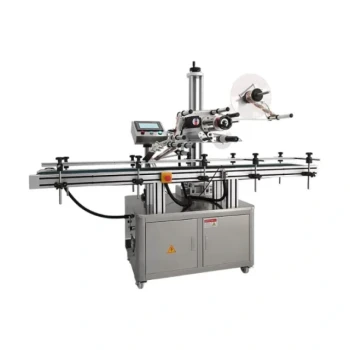
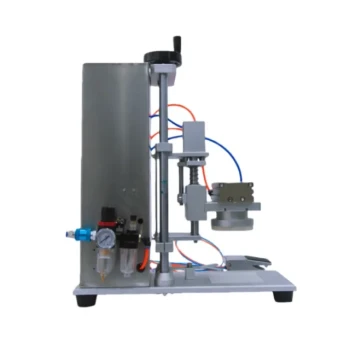
Successful packaging operations rely on a delicate balance of variables. The efficiency and output quality of your process are directly determined by the interplay between the machine's operating speed, the physical characteristics of the product itself, the properties of the packaging materials, and the surrounding environmental conditions.
True packaging efficiency is not achieved by maximizing a single variable like speed, but by harmonizing the machine's capabilities with the specific constraints of the product, materials, and production environment.
The Pillars of Packaging Performance
To troubleshoot issues or optimize throughput, you must evaluate four distinct categories that influence the packaging lifecycle.
Machine Operating Speed
The rate at which your equipment runs is the most obvious driver of efficiency. However, operating speed is not an isolated metric; it must be calibrated to match the limitations of the other factors in the line.
Running a machine beyond its optimal threshold often leads to increased error rates. Conversely, running too slowly creates bottlenecks that reduce overall profitability.
Product Characteristics
The physical nature of the item being packaged dictates how the machine must handle it. Two critical variables here are viscosity and density.
A highly viscous liquid requires different filling mechanisms and timing than a free-flowing water-like substance. Similarly, the density of a product affects how it settles into a container, which influences the speed at which you can seal the package without spillage or under-filling.
Material and Environmental Context
Beyond the machine and the product, external factors play a critical role in the integrity of the final package.
Packaging Material Properties
The material you choose must be compatible with both the product and the machine's mechanical stresses. Key properties include material strength and heat resistance.
If the material lacks sufficient strength, high-speed handling will cause tears or ruptures. Furthermore, if the material has poor heat resistance, the sealing process may fail, leading to leaks or compromised shelf-life.
Environmental Conditions
The atmosphere of your facility can silently erode efficiency. You must actively monitor temperature, humidity, and cleanliness.
High humidity can cause paper-based materials to warp or plastic films to become sticky, leading to jams. Temperature fluctuations can alter product viscosity or affect sealant efficacy, while a lack of cleanliness introduces contamination risks that can shut down production entirely.
Understanding the Trade-offs
Optimizing a packaging line requires accepting that these factors often work in opposition to one another.
Speed vs. Material Integrity
Pushing for higher operating speeds places exponential stress on packaging materials. If you increase speed without upgrading the strength of your packaging material, you will likely see a spike in waste due to damaged units.
Throughput vs. Product Stability
If you are packaging a product with complex characteristics (such as high viscosity), you may be forced to sacrifice speed to ensure accuracy. Attempting to force a dense or thick product through a system too quickly often results in inconsistent fill levels and quality control failures.
Making the Right Choice for Your Goal
To stabilize your process, identify your primary objective and adjust the variables accordingly.
- If your primary focus is Maximum Throughput: Prioritize machine operating speed, but ensure your packaging material has the strength to withstand the increased mechanical stress.
- If your primary focus is Product Consistency: Calibrate the machine specifically for the product's viscosity and density, even if it requires a slight reduction in operating speed.
- If your primary focus is Reliability in Harsh Conditions: Invest in materials with high heat resistance and strictly control facility temperature and humidity to prevent environmental downtime.
By auditing these four factors systematically, you can transform your packaging process from a source of friction into a competitive advantage.
Summary Table:
| Factor | Key Variable | Impact on Process |
|---|---|---|
| Machine Speed | Operating Rate | Determines throughput; must be balanced to avoid error rates and bottlenecks. |
| Product Traits | Viscosity & Density | Influences filling accuracy, settling time, and mechanical handling requirements. |
| Material Specs | Strength & Heat Resistance | Affects seal integrity and durability under high-speed mechanical stress. |
| Environment | Temp, Humidity & Hygiene | Prevents material warping, jams, and product contamination risks. |
Elevate Your Beekeeping Business with HONESTBEE
Optimizing your packaging process is essential for scaling your operations and maintaining product integrity. HONESTBEE specializes in supporting commercial apiaries and distributors by providing the high-performance tools and machinery needed to master these variables.
From precision honey-filling machines designed to handle varying viscosities to durable hive-making hardware and essential consumables, we offer a comprehensive wholesale portfolio tailored to the beekeeping industry. Whether you are looking to improve throughput with advanced machinery or expand your brand with honey-themed cultural merchandise, our experts are here to help.
Ready to transform your production efficiency? Contact HONESTBEE Today to Discuss Your Wholesale Needs
Related Products
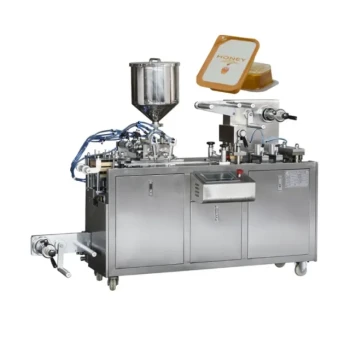
- Professional Durable Customizable Blister Packing Machine
- Precision Automated Packaging Turntable Honey Spoon Filling Sealing Packing Machine
- Automatic Single-Dose Snap & Squeeze Honey Sachets Packing Machine
- Fully Automatic Honey Filling Packaging Machine for Processing Line
- Pneumatic Paste Filling Machine Bottling Packaging Machine Single Nozzle
People Also Ask
- What is the purpose of a packaging machine? Boost Efficiency & Cut Costs for Your Business
- How do packaging machines improve efficiency? Boost Output and Slash Costs with Automation
- How many bags can the packaging machine make per minute? Unlock the Right Speed for Your Production Line
- What are the common types of packaging machines? A Guide to Filling, Sealing, Wrapping & Labeling
- How do I choose a packaging machine? A Systematic Guide to Aligning with Your Production Needs