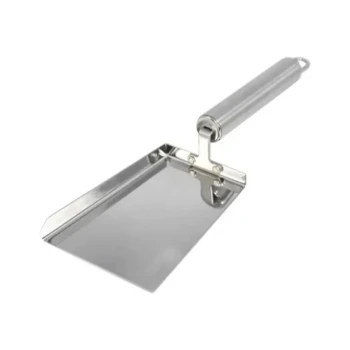
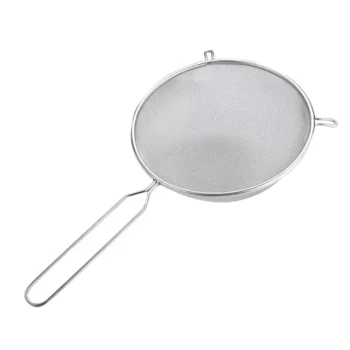
Standard grading sieve sets function as the primary mechanism for mechanical classification, utilizing precision mesh screens to separate bee pollen granules based on specific diameters. By passing mixed pollen through apertures of varying sizes—typically 0.5 mm, 1.0 mm, and 2.0 mm—these sets categorize the product into distinct grade levels while simultaneously removing unwanted impurities.
Core Takeaway: Grading sieves do not merely separate particles; they establish the commercial and nutritional standard of the final product. By isolating pollen into uniform size clusters and removing contaminants, these tools enable precise pricing strategies and ensure consistent quality.
The Mechanics of Classification
Precision Separation
The core function of the sieve set is diameter-based segregation.
The process utilizes a stack of screens with decreasing aperture sizes (e.g., 2.0 mm down to 0.5 mm).
As raw pollen passes through, it is physically sorted into clusters based on granule size, transforming a heterogeneous mixture into uniform batches.
Defining Grade Levels
Uniformity is critical for defining product grades.
By isolating granules into specific size ranges, producers can categorize the pollen into clearly defined tiers.
This classification allows for the standardization of the product, moving it from a raw agricultural harvest to a graded commercial commodity.
Commercial and Nutritional Implications
Facilitating Pricing Strategies
Sizing directly correlates to market value.
Once separated into grade levels, the bee pollen can be priced according to its specific classification.
This prevents the devaluation that occurs when high-quality large granules are mixed with dust or broken fragments.
Nutritional Value Assessment
Different granule sizes often carry different nutritional profiles.
Grading sieves facilitate the specific assessment of these clusters.
By analyzing separated batches, producers can provide more accurate data regarding the nutritional content of each grade level.
Purification and Quality Control
Removal of Impurities
Beyond sizing, sieves act as a critical filtration system.
The grading process removes non-pollen debris, ensuring the final output consists only of pure pollen granules.
This step is essential for meeting food safety standards and consumer expectations.
Pre-Drying Preparation
In the early stages of processing, specific screens (such as 6-mesh Taylor series standards) are used to target gross contaminants.
This step physically removes large solid waste, insect remains, and plant debris.
Effective screening at this stage prevents these contaminants from producing off-odors or degrading quality during the subsequent heating and drying phases.
Common Pitfalls to Avoid
Over-Agitation
While separation is the goal, mechanical force must be balanced.
Excessive vibration or agitation during sieving can fracture fragile pollen granules, inadvertently lowering the grade of the product.
Screen Maintenance
The accuracy of the grade depends entirely on the integrity of the mesh.
Clogged or damaged apertures will result in inconsistent sizing and potential contamination of high-grade batches with smaller particles or debris.
Making the Right Choice for Your Goal
The implementation of grading sieves should be dictated by your specific production objectives.
- If your primary focus is Commercial Revenue: Prioritize multi-stage sieving (0.5 mm to 2.0 mm) to create distinct product tiers that allow for targeted, premium pricing.
- If your primary focus is Product Purity: Ensure strict implementation of pre-drying screens (like the 6-mesh standard) to eliminate organic debris and prevent odor issues during processing.
Effective grading turns raw variability into consistent, measurable value.
Summary Table:
| Function | Key Mechanism | Benefit |
|---|---|---|
| Precision Separation | Multi-layer mesh screens (0.5mm - 2.0mm) | Categorizes pollen into uniform clusters by diameter. |
| Quality Grading | Tiered classification levels | Establishes standardized product tiers for premium pricing. |
| Purification | Pre-drying filtration (e.g., 6-mesh) | Removes solid waste, insect remains, and plant debris. |
| Consistency | Standardized aperture control | Ensures nutritional and physical uniformity across batches. |
Maximize the Value of Your Harvest with HONESTBEE
At HONESTBEE, we understand that precision is the difference between raw harvest and a premium commercial product. We provide commercial apiaries and distributors with high-performance beekeeping machinery, specialized grading tools, and comprehensive equipment designed to streamline your operations.
From industrial-grade honey-filling machines to precision sieve sets, our portfolio is built to enhance your productivity and product purity. Partner with us to access professional-grade hardware and essential consumables that meet global industry standards.
Ready to elevate your production quality?
Contact HONESTBEE Today for Wholesale Solutions
References
- Adriana Fava Negrão, Ricardo de Oliveira Orsi. Influence of the Collection Season on Production, Size, and Chemical Composition of Bee Pollen Produced by Apis Mellifera L.. DOI: 10.2478/jas-2014-0017
This article is also based on technical information from HonestBee Knowledge Base .
Related Products
- 30 cm Plastic Entrance Hole Bee Pollen Trap and Collector
- Plastic Bee Pollen Trap Strips Comb Catcher Collector
- Removable Plastic Pollen Trap With Ventilated Tray for Bees Pollen Collector
- Heavy-Duty Ergonomic Grip Galvanized Pollen Shovel
- Stainless Steel Pollen Shovel with Wooden Handle
People Also Ask
- What are the design principles and advantages of pollen traps in the collection of bee pollen? Boost Your Apiary Yield
- Why is frequent harvesting of bee pollen from traps necessary for quality control? Ensure Freshness and Prevent Mold.
- How often should bee pollen be harvested from a trap and why? Master Freshness and Prevent Spoilage
- What function do pollen traps serve in quantitative collection? Boost Your Apiary's Data & Production Efficiency
- What is the primary function of bee pollen traps? Optimize Your Pollen Harvest with Advanced Extraction Efficiency