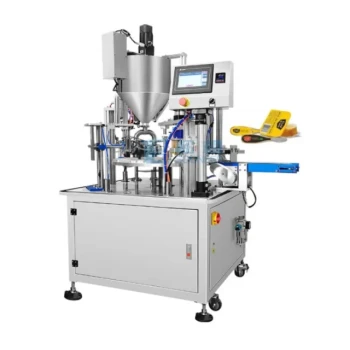
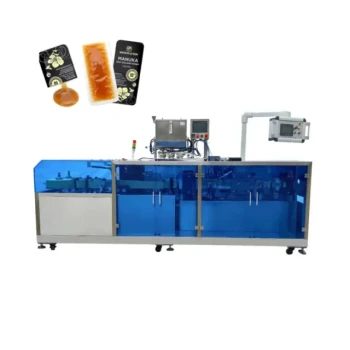
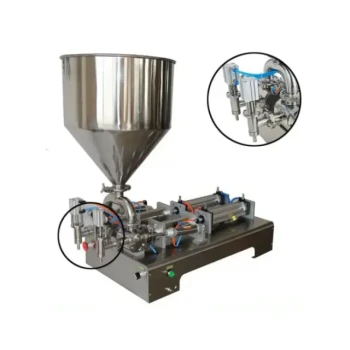
Specialized honey-filling machines function as the critical automated interface between bulk harvest and retail distribution. They utilize high-precision metering systems and advanced temperature control technology to package honey with speed and accuracy, ensuring the preservation of natural active ingredients while meeting strict commercial hygiene standards.
Core Insight: Beyond simple bottling, these machines automate the workflow to guarantee product consistency, minimize material waste, and secure compliance with rigorous food safety certifications, directly enhancing market competitiveness.
Precision Dosing and Workflow Automation
The primary function of these machines is to transform a variable manual process into a standardized industrial workflow. This automation is essential for scaling from home garden production to commercial distribution.
High-Precision Volumetric Metering
Commercial machines employ accurate flow control systems to ensure quantitative filling. This guarantees a consistent net weight for every container, which is a fundamental requirement for retail sales and regulatory compliance.
Reducing Material Waste
By automating the dosing process, these systems significantly minimize the product loss associated with manual handling. Advanced models utilize drip-proof filling mechanisms to ensure that honey goes into the container, not on the conveyor belt.
Increasing Throughput
Automation replaces slow manual methods with high-speed processing. This capability allows beekeeping enterprises to process large harvests quickly, reducing the time between extraction and shelf-readiness.
Preservation of Quality and Chemistry
Honey is a heat-sensitive, viscous product that requires careful handling. Specialized filling machines are designed to manage the physical properties of honey without degrading its chemical value.
Temperature Control and Viscosity Management
Honey viscosity fluctuates significantly based on temperature and crystallization levels. Filling machines use temperature regulation systems to improve flow without overheating the product, ensuring that natural active ingredients and original flavor profiles remain intact.
Preventing Physical Defects
Commercial honey is prone to air bubble formation during bottling, which affects visual appeal and volume. High-precision machines control the flow rate to achieve bubble-free filling, maintaining the product's physicochemical indicators.
Hygiene and Contamination Prevention
Modern machines often feature a closed-pipe design. This isolates the honey from external air, preventing the introduction of impurities, secondary contamination, and oxidation.
Standardization for Market Competitiveness
To compete in high-end markets, honey products must meet rigorous external standards. Filling machines provide the technical consistency required for certification and branding.
Ensuring Sterile Packaging
Automated sealing and packaging processes create a sterile environment that extends the shelf life of the honey. This is critical for meeting food safety standards required by major distributors.
Supporting Quality Certifications
For products seeking Geographical Indication (GI) or other quality labels, consistency is key. Standardized mechanical packaging ensures that every unit meets the specific visual and volume requirements necessary for these certifications.
Critical Operational Considerations
While these machines increase efficiency, they require a delicate balance to operate correctly. Understanding the intersection of viscosity and temperature is vital.
The Thermal Trade-off
The most critical challenge in honey filling is viscosity vs. nutrient preservation. Machines must apply enough heat to make the honey flow through metering systems but must never exceed temperatures that would destroy enzymes or active ingredients.
Complexity of Crystallization
Not all honey flows the same way. Varieties prone to rapid crystallization can cause viscosity fluctuations that standard equipment may struggle with. High-quality machines must be capable of adapting to these changes to prevent blockages or inconsistent fill levels.
Making the Right Choice for Your Goal
Selecting the right filling technology depends on your specific position in the commercial supply chain.
- If your primary focus is Production Efficiency: Prioritize machines with high-speed automated metering and closed-pipe designs to maximize throughput and minimize material waste.
- If your primary focus is Product Quality and Branding: Look for equipment with advanced temperature regulation and flow control to prevent air bubbles and preserve the honey's natural active ingredients.
Specialized filling machines ultimately serve as the bridge between raw agricultural product and a high-value consumer brand, securing both the quality of the honey and the efficiency of the operation.
Summary Table:
| Key Function | Technical Benefit | Impact on Honey Quality |
|---|---|---|
| Precision Dosing | High-precision volumetric metering | Guarantees weight consistency & reduces waste |
| Viscosity Control | Integrated temperature regulation | Improves flow without degrading active enzymes |
| Bubble-Free Filling | Controlled flow rate & nozzle design | Maintains visual appeal & physicochemical indicators |
| Hygienic Isolation | Closed-pipe automated design | Prevents oxidation & secondary contamination |
| Workflow Speed | High-speed throughput automation | Accelerates time-to-market for large harvests |
Transform Your Honey Production with HONESTBEE
At HONESTBEE, we understand that for commercial apiaries and distributors, the right equipment is the difference between raw honey and a premium brand. Our comprehensive wholesale offering includes everything from high-precision honey-filling machines to specialized hive-making hardware and honey-themed cultural merchandise.
We empower your operation to:
- Scale Efficiency: High-speed automation to handle peak harvest demands.
- Protect Quality: Advanced temperature controls that preserve the natural integrity of your honey.
- Ensure Compliance: Standardized processes that meet global food safety and GI certification requirements.
Ready to elevate your beekeeping business? Contact us today to explore our full spectrum of professional tools and machinery.
References
- Clint R. V. Otto, Matthew Smart. Land-use change reduces habitat suitability for supporting managed honey bee colonies in the Northern Great Plains. DOI: 10.1073/pnas.1603481113
This article is also based on technical information from HonestBee Knowledge Base .
Related Products
- Precision Durable Efficient HONESTBEE Rotary Honey Filling Machine
- Economy Small Honey Filling Machine Honey Bottle Filler Packaging Machine
- Fully Automatic Honey Filling Packaging Machine for Processing Line
- Commercial Rotary Honey Filling Machine for Production
- Automatic Honey Filling and Filtering Machine for Beekeeping Bottle Filling
People Also Ask
- How do high-precision honey filling machines ensure quality? Optimize Your Commercial Production with HONESTBEE
- How do honey filling machines work? Achieve Precision & Speed for Your Apiary
- What is a key feature of the new generation of the honey filling machine? The Advanced Electronic Control Unit
- How do honey filling and processing machines aid native bee product conservation? Boost Value with HONESTBEE Technology
- What are the common types of bottling machines used for honey? Choosing the Right Solution for Your Apiary