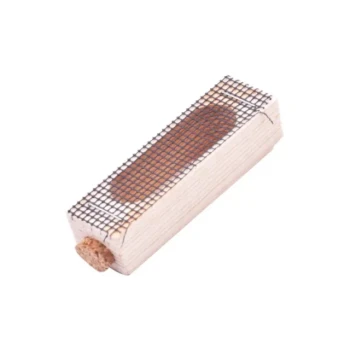
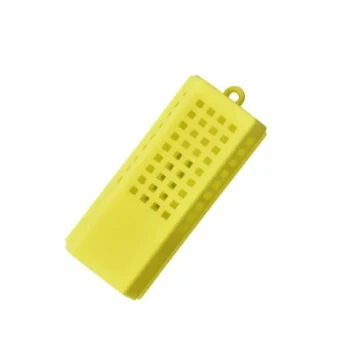
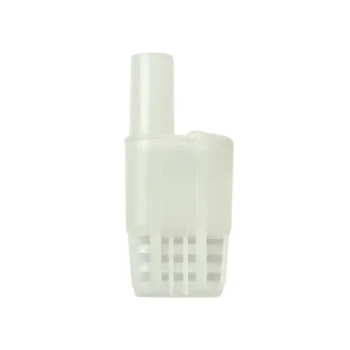
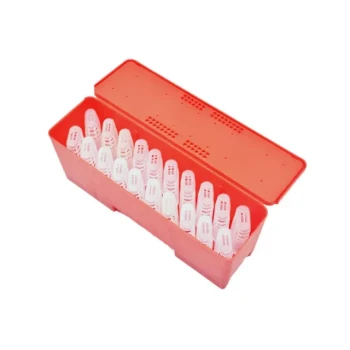
To determine if a queen has been released, you must visually inspect the candy plug located at the end of the queen cage. If the candy plug has been consumed and the seal is broken, it indicates that the worker bees have successfully released the queen into the hive. If the plug remains intact, the queen is still contained within the cage.
While the state of the candy plug confirms physical release, true success is only verified by the presence of new brood. Always follow up a cage inspection with a frame check for eggs and larvae 10 to 14 days later.
Inspecting the Physical Indicators
To assess the status of the queen during a hive maintenance check, you must examine the specific mechanisms designed to delay her release.
The Candy Plug Status
The primary mechanism controlling the queen's release is a candy plug.
During your inspection, look to see if this barrier has been eaten away by the worker bees.
If the candy is gone, the timeline for introduction has proceeded as intended.
The Integrity of the Seal
Once the candy is consumed, the physical seal of the cage should be broken.
This breach allows the queen to exit the cage and move onto the frames.
If the seal is unbroken and the candy is present, the colony requires more time to integrate the new queen.
Verifying Biological Acceptance
Releasing the queen is only the first step; confirming she has been accepted by the colony requires a different set of indicators.
The 10 to 14 Day Window
You cannot determine the success of the introduction immediately upon seeing an empty cage.
You must perform a follow-up inspection of the hive frames 10 to 14 days after the queen was initially placed.
Identifying New Brood
The definitive sign of a successful introduction is the presence of reproductive activity.
Scan the frames for new eggs and young white larvae.
The presence of this new brood confirms the queen has been accepted and has commenced laying.
Common Pitfalls to Avoid
Relying solely on the state of the cage can lead to misinterpretations regarding the health of the hive.
Misinterpreting an Empty Cage
An empty cage signifies release, but it does not guarantee survival.
A queen can be released and subsequently rejected or "balled" by the workers.
Therefore, an empty cage without subsequent brood production is not a success.
Waiting Too Long
While patience is required, there is a limit to the introduction window.
If you do not find eggs or larvae after three weeks, the introduction has failed.
At this stage, immediate intervention is required to save the colony.
Making the Right Choice for Your Goal
When managing queen introduction, your actions depend on the specific stage of the timeline.
- If your primary focus is determining immediate release: Check the queen cage to ensure the candy plug is consumed and the seal is broken.
- If your primary focus is verifying colony success: Inspect the frames 10 to 14 days later for the presence of eggs and white larvae.
Success in beekeeping comes not just from releasing the queen, but from confirming she has begun her work on the comb.
Summary Table:
| Indicator Type | Observation | Meaning |
|---|---|---|
| Physical | Candy Plug Eaten | Worker bees have chewed through the barrier. |
| Physical | Broken Seal | The queen has physically exited the cage. |
| Biological | New Eggs/Larvae | The queen is accepted and has begun laying (check after 10-14 days). |
| Failure Sign | Empty Cage/No Brood | Queen was released but likely rejected or lost. |
Scale Your Apiary Success with HONESTBEE
Ensuring a successful queen introduction is vital for hive productivity, but having the right equipment is what makes the job seamless. HONESTBEE specializes in supporting commercial apiaries and distributors with high-quality, wholesale beekeeping solutions.
From durable queen cages and precision-engineered hive-making machinery to efficient honey-filling systems and a full range of industry consumables, we provide everything your business needs to thrive.
Ready to upgrade your commercial beekeeping operation? Contact our expert team today to explore our comprehensive product portfolio and discover how we can streamline your honey production.
Related Products
- Durable Galvanized Steel Spring Queen Bee Cage
- Classic Wooden and Mesh California Queen Cage
- Professional Queen Bee Introduction and Transport Cage
- Professional Queen Cage with Sliding Gate and Feeder Plug
- Professional Multi-Compartment Queen Cage with Sliding Lid
People Also Ask
- Why are specialized queen bee cages used for the banking of mated queen bees? Maximize Commercial Apiary Storage Efficiency
- What is the mechanism of action for using temporary queen bee cages? Master Successful Queen Introduction
- What is the step-by-step process for installing a queen bee's cage onto a frame? Ensure Hive Acceptance Safely
- What is the optimal placement for a queen bee cage? Essential Strategies for Successful Re-queening
- What are the advantages and disadvantages of introducing a queen bee by embedding the cage? Boost Your Queen Acceptance