Small hive beetle control requires an integrated program, not a single product. Commercial apiaries should combine strong colony management, physical in-hive traps, entrance control, strict sanitation, rapid honey extraction, and careful comb storage. The required supply portfolio typically includes beetle traps, food-grade trap media, entrance reducers, hive tools, screened or clean bottom boards, sanitation equipment, and appropriate storage or extraction equipment.
Small hive beetles are best controlled by making colonies difficult to invade, removing adult beetles before they reproduce, and eliminating comb, soil, and equipment conditions that support larval development.
Build the IPM Program Around Prevention
Maintain strong colonies
Strong, well-populated colonies are the first line of defense. A productive young queen and sufficient adult bee coverage help workers patrol comb and prevent beetles from freely laying eggs.
Beekeepers should ensure that all combs are adequately covered by bees. Excess space and weak colonies give beetles more concealed areas in which to move and reproduce.
Reduce avoidable disturbance
Routine inspections are necessary, but unnecessary disruption can weaken colony organization and create opportunities for beetle activity. Inspect on a defined schedule and return frames promptly.
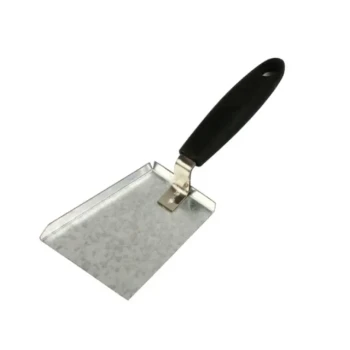
During inspections, use a standard hive tool to remove visible adult beetles from frame top-bars, inner covers, and hive crevices.
Monitor for early infestation
Small hive beetles are photophobic and often move away from light. A practical inspection method is to place the hive lid upside down on the ground, stack the brood box on it, and check beneath the lid for fleeing beetles.
Beetles may also be seen running across comb surfaces when frames are examined in direct sunlight. Early detection allows targeted trapping before larvae contaminate stored honey and pollen.
Use Specialized In-Hive Hardware
Install physical beetle traps
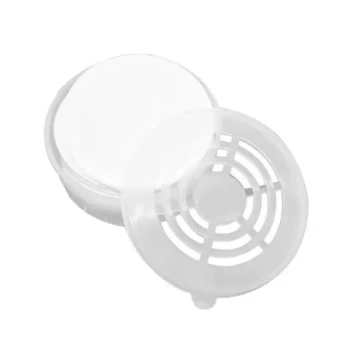
In-hive traps intercept adult beetles before they can reproduce in comb inventory. Depending on the hive configuration, traps can be placed near the top and bottom of the hive body or in other areas where beetles seek shelter.
A commercial apiary should stock trap formats that fit its hive equipment, including reusable traps, disposable trap cloths, and designs that limit bee access to the trap medium.
Select an appropriate trap medium
Common trap media include food-grade mineral oil and vegetable oil, which drown beetles entering the trap. Some systems use apple cider vinegar or diatomaceous earth as bait or a desiccating medium.
Boric-acid bait systems require particular caution. They should only be used in traps designed to prevent direct bee contact and in accordance with product labeling, local regulations, and any applicable natural or organic certification requirements.
Restrict hive entrances
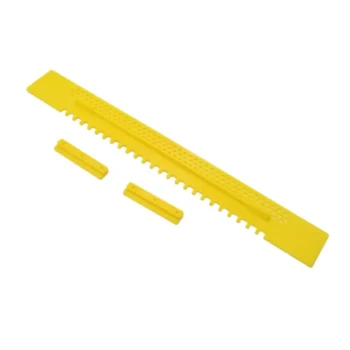
Entrance reducers limit the number of access points available to adult beetles and make it easier for the colony to defend the entrance. They are especially useful for weaker colonies, though ventilation and colony traffic must remain adequate.
Metal entrance guards can also exclude mice and other larger pests without substantially changing hive ventilation.
Keep bottom boards manageable
Clean bottom boards reduce hiding places and make inspection easier. Screened bottom boards can support broader IPM monitoring, including Varroa mite fall assessment, although they are not a stand-alone solution for small hive beetles.
Make Apiary Sanitation Routine
Remove debris and infested material
Apiary hygiene tools should be used to remove hive debris, dead colonies, abandoned comb, and heavily infested materials. Heavily damaged comb should generally be discarded rather than returned to service.
Lightly damaged brood frames may be salvageable after beetle nests, eggs, and larvae are removed and the frames are thoroughly washed with high-pressure water. They should then be returned to a strong colony for repair.
Process honey quickly
Honey supers should be extracted promptly after removal. The supplied guidance recommends extraction within approximately two days, because stored supers can become breeding sites if beetle eggs hatch before processing.
Beeswax cappings and collected pollen also require timely processing. Do not leave these nutrient-rich materials exposed or stored in warm conditions where beetles can reproduce.
Store comb under controlled conditions
Empty supers should be stored in a low-humidity environment with good airflow and protection from reinfestation. Freezer storage can be used for longer-term comb protection because cold treatment kills wax moth larvae and pupae without pesticides.
Storage practices should be coordinated with extraction schedules, inventory rotation, and clean-equipment procedures so that treated or unused comb does not become a hidden source of reinfestation.
Manage the Surrounding Apiary Environment
Reduce larval development sites
Mature small hive beetle larvae leave the hive to pupate in surrounding soil. Keeping the area beneath and around hives clean and using hard clay or rocky ground can reduce suitable burrowing conditions.
Direct sunlight may also suppress beetle activity by making the hive environment less favorable for concealment. Hive placement should still account for colony health, heat exposure, water availability, and local weather.
Consider soil-based controls carefully
Some IPM programs use beneficial nematodes around the apiary base, while others use approved soil insecticides. These measures must be evaluated against local pesticide rules, product labels, pollinator safety requirements, soil conditions, and certification standards.
Soil treatments should supplement colony and equipment management rather than replace trapping and sanitation.
Control related pests
Varroa mites and wax moths can weaken colonies and increase the conditions that allow small hive beetles to succeed. A full IPM program therefore includes regular monitoring, non-chemical controls where practical, and targeted treatments that are compatible with honey production and residue requirements.
Examples of supporting supplies include screened bottom boards, drone comb frames for Varroa removal, fresh foundation, clean replacement frames, and freezer capacity for stored supers.
Match Supplies to the Operating Model
Core supplies for beekeepers
A practical small hive beetle control kit should include:
- In-hive beetle traps for the top and bottom of hive bodies
- Food-grade mineral oil or vegetable oil for compatible traps
- Entrance reducers and metal entrance guards
- Hive tools for mechanical beetle removal
- Clean or screened bottom boards
- Disposable trap cloths where appropriate
- High-pressure washing and sanitation equipment
- Replacement frames and fresh foundation
- Low-humidity storage space or freezer capacity
- Extraction equipment that supports rapid honey processing
Requirements for distributors and resellers
Distributors serving commercial apiaries should provide more than individual trap units. Buyers often need a coordinated package covering hive hardware, consumables, sanitation, storage, and replacement inventory.
Reliable supply depends on compatibility information, clear usage instructions, rapid order fulfillment, and access to products suitable for conventional, natural, or certified operations. Product availability should also account for seasonal demand, apiary scale, and the customer’s hive equipment.
Understanding the Trade-offs
Traps require correct placement and maintenance
A trap is effective only when beetles can access it and bees cannot. Incorrect placement, a depleted liquid medium, or a design that allows bee contact can reduce performance or create colony-management problems.
Trap inspection and replenishment must therefore be part of the regular apiary schedule.
Chemical-free does not mean risk-free
Mineral oil, vegetable oil, diatomaceous earth, and bait-based systems may reduce reliance on synthetic pesticides, but each has handling, contamination, and certification considerations. Products must be used exactly as designed and kept away from honey, brood, and direct bee contact unless the label specifically permits otherwise.
Sanitation has labor and replacement costs
Discarding heavily damaged comb, washing frames, freezing supers, and extracting honey quickly require labor, equipment, and inventory planning. Those costs are generally easier to manage when suppliers offer complete kits, replacement components, and dependable delivery.
Related pest controls need separation
Varroa treatments, wax moth controls, and small hive beetle measures address different pests. Combining them under one IPM program is sensible, but a control designed for Varroa or wax moths should not be assumed to control small hive beetles.
How to Apply This to Your Apiary or Product Portfolio
A coordinated supply and management plan should reflect colony strength, infestation pressure, hive design, certification requirements, and extraction capacity.
- If your primary focus is colony protection: Maintain strong colonies, keep every frame covered by bees, install correctly fitted beetle traps and entrance reducers, and remove adult beetles during inspections.
- If your primary focus is honey quality: Extract supers quickly, process cappings and pollen without delay, discard heavily contaminated comb, and use clean, low-humidity storage.
- If your primary focus is certified natural management: Prioritize physical traps, approved non-synthetic consumables, sanitation, cold storage, and carefully documented soil-management practices.
- If your primary focus is commercial distribution: Build a full-spectrum offering that combines traps, trap media, hive hardware, sanitation tools, replacement comb supplies, storage equipment, and responsive fulfillment.
- If your primary focus is long-term IPM: Monitor small hive beetles alongside Varroa and wax moths, strengthen weak colonies, rotate old foundation, and use targeted controls supported by regular records.
Effective small hive beetle management comes from matching the right hardware, consumables, sanitation procedures, and fulfillment support to the conditions of each apiary.
Summary Table:
| Strategy/Supply | Purpose | Key Points |
|---|---|---|
| Strong colony management | Prevention | Ensure all combs covered by bees; minimize disturbance. |
| In-hive beetle traps | Intercept adults | Use appropriate trap type and food-grade oil; maintain regularly. |
| Entrance reducers | Limit access | Reduce beetle entry; maintain ventilation. |
| Sanitation (remove debris, extract honey quickly) | Reduce breeding sites | Discard heavily infested comb; process honey within 2 days. |
| Controlled comb storage | Prevent reinfestation | Store in low humidity, freeze if necessary. |
| Environmental management | Reduce pupation sites | Clean apiary floor, consider bare ground or beneficial nematodes. |
| Monitoring and early detection | Early intervention | Inspect regularly, use light sensitivity to spot beetles. |
| Related pest control (Varroa, wax moths) | Support overall health | Combine IPM programs sensibly. |
Protect your apiary with HONESTBEE's comprehensive small hive beetle control supplies. We offer a full spectrum of traps, entrance reducers, sanitation tools, and storage solutions designed for commercial operations. Our rapid response and dedicated support ensure you get the right products when you need them, backed by deep pest management expertise. For distributors, we provide reliable supply, OEM/ODM support, and competitive margins. Contact us today to discuss your IPM needs and enhance your beetle control strategy.
Related Products
- Plastic Beetle Blaster Trap Beekeeping Tools and Supplies
- Reusable Aluminium Beetle Trap for Small Hive Beetles Silver Bullet
- Removable Washable Hive Beetle Trap Attractants for Small Hive Beetles
- Reusable Clear Small Hive Beetle Traps for Beehives Beetle Trapping Tools
- Black Plastic Beetle Barn Hive Beetle Trap for Beehives
People Also Ask
- In what situations is the use of beetle traps particularly recommended? Essential Protection for Vulnerable Bee Hives
- How should beetle traps be placed in the hive? Achieve Perfect Flush Placement for Maximum Control
- How do beetle traps like Beetle Blasters support bee colonies? Protect Your Hives from Destructive Pests
- What are the three main types of hive beetle traps? Expert Solutions for Protecting Your Bee Colonies
- What are the available chemical-free options for trapping hive beetles? Safe and Effective Pest Management Solutions