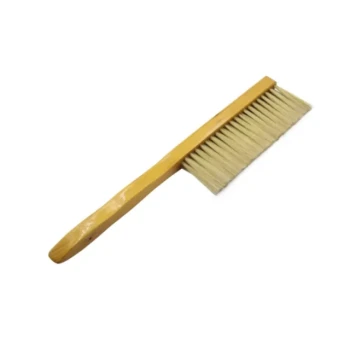
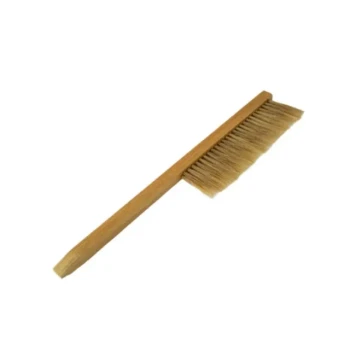
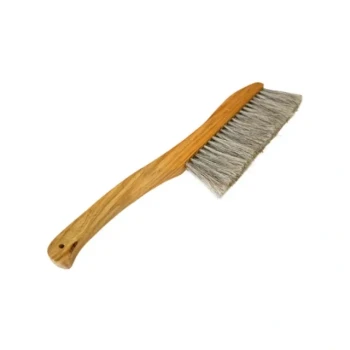
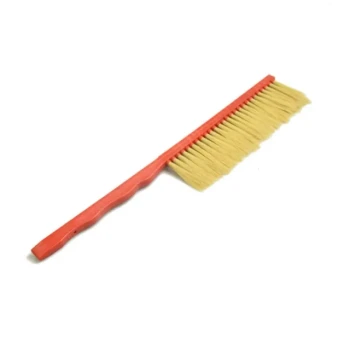
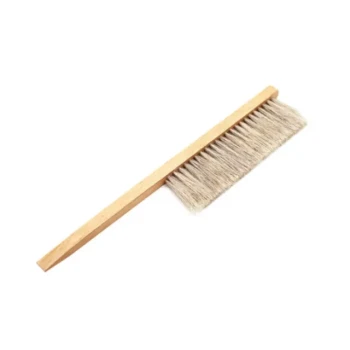
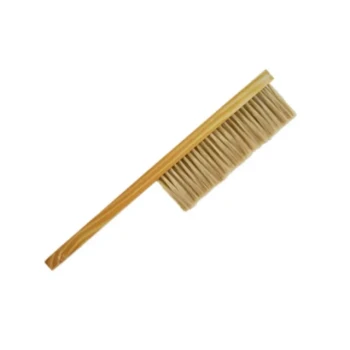
A bee brush is a specialized apiary tool, typically measuring 14 inches in length and equipped with soft bristles, designed to gently remove bees from hive components. It serves as a manual method for clearing bees from frames, honey supers, or other equipment to facilitate inspections or harvesting without resorting to violent shaking or crushing the insects.
While primarily used to sweep bees off honeycomb during harvest or inspection, the bee brush is a tool of finesse; it must be used gently to displace bees without crushing them or triggering a defensive stinging response.
Anatomy and Design
Construction Principles
The standard bee brush features a long wooden handle that provides a comfortable grip and sufficient reach for standard hive boxes. It is fitted with soft bristles, often yellow in color or made from materials like camel hair, which are flexible enough to move bees without injury.
The Primary Function
The tool is designed exclusively for displacement. It allows a beekeeper to sweep bees off a specific surface, such as a frame of honey or brood, to clear the line of sight or prepare the frame for removal.
Viable Substitutes
If a specific apiary tool is unavailable, a high-quality soft paintbrush can serve the same function. However, the primary reference notes that a good paintbrush may cost the same or even more than a dedicated bee brush.
Critical Use Cases
Honey Extraction
During the honey harvest, frames must be completely free of bees before they are taken away for extraction. The brush is essential here to sweep away stragglers that remain after shaking the frame.
Detailed Inspections
When inspecting brood patterns, a beekeeper may need to see the cell floor clearly. If shaking the frame is not an option—perhaps due to delicate fresh comb—the brush allows for a controlled clearing of the area.
Hive Maintenance and Swarms
The brush is also utilized during non-standard tasks, such as repairing broken comb or removing a swarm. It helps gently guide bees away from areas that need repair or relocation.
Understanding the Trade-offs
The Risk of Agitation
Despite its soft bristles, bees generally have a strong aversion to being brushed. They often perceive the brushing motion as a threat and may attack or sting the bristles "mercilessly."
Proper Technique is Vital
The brush must never be used to swat or strike. It requires a gentle sweeping motion to roll the bees off their footing rather than dragging them, which minimizes the release of alarm pheromones.
Use Sparingly
Because it causes agitation, the bee brush should not be the first method of removal. It is best used as a secondary tool when shaking the bees off a frame is ineffective or inappropriate.
Making the Right Choice for Your Goal
To use this tool effectively, align your technique with your specific objective:
- If your primary focus is harvesting honey: Use the brush to clear the final few bees off capped honey frames to ensure no bees are brought into the extraction room.
- If your primary focus is routine inspection: Rely on shaking the frames first; reserve the brush for times when you need to inspect a specific patch of brood without disturbing the whole colony.
- If your primary focus is budget or availability: Utilize a clean, soft-bristled paintbrush, provided it is free of chemicals or stiff bristles that could injure the bees.
Ultimately, the bee brush is an essential tool for precision work, but it demands a gentle hand to maintain the calm of the colony.
Summary Table:
| Feature | Specification/Usage |
|---|---|
| Standard Length | Approx. 14 inches |
| Bristle Type | Soft, flexible (often yellow or camel hair) |
| Primary Goal | Gentle displacement of bees from frames and equipment |
| Key Use Cases | Honey extraction, brood inspection, swarm relocation |
| Best Practice | Use as a secondary tool after shaking to minimize bee agitation |
| Substitute | High-quality, soft-bristled paintbrush |
Elevate Your Beekeeping Operations with HONESTBEE
At HONESTBEE, we understand that precision tools like the bee brush are just the beginning. We cater to commercial apiaries and distributors worldwide with a comprehensive wholesale offering designed to scale your business efficiently.
Our extensive portfolio includes:
- High-Quality Hardware: Durable hive-making and precision honey-filling machines.
- Essential Equipment: A full spectrum of beekeeping tools and machinery tailored for professional use.
- Industry Consumables: A wide array of essential supplies and unique honey-themed cultural merchandise.
Whether you are stocking a distribution network or upgrading a commercial honey production line, HONESTBEE provides the quality and volume you need to succeed.
Ready to scale your inventory? Contact us today to discuss our wholesale solutions and bulk pricing!
Related Products
- Wooden Bee Brush with Triple Row Artificial Fiber for Beekeeping
- Classic Wooden Bee Brush with Double-Row Boar Bristles
- Premium Triple-Row Horsehair Bee Brush
- Plastic Handle Single Row Artificial Fiber Bee Brush
- Wooden Bee Brush with Double-Row Horsehair Bristles
People Also Ask
- What is the specific function of a bee brush? Ensure Pure Harvests and Colony Welfare During Honey Extraction
- What are the key characteristics of the bristles on a bee brush? Master Gentle and Efficient Bee Removal
- What is the purpose of using a bee brush during the inspection of hive components? Safe & Precise Hive Management
- What problem does a bee brush solve? Protect Your Colony with Gentle Precision Tools
- Why is a bee brush necessary when extracting honeybee hive frames that contain larvae? Protect Your Brood and Colony