Capturing a honeybee swarm is the act of collecting a wild colony that has split from its original hive and is temporarily clustered while seeking a new home. This process involves physically securing the bees and installing them into your own apiary hardware. While this method is attractive because it provides "free bees," it is technically demanding and is often considered a task best reserved for experienced beekeepers rather than novices.
Core Takeaway: Swarm capture is an advanced method of apiary expansion that relies on "baiting" bees with specific scents and housing. Success is not just about catching the flying insects, but about effectively securing the queen, which compels the rest of the colony to accept the new hive.
Essential Equipment and Preparation
To successfully capture a swarm, you must be ready to deploy temporary housing and specialized tools immediately upon locating the cluster.
The Capture Unit
You will need a temporary housing unit, typically a nucleus (nuc) box or a single hive body. This unit must be fully equipped with a top cover and a bottom board to secure the bees once they are inside.
Internal Bait
Inside the box, you should place frames containing drawn comb. The scent of the wax on these used frames acts as a powerful natural attractant, signaling to the bees that the space is habitable.
Access and Safety Gear
Swarms often cluster in elevated positions. Essential hardware includes a ladder and ratchet straps to secure the box or reach the bees safely. Full protective equipment is mandatory to ensure beekeeper safety during the transfer.
Specialized Catching Tools
For difficult-to-reach areas, a Swarm Catching Sack is often used to safely collect the cluster. Additionally, having a queen cage or catching tool is vital for isolating the queen to ensure the colony remains in the box.
The Biological Mechanism: Why It Works
Capturing a swarm is not about force; it is about manipulating the bees' natural biological instincts using scents and hierarchy.
The Role of Pheromones
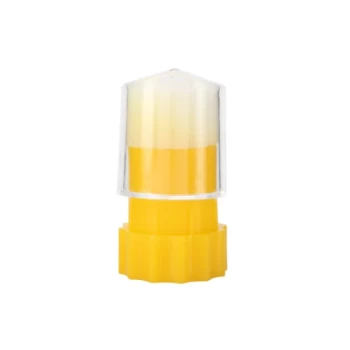
Beekeepers use olfactory attractants to guide bees into the trap. Lemongrass oil is the standard lure because it mimics the scent of the Nasonov gland, a pheromone bees use to communicate location. Commercial swarm lures and "crush vials" are also effective at mimicking these chemical signals.
Securing the Queen
The queen is the central biological focus. If you can identify and secure her in a cage or catching tool inside the new hive, the rest of the colony will follow.
The Fanning Response
Once the queen is inside, you will typically observe worker bees at the entrance fanning their wings. This behavior distributes the queen's pheromones into the air, signaling the exact location to the remaining airborne bees and ensuring the population relocates successfully.
Strategic Placement for Swarm Traps
If you are setting traps to catch swarms passively rather than actively collecting a visible cluster, placement is critical for success.
Height and Orientation
To maximize your success rate, position swarm traps approximately 15 feet above the ground. The trap should ideally face south, utilizing the sun to warm the entrance.
Visibility and Shade
The location should be shaded to prevent the box from overheating, yet it must remain visible to scouting honeybees. These scouts are the first to investigate the trap; if the location and scent (lemongrass oil) are appealing, they will guide the swarm to it.
Understanding the Trade-offs
While the prospect of free livestock is appealing, swarm capture carries distinct challenges that differ from buying packaged bees.
The Experience Barrier
As noted in beekeeping standards, this process can be intimidating for novices. Handling a wild swarm requires the ability to read bee behavior in real-time and react calmly to a large, uncontained biomass of insects.
Physical Risk
The logistical challenge of maneuvering ladders, boxes, and tools while wearing a bee suit creates safety risks. Reaching swarms in elevated or precarious spots requires physical stability and planning.
Making the Right Choice for Your Apiary
Deciding to capture swarms depends on your resources, experience level, and tolerance for physical work.
- If your primary focus is Economy: Swarm capture is the superior choice, as it eliminates the cost of purchasing packaged bees or nucs.
- If your primary focus is Safety and Simplicity: Purchasing established bees is recommended, as it avoids the risks associated with ladder work and handling wild colonies.
- If your primary focus is Education: Shadowing an experienced mentor during a capture is the best way to learn the nuances of bee behavior without managing the risk alone.
Mastering swarm capture transforms a chaotic natural event into a predictable resource, provided you prioritize the safety of the queen and yourself.
Summary Table:
| Category | Essential Requirements & Tools | Key Function |
|---|---|---|
| Housing | Nucleus (Nuc) Box / Hive Body | Provides immediate shelter for the cluster. |
| Attractants | Lemongrass Oil / Drawn Comb | Mimics bee pheromones to lure scouts and colony. |
| Hardware | Swarm Sack, Ladder, Ratchet Straps | Enables safe access and transport of the swarm. |
| Queen Care | Queen Cage / Catching Tool | Secures the queen to ensure the colony stays. |
| Placement | 15ft height, South-facing, Shaded | Optimizes trap visibility and thermal comfort. |
Elevate Your Apiary with HONESTBEE
Whether you are a commercial apiary looking to scale or a distributor seeking high-quality supplies, HONESTBEE provides the professional-grade tools you need to master swarm season. From specialized swarm catching sacks and lemongrass lures to advanced hive-making and honey-filling machinery, our comprehensive wholesale catalog covers every aspect of modern beekeeping.
Our value to you:
- Full Spectrum Supply: A one-stop shop for hardware, machinery, and industry consumables.
- Commercial Grade: Durable equipment designed for large-scale operations.
- Bespoke Solutions: Supporting honey-themed cultural merchandise and specialized hardware.
Ready to upgrade your equipment? Contact us today to discuss our wholesale offerings and discover how we can streamline your beekeeping business!
Related Products
- HONESTBEE Professional Telescopic Pole Bee Swarm Catcher
- HONESTBEE Collapsible Tiered Bee Swarm Catcher for Beekeeping
- Stainless Steel Honey Bee Smoker Hive and Honeycomb Smoker for Beekeeping
- Durable 16 Way Circular Bee Escape for Efficient Honey Harvesting
- Professional Stainless Steel Pry-Bar Hive Tool
People Also Ask
- What should be done if the swarm is situated on the bottom of a tree limb? A Guide to Methodical Bee Capture
- What role do swarm catchers play in maintaining the production scale of an apiary? Turn Colony Loss into Growth.
- What information should be gathered before attempting to catch a swarm of bees? A Safe and Successful Guide
- What precautions can be taken to prevent a newly captured swarm from absconding? Secure Your Swarm with Proven Methods
- What role does a Swarm Catcher play in the process of expanding apiary colony scale? Optimize Growth & Reduce Costs