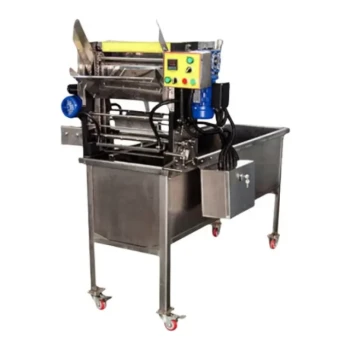
Automatic honey filling equipment and industrial beehive manufacturing machinery act as the twin pillars of commercial scalability. They transform raw agricultural output into high-value consumer goods through precise processing while simultaneously lowering infrastructure costs to allow for rapid, standardized regional expansion.
The true commercial value of this technology lies in bridging the gap between raw harvesting and retail dominance. By automating the "bookends" of the supply chain—hive construction and final packaging—producers create a scalable ecosystem that lowers unit costs while elevating product quality to meet strict international hygiene and branding standards.
Scaling Infrastructure with Beehive Manufacturing Machinery
The ability to expand a beekeeping operation depends heavily on the availability and cost of physical infrastructure. Industrial-grade machinery solves the logistical bottlenecks associated with manual hive construction.
Achieving Rapid Standardization
Efficient manufacturing machinery enables the mass production of standardized breeding containers. This ensures that every hive component is built with precise dimensions, making them fully compatible with standard beekeeping tools and automation down the line. Standardization is the prerequisite for establishing large-scale, professional beekeeping bases.
Reducing Unit Costs for Expansion
By utilizing mechanized processing for wood or composite materials, producers significantly reduce the unit cost of infrastructure. This provides the essential physical foundation for beekeepers to rapidly expand their colony scales without incurring prohibitive labor costs.
Adaptation to Local Climates
Advanced manufacturing allows for the production of hives tailored to specific local characteristics identified through GIS modeling. Whether adjusting for temperature or humidity, industrial machinery can mass-produce hives that are optimized for the specific environmental conditions of the region, maximizing colony health and yield.
Maximizing Product Value with Automatic Filling Equipment
Once the honey is harvested, the focus shifts to processing efficiency and marketability. Automatic filling equipment is the bridge between a primary agricultural product and a high-value consumer good.
From Commodity to Consumer Brand
Automated machinery allows distributors to transform bulk honey into standardized retail products through precise weighing, sealing, and labeling. This process creates the technical foundation for brand development, converting raw honey into a shelf-ready commodity with higher added value.
Ensuring Hygiene and Nutritional Integrity
High-precision fluid control and closed-loop operations prevent external contamination. This approach maximizes the retention of natural antioxidants and beneficial microorganisms, such as lactic acid bacteria. By respecting the physiological characteristics of the product, producers can market a higher quality, nutrient-rich product.
Enabling Global Export Capabilities
Manual handling carries a risk of contamination that can disqualify products from international markets. Industrial automation provides a sterile packaging environment and consistent product specifications. This adherence to international hygiene and safety standards is critical for accessing the global honey export market.
Supporting a Dual-Revenue Model
Industrial capacity helps compensate operations for the high management investment required to provide pollination services. By reducing production costs through efficient deep processing, the industry fosters a dual-revenue model: earning fees from pollination services while simultaneously capturing the full value of the honey product.
Understanding the Trade-offs
While the benefits of automation are clear, implementing these systems requires a shift in operational strategy.
Capital Intensity vs. Labor Costs
The move to industrial machinery requires significant upfront capital investment compared to manual labor. The commercial value is realized only through high-volume throughput; for smaller operations, the ROI may not justify the expense of industrial-grade hive manufacturing or automated filling lines.
Operational Complexity
Transitioning to automated systems introduces a need for technical maintenance and quality control oversight. The focus shifts from purely agricultural skills to manufacturing management, requiring a workforce capable of operating and maintaining high-precision fluid control systems and woodworking machinery.
Making the Right Choice for Your Goal
To maximize commercial value, align your equipment investment with your specific strategic objectives.
- If your primary focus is Rapid Regional Expansion: Prioritize beehive manufacturing machinery to lower the unit cost of housing colonies and ensure standardized equipment compatibility across all sites.
- If your primary focus is Brand Building and Export: Prioritize automatic honey filling equipment to guarantee precise dosing, sterile packaging, and the retention of nutritional value required for premium international markets.
Ultimately, industrial automation is not just about speed; it is the strategic lever that converts a labor-intensive apiary into a competitive, scalable, and standardized enterprise.
Summary Table:
| Equipment Category | Primary Commercial Value | Key Strategic Benefit |
|---|---|---|
| Beehive Manufacturing Machinery | Rapid standardization & infrastructure scaling | Lowers unit expansion costs & ensures equipment compatibility |
| Automatic Filling Equipment | Brand development & retail-ready processing | Enhances hygiene, ensures dosing precision & enables global exports |
| Integrated Industrial Systems | Supply chain optimization | Maximizes ROI through high-volume throughput & dual-revenue models |
Revolutionize Your Beekeeping Enterprise with HONESTBEE
Transitioning from a labor-intensive apiary to a competitive, high-output business requires more than just skill—it requires the right industrial infrastructure. HONESTBEE specializes in empowering commercial apiaries and distributors with the tools needed for global dominance.
How we add value to your business:
- Scale Smarter: Our industrial hive-making machines provide the precision and speed necessary for rapid regional expansion.
- Maximize Profits: From honey-filling machines to honey-themed cultural merchandise, we help you transform raw harvest into premium retail brands.
- Full-Spectrum Support: We supply the complete range of beekeeping tools, machinery, and industry consumables tailored to your specific climate and goals.
Ready to elevate your production and lower your operational costs? Contact HONESTBEE today for a comprehensive wholesale quote and let us help you build a scalable, standardized, and profitable honey supply chain.
References
- Muhammad Reza Fauzan, Risky Ramadhan. Pemodelan Distribusi Habitat Lebah Madu Guna Mendukung Budidaya Lebah Madu di Desa Muara Sikabaluan. DOI: 10.31004/jptam.v8i1.13738
This article is also based on technical information from HonestBee Knowledge Base .
Related Products
- Fully Automatic Honey Filling Packaging Machine for Processing Line
- Automatic Honey Filling and Filtering Machine for Beekeeping Bottle Filling
- Precision Durable Efficient HONESTBEE Rotary Honey Filling Machine
- Semi Automatic Small Honey Bottle Filling Machine Honey Filler
- Precision Automated Packaging Turntable Honey Spoon Filling Sealing Packing Machine
People Also Ask
- Why are fully automatic honey filling and packaging lines essential? Boost Your Honey's Market Value and Quality
- What is a fully-automatic honey filler? Streamline Your Production with High-Precision Automation
- How do automated honey filling and packaging machines affect profitability? Boost Margins with HONESTBEE Technology
- How do automated honey filling and packaging machines contribute to the market value of honey products? Maximize Your ROI
- How do industrial-grade automated honey filling and packaging machines mitigate the risk of physical contamination?