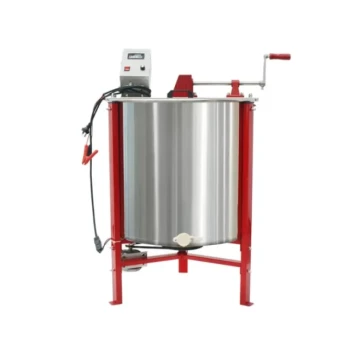
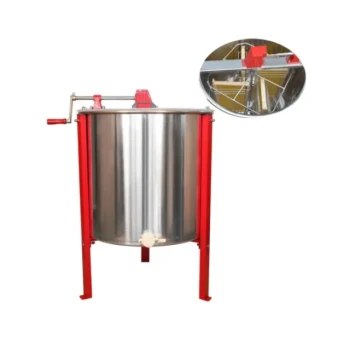
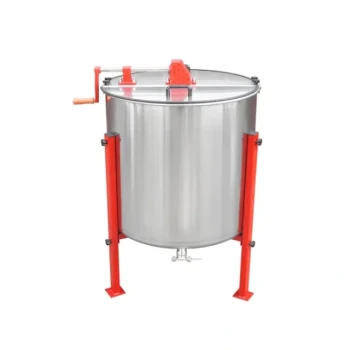
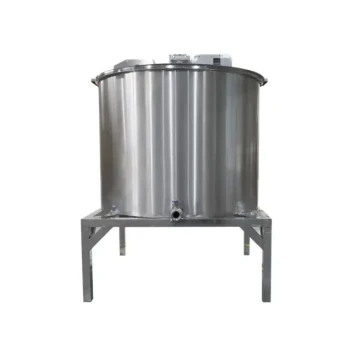
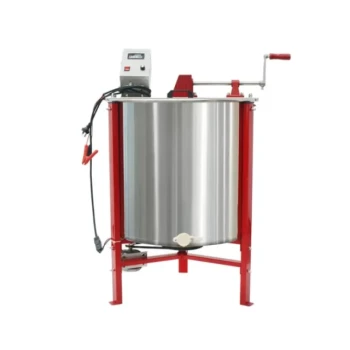
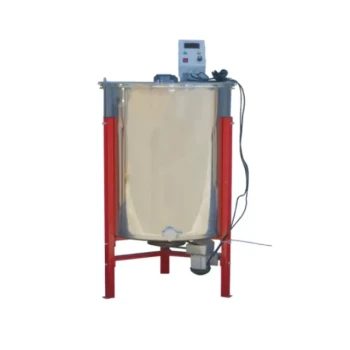
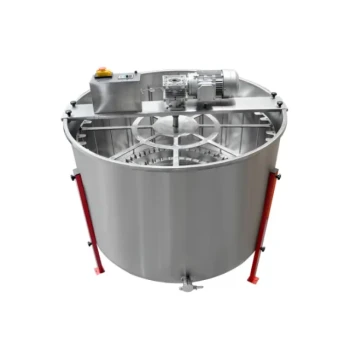
The critical function of a mechanized honey extractor is to separate liquid honey from the honeycomb using high-speed centrifugal force while keeping the wax structure intact. Unlike traditional methods that require crushing or heating the comb, this machinery spins the frames to eject the honey, allowing the physical infrastructure of the hive to be preserved.
Core Insight: The value of an extractor extends beyond simple harvesting; it is a tool for biological conservation. By preserving the honeycomb, you allow the colony to reuse existing wax structures, significantly reducing the metabolic energy bees must spend on rebuilding. This directly converts biological energy savings into increased honey production.
The Mechanics of Preservation
Utilizing Centrifugal Force
The extractor operates by spinning honeycomb frames at high speeds. This generates centrifugal force, which pulls the liquid honey out of the wax cells and throws it against the inner wall of the drum, where it drains to the bottom.
Maintaining Comb Integrity
The defining characteristic of this process is that it is non-destructive. The wax comb remains firmly set within the frame throughout the extraction. This ensures the complex architecture built by the bees is not crushed, melted, or deformed during the harvest.
Biological and Economic Impact
Reducing Energy Expenditure
Bees consume a significant amount of honey and energy to secrete wax and build combs. When an extractor allows you to return empty, intact combs to the hive, you eliminate the need for the colony to rebuild from scratch.
Increasing Production Cycles
By saving the bees from the labor-intensive task of wax secretion, the colony can reallocate those resources. The energy and time that would have been spent on construction are instead dedicated to foraging and nectar collection, effectively shortening the production cycle and boosting the season's total yield.
Comparing Extraction Methods: The Efficiency Trade-off
Avoiding the Pitfalls of Crushing
Traditional harvesting often involves crushing the comb and filtering the debris. While simple, this method destroys the bees' work. Using a centrifugal extractor avoids this loss of capital resources (the wax), treating the comb as a reusable asset rather than a disposable by-product.
Hygiene and Purity Standards
Manual or crushing methods introduce higher risks of contamination. Mechanized extractors are designed to meet industrial hygiene standards, ensuring high purity. They separate the honey cleanly without introducing wax particles or other debris that necessitate excessive filtration.
Optimizing Your Apiary Workflow
To maximize the benefits of mechanized extraction, align your usage with your production goals:
- If your primary focus is Volume: Prioritize the immediate return of extracted frames to the hive to minimize the "downtime" between nectar flows.
- If your primary focus is Efficiency: Rely on the centrifugal method to reduce the metabolic tax on your bees, allowing them to focus entirely on honey production rather than construction.
By viewing the honeycomb as a renewable resource rather than a consumable one, you transform the extraction process from a harvesting task into a yield-optimization strategy.
Summary Table:
| Feature | Mechanized Centrifugal Extraction | Traditional Crushing/Heating |
|---|---|---|
| Mechanism | High-speed centrifugal force | Physical pressure or heat |
| Comb Impact | Non-destructive (Reusable) | Destroyed (Must be rebuilt) |
| Bee Energy | Preserved for foraging | Wasted on wax secretion |
| Purity Level | High (Industrial hygiene standards) | Variable (High debris/filtration) |
| Yield Speed | Fast (Continuous production cycles) | Slow (Dependent on comb rebuild) |
Scaling Your Honey Production? Partner with HONESTBEE
At HONESTBEE, we empower commercial apiaries and honey distributors with high-performance mechanized solutions designed for efficiency. By utilizing our advanced centrifugal honey extractors and honey-filling machinery, you treat your honeycomb as a reusable asset, drastically reducing bee downtime and maximizing seasonal yields.
From industrial-grade beekeeping tools to specialized hardware and honey-themed cultural merchandise, HONESTBEE provides the full spectrum of equipment needed to dominate the wholesale market.
Ready to optimize your workflow and increase your output?
Contact HONESTBEE Today for a Wholesale Quote
References
- Meral Kekeçoğlu, Pınar Göç Rasgele. Düzce İli Yığılca İlçesindeki Arıcılık Faaliyetleri Üzerine Bir Çalışma. DOI: 10.31467/uluaricilik.162298
This article is also based on technical information from HonestBee Knowledge Base .
Related Products
- Commercial Electric 12 Frame Honey Extractor Spinner Motorized Honey Extractor
- Stainless Steel 3 Frame Manual Honey Extractor Spinner for Bee Honey Extraction
- Stainless Steel Manual 8 Frame Radial Honey Extractor Machine for Beehives
- 2 Frame Stainless Steel Manual Honey Spinner Extractor for Beekeeping
- HONESTBEE 6 Frame Three Use Electric Honey Extractor for Beekeeping
People Also Ask
- Who are commercial honey extractors designed for? Scaling Your Industrial Beekeeping Success
- What is a commercial honey extractor? The Essential High-Volume Solution for Large Apiaries
- How is honey extracted commercially? Maximize Your Apiary's Efficiency and Honey Yield
- What are commercial honey extractors used for? Boost Your Apiary's Efficiency & Profitability
- What are the advantages of motorized extractors? Boost Honey Production and Save Time