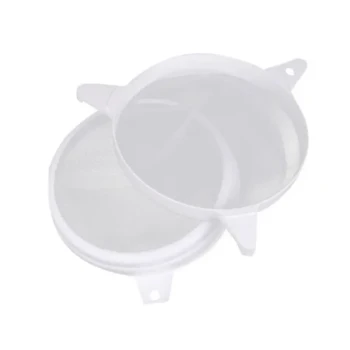
The "crush and strain" method is a manual, low-equipment technique for harvesting honey. Instead of using centrifugal force to spin honey out of the comb, this process involves physically destroying the honeycomb structure—by mashing, chopping, or puncturing the cells—to release the liquid, which is then filtered to separate it from the wax.
Core Takeaway This approach is the most accessible method for hobbyists because it eliminates the need for expensive extraction machinery. However, it requires the destruction of the honeycomb, meaning bees must consume extra energy and resources to rebuild their wax infrastructure the following season.
The Mechanics of the Process
Breaking the Cells (The "Crush")
The primary goal of this phase is to rupture every individual cell in the honeycomb. Beekeepers achieve this by manually chopping the comb with a knife, slicing off the wax cappings, or simply mashing the comb with a heavy utensil.
Unlike mechanical extraction, which preserves the structure of the comb, this step reduces the wax and honey into a mixed slurry.
Filtering the Mixture (The "Strain")
Once the cells are thoroughly broken, the resulting mixture of liquid honey and wax fragments is poured into a filtration system. This typically consists of a sieve, colander, or cheesecloth suspended over a collection container.
Gravity pulls the heavy liquid honey through the mesh, while the wax particles and other debris are trapped behind.
Settling and Clarifying
After the initial straining, the honey is often left to settle. As noted in general processing guidelines, allowing the honey to rest permits air bubbles and fine impurities—often referred to as "scum"—to rise to the surface.
This top layer can be skimmed off with a spoon before packaging, resulting in a cleaner final product.
Understanding the Trade-offs
Equipment vs. Labor
The "crush and strain" method is virtually free regarding equipment costs; you only need a bucket and a filter. However, it is labor-intensive and slow compared to using a mechanical extractor, making it unsuitable for large-scale commercial operations.
Wax Destruction vs. Preservation
The most significant downside is the loss of drawn comb. In standard extraction (spinning), the comb remains intact and is returned to the hive for immediate reuse by the bees.
In "crush and strain," the comb is destroyed. Consequently, the bees must consume significantly more honey to produce new wax to rebuild the comb, potentially lowering future honey yields.
Making the Right Choice for Your Goal
- If your primary focus is low startup costs: This method is ideal as it requires no investment in a centrifuge or mechanical extractor.
- If your primary focus is maximum honey production: You should avoid this method, as preserving the drawn comb allows bees to focus on nectar collection rather than wax building.
- If your primary focus is wax harvesting: This method is beneficial, as it yields a large amount of high-quality beeswax as a byproduct of the harvest.
For the hobbyist with just one or two hives, "crush and strain" offers the perfect balance of simplicity and effectiveness.
Summary Table:
| Feature | Crush & Strain Method | Centrifugal Extraction |
|---|---|---|
| Equipment Cost | Very Low (Bucket & Sieve) | High (Mechanical Extractor) |
| Comb Condition | Destroyed (Mashed) | Preserved (Intact) |
| Labor Level | High (Manual Processing) | Low (Automated/Fast) |
| Honey Yield | Lower (Bees must rebuild wax) | Higher (Bees reuse comb) |
| Wax Yield | High (Abundant byproduct) | Low (Only cappings) |
| Scale Suitability | Hobbyist (1-2 hives) | Commercial / Large Scale |
Scale Your Honey Production with HONESTBEE
While the crush and strain method is great for hobbyists, commercial apiaries and growing distributors need high-efficiency machinery to maximize yields and preserve valuable comb. HONESTBEE provides the professional-grade tools you need to transition from manual labor to high-output success.
Our comprehensive wholesale range includes:
- Honey Extraction & Filling Machines: Automated solutions for rapid processing.
- Hive-Making Machinery: Build your infrastructure with precision.
- Beekeeping Tools & Consumables: Everything from protective gear to specialized hardware.
- Cultural Merchandise: Unique honey-themed products to expand your brand.
Ready to upgrade your operation and increase your bottom line? Contact us today to explore our wholesale offerings and let HONESTBEE empower your beekeeping business.
Related Products
- Stainless Steel Triangle Support Honey Strainer and Filters
- Professional Honey Filter with Tripod Support Stand
- Economy Honey Homogenizer Mixer and Melting Machine for Beekeeping
- Heavy Duty Stainless Steel Honey Processing Machine Decrystallizing Tank
- Stainless Steel Double Layer Honey Strainer Sieve Filters
People Also Ask
- Why is stainless steel preferred for honey strainers? Ensure Purity and Durability for Your Honey
- What can I use to strain honey? A Beekeeper's Guide to Choosing the Right Filter
- What is the easiest way to strain honey? A Simple Guide for Hobbyist Beekeepers
- What is the primary function of a honey strainer in beekeeping? Achieve Commercial Purity & Visual Clarity
- Why is straining an essential step in honey processing? Master the Key to Pure, Market-Ready Honey Harvests