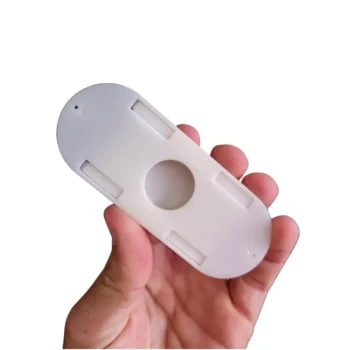
The design logic of portable bee boxes is grounded in the manipulation of honey bee behavior—specifically phototaxis—to facilitate a safe capture and release workflow. By employing a multi-chambered structure with sliding partitions and specific light-transmitting windows, these devices allow operators to capture foragers, guide them onto bait using light as a lure, and establish a directional vector toward a wild hive.
The core function of the bee box is to act as a "recruitment tool." It uses light and mechanical separation to train bees to a food source, allowing you to establish a visual "beeline" that points directly to the colony's location.
The Mechanics of Directional Control
The effectiveness of a portable bee box relies on a specific interaction between its physical components and the biological instincts of the bee.
The Multi-Chamber Architecture
The box is typically divided into multiple distinct chambers.
This compartmentalization is critical. It allows you to separate the capture zone from the feeding zone. This prevents the bee from escaping immediately upon capture and provides a controlled environment for introducing the bait.
Leveraging Phototaxis
The primary mechanism for moving a bee inside the box is phototaxis, the organism's natural attraction to light.
The design incorporates light-transmitting windows or transparent sections. When a bee is trapped in a dark chamber, it will instinctively move toward the only available light source.
By selectively covering or uncovering these windows, you can "steer" the bee between chambers without physically touching it.
The Sliding Partition System
Control over the internal space is maintained via sliding partitions.
These partitions act as gates between the chambers. When a bee moves toward the light in the adjacent chamber, the partition is slid shut behind it.
This secures the bee in the bait chamber, where it is forced to settle and discover the provided sugar syrup or honey.
The Operational Strategy
The physical design serves a specific operational loop known as "lining."
The Capture-Feed-Release Cycle
The box is designed to streamline the process of capturing a random foraging bee and converting it into a reliable guide.
Once the bee feeds on the bait inside the box, it is released. Because it is laden with food, it returns directly to its hive.
Establishing the Beeline
The ultimate goal of the box's design is to facilitate repetition.
The design allows you to capture and release multiple bees efficiently. As these bees return to the hive and communicate the food source, more bees return to the box.
This traffic creates a visible line of flight—the beeline—which you can follow through complex terrain to locate the wild colony.
Common Constraints and Trade-offs
While the design is effective, it relies heavily on environmental conditions and operator skill.
Dependency on Ambient Light
Because the logic relies on light contrast, the box functions best when there is a clear difference between the interior shadow and the exterior light.
On heavily overcast days or in dense forest canopies, the phototactic response may be weaker, making it difficult to move bees between chambers efficiently.
Mechanical Precision vs. Durability
The sliding partitions must move smoothly to avoid injuring the bees.
If a slide is too loose, bees may escape or get crushed; if it is too tight, it may jar the box and disturb the feeding bees. This requires a high quality of construction that balances tight tolerances with rugged field durability.
Making the Right Choice for Your Goal
When selecting or building a bee box, prioritize the features that align with your specific environment.
- If your primary focus is rapid recruitment: Prioritize a box with high-transparency windows and very smooth sliding mechanisms to minimize the time bees spend trapped between chambers.
- If your primary focus is durability in rough terrain: Ensure the sliding partitions are constructed of robust materials that will not warp or stick when exposed to humidity or debris.
The bee box is not a trap, but a communication tool; its design succeeds only when it allows you to efficiently negotiate a trade of food for directional information.
Summary Table:
| Feature | Design Component | Function & Logic |
|---|---|---|
| Movement Control | Light-Transmitting Windows | Leverages phototaxis to guide bees between chambers using light. |
| Spatial Management | Sliding Partition System | Acts as a gate to secure bees in specific zones without physical contact. |
| Workflow Separation | Multi-Chamber Architecture | Separates the capture zone from the feeding zone for controlled baiting. |
| Operational Goal | Capture-Feed-Release Cycle | Converts foraging bees into guides to establish a visible directional beeline. |
Elevate Your Beekeeping Operations with HONESTBEE
At HONESTBEE, we specialize in empowering commercial apiaries and distributors with high-performance tools designed for professional use. Whether you are tracking wild colonies or managing large-scale operations, our comprehensive wholesale portfolio offers everything from specialized hive-making and honey-filling machinery to durable field equipment and essential industry consumables.
Why Partner with HONESTBEE?
- Professional Grade: Equipment built to withstand rigorous field conditions.
- Complete Solutions: A full spectrum of tools, from hardware to honey-themed cultural merchandise.
- Wholesale Advantage: Competitive pricing tailored for distributors and large-scale apiaries.
Contact us today to streamline your apiary's efficiency and equipment sourcing!
References
- Hannelie Human, Huoqing Zheng. Miscellaneous standard methods for<i>Apis mellifera</i>research. DOI: 10.3896/ibra.1.52.4.10
This article is also based on technical information from HonestBee Knowledge Base .
Related Products
- Portable Bee Mating Hive Boxes Mini Mating Nucs 8 Frames for Queen Rearing
- Portable Electric Bee Vacuum with Lithium Battery and 20L Collection Bucket
- Plastic Transporting Bee Packages and Nuc Boxes for Beekeeping
- JZBZ Style Professional Battery Box with 20 Shipping Cages
- Metal Bee Hive Stand Bee Box Stand for Beekeeping
People Also Ask
- How do specialized queen-rearing frames and mating boxes boost off-season bee production? Optimize Your Apiary's Output
- What are the approximate weights of different types of 8-frame beehive boxes? Lift Smarter for Your Apiary
- What role does the structural configuration of beekeeping mating boxes play? Optimize Queen Mating Success
- What is an 8 frame box and why is it popular? A Lighter, More Ergonomic Hive Solution
- What role do portable mating nucs play in geographic isolation breeding? Secure Genetic Purity in Remote Locations