A high-performance pollen trap functions as a specialized mechanical filter installed at the entrance of a beehive. Its primary role is to strip pollen loads from the hind legs of returning worker bees using a series of precisely sized apertures, achieving separation through physical obstruction without harming the insect.
Core Takeaway High-performance traps are not just about collection; they are engineered for volume and purity. By optimizing aperture design, these tools can facilitate yields of up to 36kg per colony annually while simultaneously filtering out hive debris to ensure a cleaner raw material for processing.
The Mechanics of Efficient Extraction
Precision Aperture Design
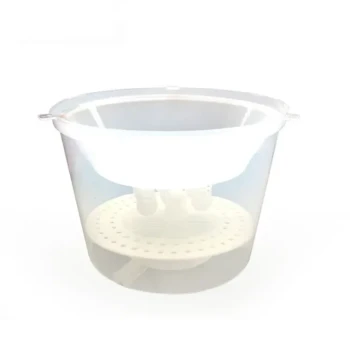
The core mechanism of the trap relies on a grid or sieve plate featuring specifically calculated pore sizes.
These apertures are large enough to allow the worker bee to pass through but small enough to create friction against the pollen pellets stored on their hind legs.
Non-Destructive Harvesting
A defining feature of a high-performance trap is the balance between obstruction and safety.
The design effectively dislodges the pollen pellet so it falls into a collection tray, yet it prevents physical injury to the bee’s legs or body. This ensures the colony's workforce remains healthy and active.
Optimizing Yield and Purity
Maximizing Annual Production
Standard traps often miss a significant percentage of available pollen, but optimized high-performance designs drastically improve capture rates.
According to primary data, these advanced systems can elevate annual pollen yields to reach levels as high as 36kg per colony.
Ensuring Raw Material Quality
Beyond simple collection, these traps serve as a critical quality control checkpoint.
By intercepting pollen at the entrance, the device reduces the entry of internal hive impurities and debris. This guarantees a higher degree of initial purity, creating a superior foundation for subsequent deep processing stages.
Understanding the Operational Trade-offs
Balancing Collection with Colony Health
While high efficiency is desirable, continuous use without management can deplete the colony's necessary nutritional reserves.
Operators must balance harvest periods with recovery times to ensure the colony retains enough pollen for its own development.
Drone Accessibility
The apertures designed to strip pollen from worker bees are often too small for larger drones to pass through.
Effective traps typically include a movable grille or bypass mechanism. This allows beekeepers to open the entrance periodically, ensuring unimpeded access for drones and preventing disruption to natural mating and population dynamics.
Making the Right Choice for Your Goal
To maximize the utility of a high-performance pollen trap, align your usage with your specific objectives:
- If your primary focus is Commercial Volume: Prioritize traps with optimized aperture geometries that are proven to support yields approaching the 36kg benchmark.
- If your primary focus is Product Purity: Select designs explicitly engineered to minimize the intake of internal impurities to reduce downstream processing costs.
- If your primary focus is Colony Sustainability: Ensure your equipment allows for easy disengagement (such as a sliding grille) to permit free foraging and drone passage during non-harvest intervals.
Successful pollen harvesting requires viewing the trap not just as a collector, but as a precision tool for managing both yield and hive biology.
Summary Table:
| Feature | Function & Impact |
|---|---|
| Precision Apertures | Strips pollen pellets via friction while allowing bees to pass safely. |
| High-Yield Design | Engineered to achieve commercial outputs of up to 36kg per colony annually. |
| Purity Control | Filters out hive debris and internal impurities at the point of entry. |
| Safety Mechanisms | Includes drone bypasses and non-destructive grids to maintain hive health. |
Scale Your Pollen Production with HONESTBEE
Are you looking to enhance your commercial output and product quality? HONESTBEE provides professional-grade beekeeping tools and machinery tailored for commercial apiaries and global distributors. From high-performance pollen traps and hive-making machines to specialized honey-filling equipment, we offer the full spectrum of hardware and consumables to streamline your operations.
Our value to you:
- Comprehensive Wholesale Range: Access everything from specialized machinery to honey-themed cultural merchandise.
- Precision Engineering: Equipment designed for maximum yield and long-term durability.
- Industry Expertise: Solutions that balance high-volume harvesting with colony sustainability.
Ready to upgrade your apiary’s efficiency? Contact us today to explore our wholesale offerings!
References
- Fermín J. Chamorro, Guiomar Nates‐Parra. Botanical origin and geographic differentiation of bee-pollen produced in high mountains from the Colombian eastern Andes. DOI: 10.1080/00173134.2017.1283440
This article is also based on technical information from HonestBee Knowledge Base .
Related Products
- High-Efficiency Diamond Maze Bee Escape for Clearing Supers
- Removable Plastic Pollen Trap With Ventilated Tray for Bees Pollen Collector
- 30 cm Plastic Entrance Hole Bee Pollen Trap and Collector
- Plastic Bee Pollen Trap Strips Comb Catcher Collector
- Heavy-Duty Ergonomic Grip Galvanized Pollen Shovel
People Also Ask
- How can bees be cleared off honey supers in a Langstroth hive? Use a Gentle Bee Escape
- What is a bee escape and why is it used in beekeeping? A Guide to Gentle Honey Harvesting
- How can a bee escape be adapted for use in a Warre hive? Effective Customization Methods for Successful Harvesting
- What are some common types of bee escapes and how are they typically mounted? Optimize Your Honey Harvest Efficiency
- What is the primary function of a bee escape? Simplify Your Honey Harvest with Stress-Free Hive Management