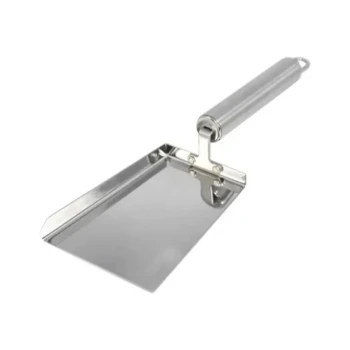
A pollen collector serves as a specialized filtration device installed at the entrance of a beehive to mechanically intercept and harvest pollen pellets from foraging bees. By forcing returning bees to navigate through a calibrated grid or perforated plate, the device dislodges pollen loads from their hind legs, allowing researchers to gather fresh samples without harming the insects.
Core Insight: The pollen collector is the foundational tool for nutritional benchmarking in apiculture. It transforms the chaotic variable of open foraging into a controlled data stream, enabling the precise formulation of mono-floral diets and the accurate analysis of plant origins.
The Mechanics of Interception
The Perforated Grid Design
The core component of the collector is a physical barrier, typically a plate featuring holes measuring between 4.0 to 4.5 mm in diameter.
This specific size is critical; it is large enough to allow the honeybee to pass through but narrow enough to create friction against the bee's body.
The Separation Process
As foraging bees squeeze through these perforations to enter the hive, the mechanical action scrapes the pollen pellets carried on their hind legs.
Gravity then causes these dislodged pellets to fall directly into a designated collection tray located beneath the grid, separating the nutrient payload from the carrier.
The Role in Nutritional Research
Enabling Mono-floral Diets
According to primary research protocols, the ability to collect fresh and sufficient raw pollen is essential for creating specific dietary profiles.
Researchers use these bulk samples to produce "mono-floral diets"—nutrition plans based on a single flower source. This allows scientists to isolate variables and test how specific pollens affect bee health.
Plant Origin Analysis
Beyond diet creation, the collected pellets serve as data points for environmental analysis.
By examining the raw pollen captured in the tray, researchers can determine exactly which plants the colony is visiting, providing clear insights into local biodiversity and foraging preferences.
Distinguishing Equipment Functions
Collection vs. Defense
It is vital to distinguish the pollen collector from other entrance hardware, such as entrance reducers.
While both sit at the hive opening, an entrance reducer is a restrictor used to help a colony defend against intruders (like mice) or maintain internal temperatures in cold climates.
The Specificity of Purpose
The pollen collector offers no defensive or thermal benefits. Its sole function is the extraction of biological samples for analysis.
Mistaking a reducer for a collector will result in zero data collection, as reducers lack the stripping grid necessary to harvest pollen.
Making the Right Choice for Your Goal
To maximize the value of your beehive setup, match your equipment to your specific research objective:
- If your primary focus is nutritional experimentation: Prioritize a collector with a precise 4.0–4.5 mm grid to ensure sufficient volume for creating mono-floral test diets.
- If your primary focus is environmental surveying: Use the collector to gather raw samples specifically for identifying plant origins and mapping local forage availability.
- If your primary focus is colony survival: Remove the pollen collector and install an entrance reducer to defend the hive and conserve internal heat.
By using the pollen collector strictly for data harvesting, you ensure the integrity of your nutritional samples while maintaining a clear understanding of your colony's environmental inputs.
Summary Table:
| Feature | Pollen Collector | Entrance Reducer |
|---|---|---|
| Primary Function | Mechanical pollen harvesting | Hive defense & thermal regulation |
| Mechanism | 4.0–4.5mm calibrated grid | Restricted entrance opening |
| Research Use | Nutritional benchmarking & biodiversity mapping | Colony survival & pest protection |
| Impact on Bees | Collects pollen loads from hind legs | Limits entry/exit flow for security |
| Data Output | Fresh raw pollen samples | N/A |
Elevate Your Beekeeping Operations with HONESTBEE
At HONESTBEE, we specialize in empowering commercial apiaries and distributors with professional-grade solutions. Whether you are conducting advanced nutritional research or scaling honey production, our comprehensive wholesale portfolio has you covered.
Our Value to You:
- Research-Grade Equipment: High-precision pollen collectors and specialized beekeeping tools for accurate data collection.
- Industrial Machinery: Advanced hive-making and honey-filling machines to streamline your manufacturing process.
- Full-Spectrum Supply: From essential industry consumables to honey-themed cultural merchandise, we provide everything your business needs to thrive.
Ready to enhance your apiary's efficiency and output? Contact us today to discuss your wholesale needs and discover how HONESTBEE can support your growth.
References
- Maciej Sylwester Bryś, Aneta Strachecka. Changes in the Activities of Antioxidant Enzymes in the Fat Body and Hemolymph of Apis mellifera L. Due to Pollen Monodiets. DOI: 10.3390/antiox14010069
This article is also based on technical information from HonestBee Knowledge Base .
Related Products
- Plastic Bee Pollen Trap Strips Comb Catcher Collector
- 30 cm Plastic Entrance Hole Bee Pollen Trap and Collector
- Removable Plastic Pollen Trap With Ventilated Tray for Bees Pollen Collector
- Heavy-Duty Ergonomic Grip Galvanized Pollen Shovel
- Stainless Steel Pollen Shovel with Wooden Handle
People Also Ask
- For what reasons do beekeepers collect bee pollen? Boost Hive Health and Unlock New Revenue Streams
- What are the design principles and advantages of pollen traps in the collection of bee pollen? Boost Your Apiary Yield
- What are the ideal weather conditions for installing a bee pollen trap? Ensure Colony Safety with Expert Timing
- Why is frequent harvesting of bee pollen from traps necessary for quality control? Ensure Freshness and Prevent Mold.
- How often should bee pollen be harvested from a trap and why? Master Freshness and Prevent Spoilage