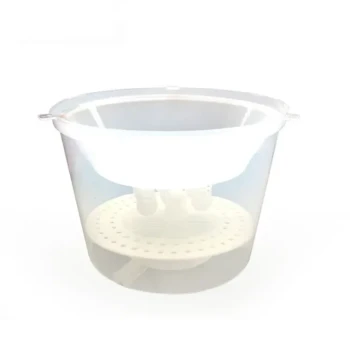
A Pollen Trap functions as a mechanical interception device designed to automate the harvesting of bee pollen. Installed at the entrance of a beehive, it forces returning foragers to pass through a grid with specifically sized pores, which physically dislodges pollen pellets from their hind legs and collects them in a tray before the bees fully enter the colony.
Core Takeaway By leveraging the natural entry behavior of foraging bees, Pollen Traps enable the large-scale, standardized collection of high-purity pollen without manual intervention. Beyond production, they serve as critical diagnostic tools for analyzing local plant diversity, foraging intensity, and the correlation between pollen composition and honey quality.
The Mechanics of Extraction
The Physical Barrier System
The core mechanism of the trap is a grid or mesh barrier featuring openings calibrated to a specific size. This hardware is installed directly at the hive entrance, becoming the only point of entry for the colony.
Passive Dislodgment
As worker bees squeeze through these openings to return home, the physical restriction scrapes the pollen loads (pellets) off their hind legs. The process relies on mechanical friction rather than chemical or manual removal.
Gravity-Fed Collection
Once dislodged, the pollen pellets fall through a lower screen into a dedicated collection tray. This design separates the harvested pollen from the bees immediately, preventing it from being tracked into the hive or contaminated by hive debris.
Strategic Value for Production and Research
Ensuring Raw Material Purity
Because the pollen is intercepted at the entrance, it never enters the hive environment. This prevents the pollen from being consumed by the colony or mixed with nectar and wax, ensuring the harvested granules are clean and suitable for processing into nutritional products or capsules.
Analyzing Foraging Intensity
For researchers and apiarists, the volume of pollen caught in the trap serves as a quantitative metric. It provides concrete data on colony foraging intensity, allowing observers to measure how actively the bees are gathering resources during specific periods.
Monitoring Biodiversity
The trap acts as a sampling tool for the surrounding environment. By collecting pollen pellets, researchers can identify specific floral sources to characterize the local plant diversity and determine the colony's foraging preferences.
Correlating Honey Quality
As highlighted in primary research, the trap is essential for studying the relationship between pollen composition and honey quality. It allows for the isolation of specific pollen types to determine how they influence the sensory and chemical properties of the honey produced.
Operational Trade-offs
Balancing Harvest vs. Hive Health
The trap functions by depriving the hive of its incoming protein source. While effective for collection, it prevents the pollen from being consumed by the brood. Continuous use without breaks can lead to nutritional deficits within the colony.
The Importance of Grid Precision
The efficiency of the trap relies entirely on the pore size of the grid. If openings are too large, pollen is not stripped; if too small, they may cause physical harm to the bees or significantly slow down hive traffic.
Making the Right Choice for Your Goal
To maximize the utility of a Pollen Trap, align its usage with your specific objective:
- If your primary focus is Commercial Production: Prioritize traps with high-capacity collection trays and precise grids to ensure maximum purity for processing into granules.
- If your primary focus is Environmental Research: Use the trap to gather samples for species identification, helping you map the biodiversity and flowering periods of the local geography.
- If your primary focus is Honey Quality Control: Utilize the trap to capture and analyze pollen composition to understand the specific floral contributors to your honey's flavor profile.
Effective use of a Pollen Trap turns a biological byproduct into a quantifiable data point and a valuable commodity.
Summary Table:
| Feature | Function & Purpose | Benefit to Apiary |
|---|---|---|
| Mechanical Grid | Dislodges pollen pellets via calibrated friction | Enables automated, high-volume harvesting |
| Collection Tray | Separates pellets from hive debris and bees | Ensures raw material purity for retail/processing |
| Data Sampling | Monitors foraging intensity and floral diversity | Provides scientific insights for environmental research |
| Quality Control | Links pollen composition to honey profiles | Enhances product branding and sensory consistency |
Maximize Your Apiary’s Commercial Potential with HONESTBEE
At HONESTBEE, we empower commercial apiaries and global distributors with professional-grade beekeeping solutions. Whether you are scaling up pollen production or refining your honey quality research, our comprehensive wholesale catalog has you covered.
Why partner with HONESTBEE?
- Advanced Machinery: From hive-making to honey-filling systems.
- Specialized Hardware: High-precision pollen traps and specialized beekeeping tools.
- Scale & Supply: Reliable delivery of essential consumables and cultural merchandise for large-scale operations.
Ready to elevate your beekeeping business? Contact us today to explore our wholesale offers and see how our expertise can streamline your production!
References
- Violeta Čeksterytė, Rūta Navakauskienė. Evaluation of proteome profiles of Salix spp. pollen and relationship between glucose oxidase activity and pollen content in willow honey. DOI: 10.46490/vol25iss1pp083
This article is also based on technical information from HonestBee Knowledge Base .
Related Products
- Removable Plastic Pollen Trap With Ventilated Tray for Bees Pollen Collector
- 30 cm Plastic Entrance Hole Bee Pollen Trap and Collector
- Plastic Bee Pollen Trap Strips Comb Catcher Collector
- High-Efficiency Diamond Maze Bee Escape for Clearing Supers
- Professional Bucket Style Wasp and Moth Pheromone Trap
People Also Ask
- What are the design principles and advantages of pollen traps in the collection of bee pollen? Boost Your Apiary Yield
- What is the function of professional pollen traps in evaluating honey plants? Quantifying Pollination and Crop Potential
- What functions do pollen traps serve for bee bread production? Optimize Your Raw Material Collection
- What maintenance and pest prevention measures should be taken for pollen traps? Protect Your Hive and Harvest Quality
- How does the use of pollen traps in honeybee hives enhance crop fertilization? Boost Your Yield Through Induced Activity