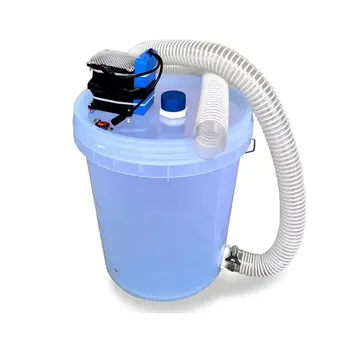
An aspirator or vacuum collector functions by utilizing controlled negative pressure to gently draw target insects into a secure containment vessel. This device is specifically engineered to capture individual bees directly from crops or surfaces without the physical impact associated with traditional trapping methods.
The primary value of an aspirator lies in its ability to isolate specific individuals without damaging them, ensuring the specimen remains physically intact for identification while preventing the cross-contamination of samples with non-target species.
Preserving Specimen Quality
The most critical function of the aspirator is the protection of the bee's physical structure.
Reducing Mechanical Damage
Unlike nets that rely on striking or sweeping, an aspirator uses air suction to move the insect.
This method significantly lowers the risk of crushing the specimen or detaching delicate appendages during capture.
Ensuring Morphological Integrity
For researchers, the physical condition of the bee is paramount for accurate data.
By maintaining morphological integrity, the aspirator ensures that specimens are suitable for rigorous taxonomic identification or detailed physiological analysis later in the lab.
Precision in Field Monitoring
Beyond protection, the aspirator serves as a tool for high-precision ecological monitoring.
Selective Collection
The device allows operators to target specific individuals exhibiting particular behaviors.
This is essential when monitoring foraging activity on specific crops, as it allows the researcher to choose exactly which bee to sample based on real-time observation.
Eliminating Non-Target Mixing
A common issue in entomology is "by-catch," or the accidental collection of unwanted species.
The aspirator avoids the non-target species mixing inherent in sweep-netting processes, ensuring that the collected sample consists only of the intended subjects.
Understanding the Operational Trade-offs
While the aspirator offers superior precision, it is important to understand how it contrasts with other methods mentioned in the reference material.
Individual Focus vs. Mass Capture
The aspirator is an active, selective tool designed for quality over quantity.
It is distinct from sweep-netting, which is a passive or broad-stroke method. While sweep-netting captures large volumes of biomass quickly, it lacks the discrimination and gentleness of the vacuum approach.
The Requirement for Visibility
Because the aspirator is used to collect specific individuals, it requires the operator to visually locate the target first.
This makes it highly effective for behavioral studies on crops but functionally different from blind sampling methods.
Making the Right Choice for Your Research
When deciding on a collection method, align your choice with your specific data requirements.
- If your primary focus is Taxonomic Identification: Prioritize the aspirator to ensure morphological integrity and prevent damage to key physical features required for classification.
- If your primary focus is Behavioral Ecology: Use this tool to selectively capture individuals from specific crops without introducing noise from non-target species.
The aspirator is the definitive tool for researchers who require undamaged specimens and absolute certainty regarding the host plant origin of the bee.
Summary Table:
| Feature | Aspirator / Vacuum Collector | Traditional Sweep Netting |
|---|---|---|
| Mechanism | Controlled Air Suction | Physical Striking / Sweeping |
| Specimen Quality | High (Morphological Integrity) | Moderate to Low (Risk of Damage) |
| Selectivity | High (Target Specific Individuals) | Low (Captures All Biomass) |
| By-catch Risk | Minimal to None | High (Non-target Species) |
| Primary Use | Behavioral & Taxonomic Research | General Biodiversity Surveys |
Elevate Your Apiary Operations with HONESTBEE
As a dedicated partner to commercial apiaries and distributors, HONESTBEE understands that precision is the foundation of success. Whether you are conducting field research or managing large-scale operations, our comprehensive wholesale portfolio offers the specialized tools you need.
From precision bee collection devices to industrial-grade hive-making and honey-filling machinery, we provide the full spectrum of beekeeping equipment and essential consumables designed for durability and performance.
Ready to scale your business with professional-grade solutions? Contact HONESTBEE Today to explore our wholesale offerings and discover how our expertise can streamline your production from hive to market.
References
- Jason R. Graham, Jamie Ellis. Observing bees and wasps: Why surveys and monitoring programs are critical and how they can improve our understanding of these beneficial hymenopterans. DOI: 10.26786/1920-7603(2023)725
This article is also based on technical information from HonestBee Knowledge Base .
Related Products
- Portable Electric Bee Vacuum with Lithium Battery and 20L Collection Bucket
- Commercial Grade Vertical Electric Bee Sweeper for Bee Removal
- High Performance Cordless Electric Bee Shaker for Beekeeping
- Plastic Handle Single Row Artificial Fiber Bee Brush
- Heavy Duty Manual Bee Smoker Blower for Beekeeping
People Also Ask
- What are the advantages of using portable bee vacuums for sampling honey bees? Optimize Nosema Detection Efficiency
- Who is qualified to use a bee vacuum? Essential Safety and Experience Requirements for Effective Bee Relocation
- What potential problems can occur when using a bee vacuum? Prevent Colony Mortality and Ensure Safe Bee Removal
- What are the benefits of using a bee vacuum? Safely Remove & Preserve Honey Bee Colonies
- Why do people use bee vacuums? A Humane Solution for Live Bee Removal