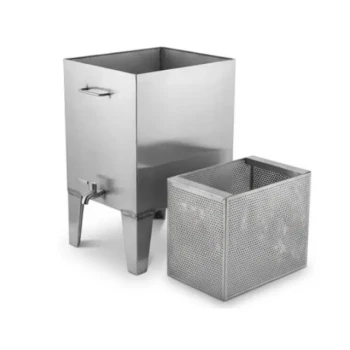
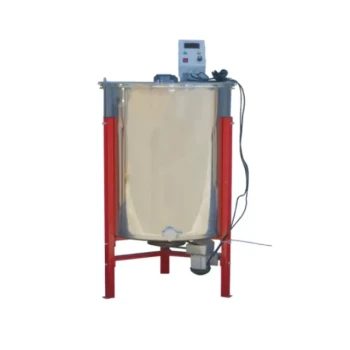
The primary function of an industrial centrifuge in the methanol extraction process is rapid phase separation. By utilizing high-speed rotation, the device generates powerful centrifugal force to split the treated mixture into two distinct components: a purified molten beeswax phase and a waste methanol phase containing contaminants.
By replacing passive gravity separation with active mechanical force, the industrial centrifuge drastically reduces solvent residues and ensures the structural integrity and purity of the recovered beeswax.
The Mechanics of the Extraction
Generating Centrifugal Force
The core mechanism involves spinning the mixture at high velocities. This rotation creates a force significantly stronger than gravity, acting on the different densities within the mixture.
Creating Distinct Phases
Under this intense force, the mixture stratifies almost instantly. The heavier materials and the lighter phases separate, isolating the molten beeswax from the methanol solvent.
Isolating Contaminants
Crucially, the contaminants do not remain in the wax. They are driven into the methanol phase, effectively washing the beeswax and leaving the impurities behind in the solvent.
Why This Step is Critical for Quality
Minimizing Solvent Residues
One of the most important roles of the centrifuge is reducing the presence of methanol in the final product.
Methanol is a solvent that must be removed for the wax to be safe and usable. The high G-force spins off the liquid methanol far more effectively than simple draining or settling could achieve.
Ensuring High Purity
The separation process is a "solid-liquid" separation operational step. By forcibly ejecting the contaminant-laden methanol, the system recovers beeswax that retains its natural quality without the chemical baggage of the extraction process.
Understanding the Trade-offs
Complexity vs. Efficiency
While traditional methods like gravity settling are simpler and require less energy, they are often insufficient for chemical extraction processes involving solvents like methanol.
Maintenance and Operation
An industrial centrifuge introduces moving parts and requires precise calibration. However, this operational complexity is the necessary "cost" for achieving a level of separation efficiency that ensures the beeswax is free of hazardous solvents.
Making the Right Choice for Your Goal
To determine if this specific extraction step aligns with your production needs, consider your final requirements for the beeswax:
- If your primary focus is Safety and Purity: The centrifuge is non-negotiable, as it provides the mechanical force required to strip hazardous methanol residues from the wax.
- If your primary focus is Production Speed: Implementing a centrifuge transforms a slow, passive settling process into a continuous, rapid-flow operation.
Ultimately, the industrial centrifuge serves as the gatekeeper between a chemically treated raw mixture and a purified, safe final product.
Summary Table:
| Feature | Function in Methanol Extraction | Benefit for Beeswax Quality |
|---|---|---|
| Phase Separation | Splits molten wax from methanol solvent | Ensures structural integrity and purity |
| Centrifugal Force | Replaces passive gravity with active mechanical force | Drastically reduces solvent residues |
| Contaminant Isolation | Drives impurities into the waste liquid phase | Removes chemical baggage and hazards |
| Process Efficiency | Transitions batch settling to continuous flow | Increases production speed and throughput |
Elevate Your APIARY Operations with HONESTBEE
Are you a commercial apiary or distributor looking to optimize your production? HONESTBEE specializes in delivering the industry's most reliable beekeeping tools, machinery, and equipment. From precision industrial centrifuges for beeswax purification to advanced hive-making and honey-filling machines, our comprehensive wholesale offering is designed to scale your business.
Don't let inefficient extraction limit your quality. Let HONESTBEE supply you with the essential hardware and consumables needed to lead the market. Contact us today to explore our full equipment portfolio and see how we can streamline your honey and wax processing.
References
- J. M. Flores, Marı́a Dolores Hernando. Acceptance by Honey Bees of Wax Decontaminated through an Extraction Process with Methanol. DOI: 10.3390/insects14070593
This article is also based on technical information from HonestBee Knowledge Base .
Related Products
- Manual Hand Crank 4 Frame Honey Extractor Centrifuge for Beekeeping
- Steam Beeswax Melter Wax Warmer for Wax Processing
- Solar Beeswax Melter Easy Solar Wax Melter for Beeswax
- Professional 4 Frame Self Reversing Electric Honey Extractor for Beekeeping
- electric honey extractor honey centrifuge 3 frame honey extractor stainless steel honey frame extractor
People Also Ask
- What are some tips for achieving efficient honey extraction with a centrifuge extractor? Maximize Your Yield & Efficiency
- What is the proper procedure for maintaining a centrifuge honey extractor? Expert Tips for Longevity and Hygiene
- What are the advantages of using a centrifuge honey extractor? Maximize Yields and Protect Your Honeycombs
- Which type of honey extractor is generally more durable? Focus on Material & Build Quality for Longevity
- What is a manual honey extractor? The Essential Guide to Cost-Effective Beekeeping for Beginners