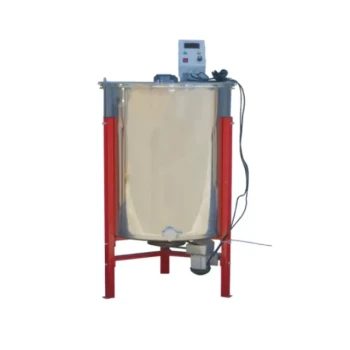
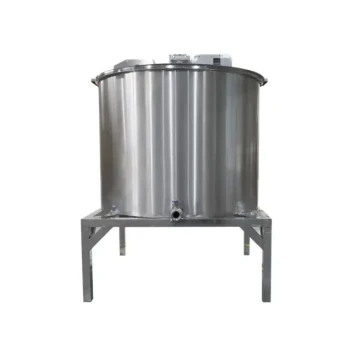
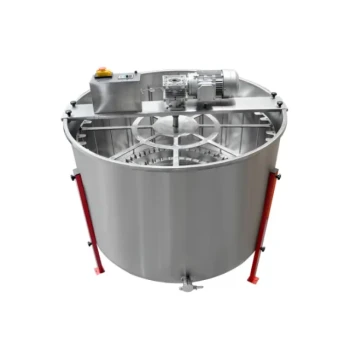
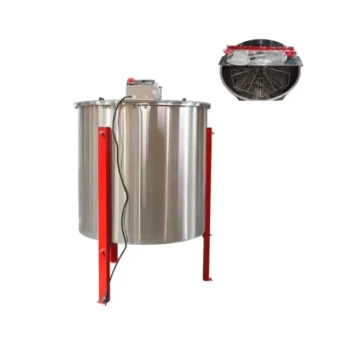
The industrial high-speed centrifuge is the mechanical cornerstone of honey pollen isolation. It utilizes high-velocity rotation to create powerful centrifugal force, physically separating solid pollen grains from the liquid sugar, water, and wax matrix. This process allows for the rapid concentration of trace particles into a pure sediment necessary for botanical verification, geographical origin identification, and DNA analysis.
By leveraging density differences, industrial centrifuges provide the precision rotation required to isolate and wash pollen from diluted honey solutions. This equipment is essential for B2B operations focused on honey quality control, high-purity pollen harvesting, and regulatory compliance.
The Role of Centrifugal Force in Pollen Concentration
Overcoming the Sugar Matrix
The primary function of the centrifuge is to separate solid pollen grains from the diluted honey solution. By spinning the mixture at high speeds, the equipment forces the denser pollen particles to settle at the bottom of the container. This effectively removes the sugar background and wax residues that would otherwise interfere with microscopic observation.
Achieving Precise Sedimentation
Industrial-grade units typically operate at stable speeds of 2500 to 3000 rpm. This specific range utilizes the density difference between the pollen and the liquid to ensure a complete precipitation of even the smallest particles. This physical concentration transforms a low-concentration liquid sample into a high-concentration sediment for analysis.
Multi-Cycle Washing and Purification
The centrifuge is used for multiple cycles of centrifugation and resuspension. This "washing" workflow is critical for removing water-soluble contaminants and preparing the sample for DNA extraction. Each cycle further refines the sediment, ensuring the isolation of pure pollen grains for high-stakes laboratory testing.
Enhancing Accuracy in Quality Control and Research
Botanical and Geographical Origin Identification
Isolating pollen is the only reliable way to verify the botanical and geographical origins of honey. The centrifuge allows technicians to collect a sufficient number of pollen grains, fungal spores, and honeydew indicators. This enrichment process is a prerequisite for ensuring the sample size is statistically significant for microscopic counting.
Preparation for Advanced DNA Analysis
Modern honey trade often requires molecular testing to detect fraud or verify premium floral sources. The centrifuge removes the enzymes and sugars that can inhibit chemical reactions during DNA extraction. By providing a "clean" sample, the equipment ensures the integrity of the genetic data retrieved from the pollen.
Versatility in Industrial Honey Processing
Beyond the laboratory, industrial-grade centrifuges are used for efficient honey recovery from uncapped honeycombs. This dual-purpose utility makes the equipment a high-value asset for commercial apiaries and processors. It maximizes production efficiency while preserving the bioactive components of the honey through purely physical separation.
Understanding the Trade-offs
Equipment Throughput vs. Precision
While high-speed centrifuges offer rapid results, increasing the speed too far can damage the morphology of delicate pollen grains. It is essential to maintain a balance between rotational velocity and sample integrity to ensure accurate microscopic identification.
Maintenance and Operational Complexity
Industrial centrifuges are high-precision instruments that require regular calibration and balancing to prevent vibration-induced wear. For distributors, sourcing units with robust motor designs and easy-to-clean chambers is vital to reducing the long-term cost of ownership for the end-user.
Investment Cost and Scalability
High-speed industrial models represent a significant capital expenditure compared to manual filtration methods. However, the increase in labor efficiency and the ability to perform quantitative pollen analysis (APC) usually justify the investment for large-scale wholesalers and exporters.
How to Apply This to Your Portfolio
As a distributor or wholesaler, selecting the right centrifugal technology is about matching equipment capabilities with your client's specific volume and purity requirements.
- If your primary focus is regulatory compliance and lab testing: Prioritize high-speed models with programmable cycles that facilitate the specialized "washing" workflows needed for DNA and microscopic analysis.
- If your primary focus is high-volume commercial extraction: Focus on industrial-grade centrifuges that emphasize durability, high-capacity rotors, and ease of maintenance for continuous operation.
- If your primary focus is providing a one-stop sourcing solution: Leverage our full-spectrum product portfolio and professional expertise to ensure your clients receive ultra-fast delivery on equipment that meets both laboratory and production standards.
The industrial centrifuge is the definitive tool for transforming raw honey into verifiable, high-purity data and products.
Summary Table:
| Key Function | Benefit for the Workflow | Industry Application |
|---|---|---|
| High-Velocity Rotation | Rapidly concentrates trace pollen particles | Botanical & Geographical Origin ID |
| Matrix Removal | Clears sugar and wax for better observation | Microscopic Counting & Analysis |
| Multi-Cycle Washing | Purifies samples for high-stakes testing | DNA Extraction & Molecular Research |
| Mechanical Separation | Maximizes honey recovery from uncapped combs | Large-Scale Commercial Production |
Scale Your Wholesale Business with HONESTBEE
Are you looking to expand your portfolio with high-precision beekeeping technology? HONESTBEE is your premier partner for one-stop sourcing. We provide distributors and B2B resellers with a comprehensive, full-spectrum product range—from industrial centrifuges and honey-filling machinery to essential apiary consumables and specialized hardware.
Benefit from our deep professional industry expertise, rapid response times, and ultra-fast delivery to keep your supply chain moving. We are committed to helping you enhance your profit margins through reliable equipment and dedicated customer service.
Connect with our expert team today to discuss wholesale opportunities and custom solutions!
References
- Davide Vancheri, Gabriele Ciaccio. Melissopalinological study of Sicilian honey by morphological and molecoular approach. DOI: 10.31396/biodiv.jour.2019.10.4.329.336
This article is also based on technical information from HonestBee Knowledge Base .
Related Products
- electric honey extractor honey centrifuge 3 frame honey extractor stainless steel honey frame extractor
- Manual Hand Crank 4 Frame Honey Extractor Centrifuge for Beekeeping
- Professional 4 Frame Self Reversing Electric Honey Extractor for Beekeeping
- HONESTBEE 72 Frame Industrial Electric Honey Extractor for Beekeeping
- Electric Honey Press Machine for Squeezing Honey Comb Press Equipment
People Also Ask
- What are the characteristics of electric honey extractors? Boost Your Apiary Efficiency with Automated Technology
- What are the disadvantages of using an electric honey extractor? Weighing Cost, Power, and Comb Safety
- What are the advantages of an electric honey extractor? Boost Efficiency and Scale Your Honey Production
- What are the technical advantages of electric honey extractors? Maximize Yield and Protect Your Bee Colony
- How does an electric honey extractor affect the quality of honey? Preserve Flavor & Purity with Precision Extraction