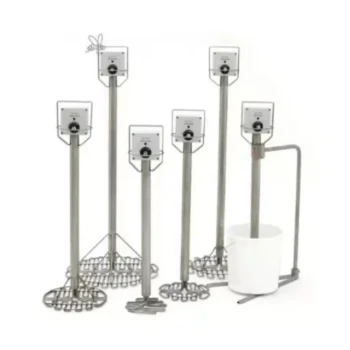
The primary function of an upright cooler (or reflux condensation device) in honey analysis is to maintain constant volume and concentration during required heating steps. By capturing rising vapors and re-condensing them back into the reaction flask, the device prevents the loss of water and volatile components. This ensures that the chemical environment remains stable while the honey sample reacts with acidic reagents or Luff solutions.
Core Insight: In quantitative analysis, heat is often necessary to drive chemical reactions, but heat naturally causes evaporation that skews results. The upright cooler acts as a stabilizer, allowing you to apply the necessary thermal energy without altering the precise concentrations of your sample and reagents.
Preserving Chemical Integrity
To accurately determine reducing sugar content, honey samples must undergo thermal reactions. The upright cooler is the critical hardware that creates a controlled environment for these reactions.
Preventing Solvent Loss
When honey is heated with reagents, the water in the solution begins to evaporate. Without intervention, this steam would escape, drastically reducing the volume of the liquid in the flask.
The upright cooler sits atop the flask, cooling these vapors until they liquefy. Gravity then returns this condensate to the mixture, ensuring the solvent volume remains unchanged.
Stabilizing Reaction Concentrations
Chemical reactions used in this analysis, such as hydrolysis, rely on specific ratios of sugar to acid or Luff solution.
If water is lost to evaporation, the concentration of the reagents increases unpredictably. The upright cooler guarantees that the reaction system concentration remains stable, preventing skewed chemical kinetics.
Ensuring Analytical Accuracy
The ultimate goal of using an upright cooler is to minimize variables that could lead to calculation errors.
Facilitating Complete Reactions
Methods used to determine reducing sugars often require sustained heating to ensure the reaction reaches completion.
The cooler allows the mixture to boil or simmer for the necessary duration without drying out. This ensures that the sugar hydrolysis and subsequent color reactions are fully executed under constant environmental conditions.
The Link to Precision Measurement
Accurate calculation of glucose, fructose, and sucrose levels depends entirely on the initial and final conditions of the sample being known and controlled.
By eliminating volume loss as a variable, the upright cooler ensures that the final titration or measurement reflects the true sugar content, rather than an artifact of evaporation.
Understanding the Trade-offs
While the upright cooler is essential for accuracy, it introduces specific requirements for the analyst.
Equipment Sensitivity
The efficiency of the reflux action depends on the cooling medium (usually water) flowing through the condenser.
If the cooling water is too warm or the flow rate is too low, vapors may still escape through the top of the cooler. This "partial loss" is dangerous because it often goes unnoticed, subtly compromising the data.
Connection Integrity
The seal between the flask and the upright cooler must be perfect.
Even a microscopic gap can allow pressurized vapor to leak out during heating. This bypasses the re-condensation process entirely, leading to concentration errors similar to using no cooler at all.
Making the Right Choice for Your Goal
The use of reflux condensation is not merely a procedural formality; it is a quality control measure essential for validating honey authenticity.
- If your primary focus is Standard Compliance: Ensure your reflux setup strictly maintains a constant volume to meet the rigorous requirements of official methods like Fehling's or Luff-Schoorl.
- If your primary focus is Detecting Adulteration: Use this precise thermal control to accurately measure sugar changes before and after inversion, which helps identify added industrial syrups or sugar feeding.
Precision in hardware setup is the prerequisite for precision in chemical data.
Summary Table:
| Feature | Role in Honey Analysis | Impact on Results |
|---|---|---|
| Solvent Retention | Condenses steam and vapors back into the reaction flask | Maintains constant volume and prevents dry-out |
| Concentration Stability | Prevents evaporation of water and volatile reagents | Ensures stable kinetics for sugar hydrolysis |
| Thermal Regulation | Allows sustained boiling without loss of integrity | Facilitates complete chemical reactions |
| Error Reduction | Eliminates evaporation as a variable | Guarantees precision in glucose/fructose titration |
Maximize Your Lab’s Precision with HONESTBEE
At HONESTBEE, we understand that the integrity of your beekeeping products depends on rigorous analytical standards. Whether you are a commercial apiary ensuring honey authenticity or a distributor seeking high-performance equipment, we provide the specialized tools you need.
From high-precision honey-filling machines to durable laboratory hardware, our comprehensive portfolio is designed to support every stage of the honey production and testing process. We empower our partners with specialized hardware and essential industry consumables that meet the highest quality benchmarks.
Ready to upgrade your operations? Contact us today to explore our wholesale equipment solutions and see how HONESTBEE can enhance your yield and accuracy.
References
- Sulistyianingsih, Riesta Primaharinastiti. Physicochemical Properties and Antioxidant Activity of Three Types of Monofloral Honey from Indonesia. DOI: 10.20473/jfiki.v9i32022.290-297
This article is also based on technical information from HonestBee Knowledge Base .
Related Products
People Also Ask
- What is melter honey used for? A Low-Cost Ingredient for Bakers and Brewers
- How do you melt a bucket of honey? Safely Reliquefy Crystallized Honey Without Damage
- How does a honey melter address the issue of crystallized honey in storage? Restore Flow and Quality Efficiently
- When is a honey melter necessary? Optimize Your Facility's Workflow for Crystallized Honey
- What methods are used to heat honey, and what precaution should be taken? Expert Guide to Safe Honey Liquefaction