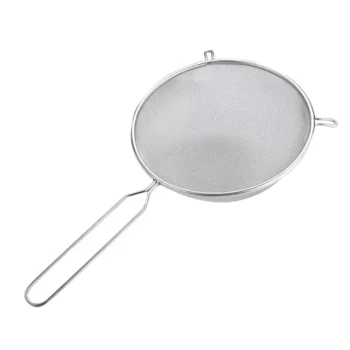
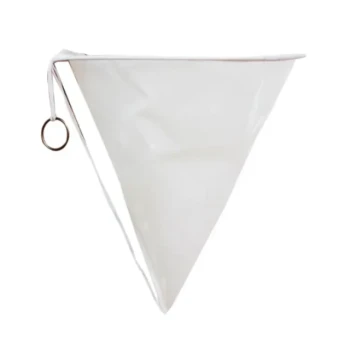
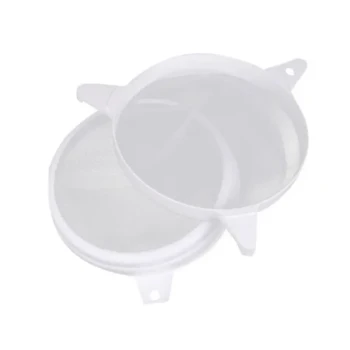
The primary function of fine-mesh metal sieves in the initial filtration of honey samples is to act as a mechanical barrier against macro-impurities. This step physically separates large contaminants—such as bee debris, wax particles, and extraneous plant tissues—from the liquid honey while allowing the honey matrix and microscopic pollen to pass through.
Core Takeaway While filtration cleans the sample, its scientific value lies in noise reduction. By removing large solids prior to centrifugation, the sieve ensures that the resulting sediment is composed primarily of pollen, significantly improving the clarity and efficiency of subsequent microscopic analysis.
The Mechanics of Initial Purification
Removal of Macro-Contaminants
The raw honey sample often contains physical debris introduced during the harvesting process.
The fine-mesh sieve targets specific solid impurities including honeycomb fragments, dead bees, and wax particles. Removing these elements immediately is critical to standardizing the sample for testing.
Preserving the Liquid Matrix
Unlike chemical purification, this is a purely physical separation process.
The sieve allows the liquid honey and, crucially, the microscopic pollen grains to pass through the mesh. This distinction is vital; the goal is to clean the "background" of the sample without stripping away the biological markers needed for identification.
Enhancing Analytical Precision
Optimizing Centrifugation
Following filtration, honey samples typically undergo centrifugation to concentrate pollen into a sediment.
If large contaminants are not removed first, they will settle with the pollen during centrifugation. This creates a mixed, impure sediment that is difficult to process and analyze effectively.
Improving Microscopy Efficiency
The ultimate destination for these samples is often a microscope slide.
Large contaminants create "visual noise" that obscures pollen grains, making identification tedious and prone to error. By using a sieve, the analyst ensures a clean field of view, allowing for faster and more accurate pollen counting and classification.
Understanding the Trade-offs
The Risk of Over-Filtration
It is critical to select the correct mesh size for your specific analytical goal.
If the mesh is too fine, it may inadvertently filter out the pollen grains themselves. In scientific research aiming to identify botanical origins, removing pollen destroys the biological information required for the study.
Commercial vs. Analytical Goals
Be careful not to confuse analytical filtration with commercial processing.
Commercial filtration aims for aesthetic clarity and shelf stability, often stripping honey of all particulates. Analytical filtration must strike a balance: removing trash while retaining the microscopic sediment.
Making the Right Choice for Your Goal
- If your primary focus is Pollen Analysis (Melissopalynology): Use a sieve that removes wax and bee parts but is coarse enough to let pollen pass, ensuring a clean sediment for microscopy.
- If your primary focus is Contaminant Detection (e.g., Microplastics): Use a specific pore size (such as 30 micrometers) designed to capture and concentrate the target solids rather than let them pass.
- If your primary focus is Commercial Bottling: Prioritize clarity and the removal of all visible solids to improve the product's visual appeal.
Proper filtration is the balance between removing the noise and keeping the data.
Summary Table:
| Feature | Analytical Filtration | Commercial Filtration |
|---|---|---|
| Primary Goal | Noise reduction & pollen preservation | Aesthetic clarity & shelf stability |
| Target Contaminants | Bee debris, wax, & macro-solids | All visible particulates & crystals |
| Pollen Retention | Essential for botanical identification | Often removed for ultra-clarity |
| Key Outcome | Accurate microscopic sediment | Clear, consumer-ready liquid honey |
Elevate Your Honey Processing with HONESTBEE
At HONESTBEE, we understand that whether you are conducting rigorous laboratory analysis or running a large-scale commercial apiary, the quality of your equipment determines the quality of your honey.
We provide a comprehensive wholesale range of high-precision beekeeping tools, honey-filling machinery, and specialized filtration equipment designed for distributors and commercial beekeepers worldwide. From ensuring analytical precision to enhancing the shelf appeal of your final product, our hardware and industry consumables are built for excellence.
Ready to optimize your apiary or distribution line? Contact us today to explore how our specialized machinery and wholesale solutions can grow your business.
References
- C. V. Nnamani, Dimphna Nneka Ezikanyi. Potentials of palynotaxa for apicultural entrepreneurships: Implication for conservation and policy. DOI: 10.4314/njbot.v36i1.7
This article is also based on technical information from HonestBee Knowledge Base .
Related Products
- Professional Stainless Steel Honey Filter with Support Handle
- Stainless Steel Triangle Support Honey Strainer and Filters
- Stainless Steel Double Layer Honey Strainer Sieve Filters
- Nylon Honey Strainer Square Filter Cloth for Honey Filters
- Conical Nylon Honey Strainer Filter Bag for Beekeeping and Honey Filtration
People Also Ask
- Why are stainless steel filters essential during the initial purification phase of honey processing? Ensure Purity
- What are the benefits of using a high-quality honey filter? Elevate Purity and Preserve Natural Flavor
- What is the primary purpose of honey filters? Achieve Professional Clarity & Pure Honey Quality
- What micron filter should I use for honey? Choose the Right Filter for Sales or Competitions
- Why do people filter honey? For Clarity, Stability, and Consumer Appeal