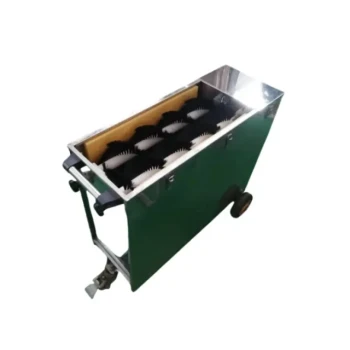
The primary function of industrial-grade dehydration equipment is to rapidly and precisely reduce the high moisture content inherent in fresh bee pollen. By employing controlled thermal environments, this machinery effectively inhibits microbial growth and prevents spoilage while maintaining the bioactivity of the pollen's sensitive nutritional components.
Core Takeaway Fresh bee pollen is highly perishable and prone to rapid biodegradation. Industrial drying equipment solves this by lowering moisture levels to a safe range, which extends shelf life and concentrates antioxidant substances without destroying heat-sensitive enzymes and vitamins.
Ensuring Biological Stability
Inhibiting Microbial Growth
Freshly harvested bee pollen is rich in nutrients and moisture, creating an ideal environment for bacteria, yeast, and mold.
Industrial drying equipment is critical for removing this moisture to prevent rapid spoilage. By lowering the water content, the equipment eliminates the medium required for microbial proliferation.
Reducing Water Activity
The technical goal of this equipment is not just to "dry" the product, but to specifically reduce water activity.
Processors often aim to lower water activity from approximately 0.7 to 0.3. This physical change stabilizes the pollen, ensuring it remains safe for long-term storage and consumption.
Preserving Nutritional Integrity
Protecting Heat-Sensitive Compounds
Bee pollen contains volatile, bioactive ingredients such as enzymes, vitamins (particularly the Vitamin B complex), and amino acids.
Uncontrolled drying methods, such as direct sunlight or high-heat ovens, can destroy these components. Industrial equipment allows for precise temperature regulation—often keeping temperatures gentle (around 45°C)—to ensure these nutrients remain intact.
Enhancing Antioxidant Concentration
According to research, proper dehydration technology does more than just preserve the status quo.
Effective drying processes have been shown to actually enhance the concentration of antioxidant substances within the pollen to a certain extent. This adds value to the final product compared to raw, untreated pollen.
Facilitating Commercial Viability
Meeting Standardization Requirements
For bee pollen to be sold as a commodity or used in deep processing, it must meet strict regulatory standards.
Industrial equipment ensures uniformity across large batches, maintaining moisture content within a specific, stable range (often 10% to 12%). This consistency is essential for the standardized quality required in the commercial bee product trade.
Understanding the Trade-offs
Convective vs. Vacuum Drying
Not all industrial equipment functions identically. Convective drying (circulating heated air) creates a uniform thermal field and is often the core choice for small to medium enterprises due to lower investment costs.
However, vacuum drying ovens offer a different approach, utilizing lower pressures to dry pollen at lower temperatures. While potentially more expensive, this method is often superior for preserving the most delicate bioactive substances.
The Balance of Efficiency and Quality
The primary risk in industrial drying is the balance between speed and thermal degradation.
Accelerating the process with higher heat increases production efficiency but risks destroying the enzymes and vitamins that give pollen its market value. Operators must strictly control parameters to avoid "cooking" the product.
Making the Right Choice for Your Goal
To select the right drying approach, you must define your primary objective for the end product.
- If your primary focus is nutritional retention: Prioritize equipment with precise low-temperature controls or vacuum capabilities to protect enzymes and Vitamin B complexes.
- If your primary focus is shelf stability: Ensure the equipment is capable of consistently reducing water activity to 0.3 to effectively inhibit mold and yeast.
- If your primary focus is production efficiency: Consider convective drying systems, which offer a balance between uniform drying speed and equipment cost.
Successful bee pollen processing relies on using technology not just to remove water, but to lock in quality.
Summary Table:
| Feature | Industrial Dehydration Function | Benefit to Bee Pollen |
|---|---|---|
| Microbial Control | Reduces water activity from 0.7 to 0.3 | Inhibits mold, yeast, and bacterial growth |
| Temperature Regulation | Precise control (typically around 45°C) | Protects heat-sensitive enzymes and Vitamin B |
| Bioactive Retention | Low-temperature/Vacuum options | Enhances antioxidant concentration and potency |
| Commercial Standardization | Uniform batch drying (10%-12% moisture) | Ensures consistent quality for wholesale trade |
Scale Your Bee Product Business with HONESTBEE
Maximize the market value of your harvests with professional-grade processing technology. HONESTBEE specializes in supporting commercial apiaries and distributors with a comprehensive wholesale portfolio designed for excellence. From precision pollen dehydration and honey-filling machines to essential industry consumables and hive-making equipment, we provide the tools you need to ensure biological stability and nutritional integrity.
Ready to upgrade your facility? Contact us today to discover how our high-performance machinery and specialized hardware can streamline your production and boost your commercial viability!
References
- Roberto Bava, Ernesto Palma. Hive Products: Composition, Pharmacological Properties, and Therapeutic Applications. DOI: 10.3390/ph17050646
This article is also based on technical information from HonestBee Knowledge Base .
Related Products
- High Quality Honey Dehumidifier Dryer Thickening Machine for Beekeeping
- Stainless Steel Pollen Shovel with Wooden Handle
- Heavy-Duty Ergonomic Grip Galvanized Pollen Shovel
- High Performance Cordless Electric Bee Shaker for Beekeeping
- 0.5T Capacity Honey Dehumidifier Dryer with Vacuum Heating and Thickening Filtering Machine
People Also Ask
- Can you dehumidify honey? A Beekeeper's Guide to Preventing Fermentation
- How to dry up honey? The Safe Guide to Stabilizing Honey and Preventing Fermentation
- How can the moisture content of honey be reduced? A Guide to Safe, Effective Drying Methods
- How to remove humidity from honey? Protect Your Harvest from Fermentation
- What is the process for using a dehumidifier to lower honey's moisture content? Expert Drying Techniques