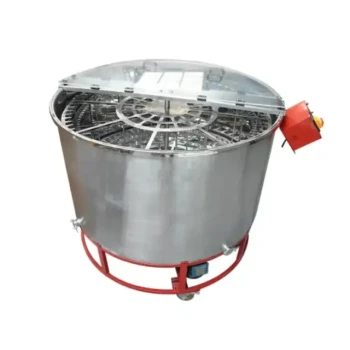
The primary function of industrial-grade filtration and sedimentation equipment within a honey Warehouse Receipt System (WRS) is to establish a standardized baseline of purity for the commodity. Specifically, this machinery physically removes impurities, beeswax residues, and trapped air bubbles before the honey enters storage. This process ensures the product meets strict commercial trading standards, transforming raw agricultural produce into a tradable financial asset.
In a WRS environment, honey serves as collateral for financing; therefore, its stability is paramount. Filtration and sedimentation are critical processing steps that stabilize the honey, preventing degradation that would lower its value during the holding period.
The Mechanics of Quality Assurance
Removing Physical Contaminants
Raw honey often arrives with organic debris that compromises its grade. Industrial filtration systems are designed to strip out these impurities, specifically beeswax residues and other particulate matter. This step is non-negotiable for achieving the purity levels required for commercial certification.
Eliminating Air Bubbles
Beyond solid particles, the equipment addresses air entrapment. Air bubbles can affect the visual appeal and the volumetric measurement of the honey. Sedimentation allows these bubbles to rise and escape, ensuring a dense, uniform product that meets buyer specifications.
Preserving Long-Term Asset Value
Preventing Fermentation
The removal of impurities is not just for aesthetics; it is a preservation strategy. Organic particles can harbor yeasts or act as catalysts for spoilage. By thoroughly filtering the honey, the risk of fermentation during long-term storage is significantly reduced.
Mitigating Crystallization
Honey that is rich in particulate matter will crystallize faster, as particles provide a surface for crystals to form. Filtration removes these nucleation points. When the product remains liquid and clear, it retains its highest market value for the duration of the warehouse receipt.
The Necessity of Environmental Control
Filtration is Not a Standalone Solution
While filtration handles the physical composition of the honey, it cannot independently guarantee preservation. The primary reference highlights that this equipment must be paired with temperature-controlled storage systems.
The Synergy of Systems
Filtration prepares the honey, but temperature control maintains it. Without precise temperature management, even filtered honey can eventually succumb to crystallization or chemical changes. Both systems must function together to ensure the commodity maintains its value as financial collateral.
Making the Right Choice for Your Operations
To maximize the effectiveness of a honey WRS, you must view filtration as the first line of defense in asset protection.
- If your primary focus is Commercial Tradability: Prioritize high-efficiency filtration to remove all visual beeswax and air bubbles, ensuring immediate compliance with trading standards.
- If your primary focus is Long-Term Storage Security: Ensure your filtration process is integrated seamlessly with temperature controls to proactively prevent fermentation and crystallization.
By treating filtration as a critical value-retention step, you secure the financial integrity of the entire Warehouse Receipt System.
Summary Table:
| Core Function | Impact on Honey Asset | Risk Mitigation |
|---|---|---|
| Physical Filtration | Removes beeswax & organic debris | Prevents spoilage and fermentation |
| Sedimentation | Eliminates trapped air bubbles | Ensures volume accuracy & visual clarity |
| Impurity Removal | Eliminates nucleation points | Slows down crystallization process |
| System Synergy | Prepares product for storage | Maintains value for financial collateral |
Maximize Your Honey Asset Value with HONESTBEE
At HONESTBEE, we understand that in a Warehouse Receipt System, your honey is more than just a product—it is a financial asset. We provide commercial apiaries and distributors with the high-precision industrial-grade filtration systems, honey-filling machines, and temperature-controlled storage solutions needed to meet strict global trading standards.
Whether you are looking to scale your wholesale operations or secure long-term storage integrity, our comprehensive range of beekeeping machinery and essential consumables ensures your honey remains pure, stable, and tradable. Partner with HONESTBEE today to optimize your processing facility and protect your investment with industry-leading equipment.
References
- Nicholaus Bhikolimana Tutuba, Hawa Petro Tundui. Business Model Innovation for Sustainable Beekeeping in Tanzania: A Content Analysis Approach. DOI: 10.33423/ajm.v19i1.1340
This article is also based on technical information from HonestBee Knowledge Base .
Related Products
- Electric Double Wall Honey Filtering Machine Purifier Equipment for Honey Processing Plant
- Professional Stainless Steel Honey Filter with Support Handle
- Professional Stainless Steel Honey Filtering Machine with Water Bath Heating for Beekeeping
- Honey Concentrating and Filtering Dehumidifier Machine 2T Capacity for Honey
- Professional Honey Filter with Tripod Support Stand
People Also Ask
- What is the process of filtering honey? A Guide to Clean, Pure, and Market-Ready Honey
- What types of equipment are used in honey filtering? Build an Efficient System for Pure, Marketable Honey
- What is the overall importance of using the right equipment in honey filtering? Boost Quality & Marketability
- How should honey filtering equipment be properly maintained? Extend Equipment Life & Protect Honey Purity
- What steps are involved in maintaining honey filtering equipment? A Guide to Protecting Your Honey Quality