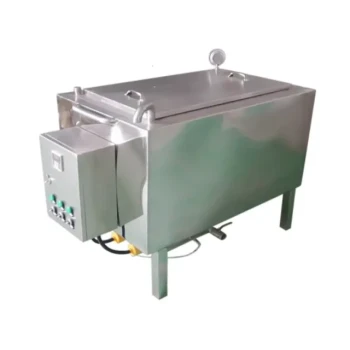
The primary function of industrial vacuum drying ovens in this context is to stabilize fermented bee pollen by reducing its moisture content to a precise range of 10% to 12% while maintaining a low processing temperature. By utilizing a vacuum environment, the equipment allows moisture to evaporate effectively at a gentle 45°C, inhibiting microbial growth without destroying heat-sensitive bioactive substances like enzymes and carotenoids.
Core Insight: The value of vacuum drying lies in its ability to decouple moisture removal from high heat. It solves the critical problem of preventing spoilage (microbial growth) while simultaneously preserving the chemical potency that gives fermented bee pollen its nutritional market value.
Achieving Stability Through Moisture Control
Target Moisture Range
The fundamental goal of the vacuum drying process is to bring the moisture content of the fermented pollen down to a stable window of 10% to 12%.
Reaching this specific percentage is critical for long-term storage.
Inhibiting Microbial Growth
Bee pollen is naturally high in moisture, making it highly susceptible to spoilage from yeasts and molds.
By removing free moisture, the drying process lowers the water activity of the pollen—typically reducing it from approximately 0.7 to 0.3. This creates an environment where spoilage microorganisms cannot survive or reproduce.
Ensuring Chemical Stability
Beyond biological spoilage, excess moisture can lead to chemical degradation over time.
Vacuum drying locks in the chemical composition of the pollen. This ensures that the product remains stable during commercial distribution and does not deteriorate in sensory quality or nutritional value over its shelf life.
Preserving Bioactive Integrity
The Role of Low-Temperature Processing
Standard drying methods often rely on higher temperatures (around 60°C) to drive off moisture efficiently.
However, industrial vacuum ovens are set to a much gentler temperature, typically 45°C. The vacuum lowers the boiling point of water, allowing evaporation to occur rapidly without subjecting the product to extreme heat.
Protecting Heat-Sensitive Compounds
Fermented bee pollen contains fragile bioactive substances, including enzymes and carotenoids.
High heat can denature these enzymes and degrade antioxidants. The gentle thermal treatment provided by vacuum drying ensures these bioactive components are retained, maximizing the health benefits of the final product.
Understanding the Trade-offs
Vacuum vs. Forced Air/Lab Ovens
It is important to distinguish between industrial vacuum drying and standard laboratory drying.
Laboratory or forced air ovens often operate at roughly 60°C to dry samples until they are brittle for grinding or analysis. While effective for preparing samples or calculating moisture weight, this higher temperature can be detrimental to the delicate nutrients sought in a premium consumer product.
Efficiency vs. Quality
Microwave-assisted drying is another method that offers rapid dehydration and sterilization by heating from the inside out.
While microwave drying significantly reduces the production cycle and improves efficiency, vacuum drying is prioritized when the absolute retention of heat-sensitive bioactives is the primary quality metric, even if the cycle time is different.
Making the Right Choice for Your Goal
To select the appropriate post-processing method, you must align the technology with your end-product requirements.
- If your primary focus is premium nutritional quality: Prioritize industrial vacuum drying at 45°C to reach 10-12% moisture while retaining maximum enzyme and carotenoid activity.
- If your primary focus is analytical testing or powder production: Utilize forced air or lab ovens at 60°C to achieve total brittleness and constant weight for easier grinding and measurement.
- If your primary focus is speed and throughput: Consider microwave-assisted drying to rapidly reduce water activity and sterilize large batches, acknowledging the different mechanism of heating.
Ultimately, industrial vacuum drying provides the optimal balance for commercial fermented pollen, securing shelf stability without compromising the biological potency that consumers expect.
Summary Table:
| Feature | Industrial Vacuum Drying | Forced Air/Lab Ovens | Microwave-Assisted Drying |
|---|---|---|---|
| Operating Temp | 45°C (Gentle) | 60°C+ (High) | Internal Heating |
| Primary Goal | Bioactive Retention | Analytical Prep/Grinding | Speed & Throughput |
| Moisture Target | 10% - 12% | Total Dehydration | Rapid Reduction |
| Key Benefit | Preserves Enzymes/Carotenoids | Efficiency for Analysis | High Volume Sterilization |
Elevate Your Bee Product Quality with HONESTBEE
At HONESTBEE, we understand that preserving the nutritional integrity of bee pollen is vital for your brand's reputation. As a leading supplier to commercial apiaries and global distributors, we provide more than just equipment; we provide the precision tools necessary to maintain market-leading bioactive potency.
Our comprehensive wholesale portfolio includes:
- Advanced Drying & Processing Machinery: Including industrial vacuum ovens designed for heat-sensitive hive products.
- Comprehensive Beekeeping Hardware: From hive-making to honey-filling machines.
- Industry Consumables & Merchandise: A full spectrum of supplies to support your entire operation.
Whether you are scaling up production or seeking to optimize your processing line, HONESTBEE delivers the expertise and equipment you need to succeed in the competitive apiculture market.
Ready to optimize your production? Contact us today to discuss your wholesale requirements!
References
- Michał Miłek, Małgorzata Dżugan. Chemical Composition and Bioactivity of Laboratory-Fermented Bee Pollen in Comparison with Natural Bee Bread. DOI: 10.3390/biom13071025
This article is also based on technical information from HonestBee Knowledge Base .
Related Products
- High Quality Honey Dehumidifier Dryer Thickening Machine for Beekeeping
- Electric Commercial Beeswax Melter for Factory Use
- 12V Bee Mite Removal Evaporator Oxalic Acid Vaporizer for Bee Fumigation Treatment 180W Atomization
People Also Ask
- Can you dehumidify honey? A Beekeeper's Guide to Preventing Fermentation
- How to dry up honey? The Safe Guide to Stabilizing Honey and Preventing Fermentation
- How can the moisture content of honey be reduced? A Guide to Safe, Effective Drying Methods
- How to remove humidity from honey? Protect Your Harvest from Fermentation
- What is the process for using a dehumidifier to lower honey's moisture content? Expert Drying Techniques