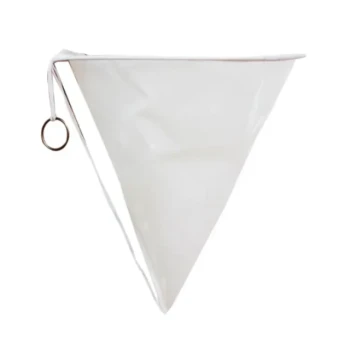
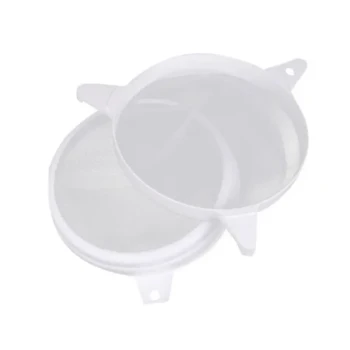
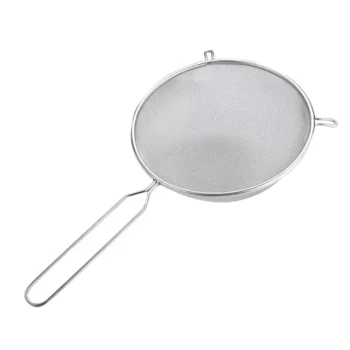
Precision filtration devices serve as the definitive purification step in the preparation of propolis ethanol extracts. Their primary function is to physically intercept and remove insoluble impurities, particulate matter, and suspended residues from the crude extraction mixture, yielding a visually clear and transparent liquid.
Core Insight: The value of precision filtration extends beyond simple clarification. By ensuring the total removal of microscopic solids, this process enables the accurate calculation of dry weight concentrations and guarantees the uniformity required for sensitive biological assays, such as cell culture experiments.
Achieving Absolute Sample Purity
To transform a raw suspension into a usable scientific sample, filtration must address both visible and microscopic contaminants.
Removal of Insoluble Matter
The initial reaction between propolis powder and ethanol creates a suspension filled with undissolved byproducts. Precision filtration devices utilize specific media to separate these solids from the liquid phase.
Eliminating Specific Contaminants
This process targets distinct physical impurities inherent to raw propolis. It effectively removes traces of beeswax, pollen residues, and particulate resin that did not dissolve during the extraction phase.
Ensuring Visual Clarity
The immediate result of this mechanical separation is a clear, transparent Propolis Ethanol Extract (PEE). This optical clarity is a fundamental indicator that the sample is free of suspended solids that could skew subsequent measurements.
Enabling Precise Quantification
For scientific analysis, knowing the exact concentration of the active ingredients is critical. Filtration is the prerequisite for this accuracy.
Facilitating Dry Weight Calculation
To standardize a sample (e.g., to 120 mg/ml), researchers must determine the mass of solid matter per unit volume. Precision filtration removes the "noise" of insoluble trash, ensuring that the measured mass represents only the dissolved active components.
Standardization for Analysis
Once the liquid is filtered, it can be dried to a constant weight to convert volume percentages into accurate mass concentrations. This step is essential for maintaining scientific objectivity when comparing the efficacy of propolis from different sources.
Protecting Downstream Experiments
The quality of the filtration directly impacts the reliability of biological and chemical testing.
Ensuring Uniformity for Cell Culture
When propolis extracts are introduced to cell experiments, uniformity is paramount. Filtration ensures that every aliquot added to a culture contains the same concentration of dissolved compounds.
Preventing Environmental Interference
Unfiltered impurities can mechanically interfere with cell growth or chemically react with the culture medium. Precision filtration eliminates these variables, ensuring that observed effects are due to the propolis extract itself, not the contaminants.
Preparing for High-Precision Instrumentation
Techniques like gas chromatography require samples to be strictly free of particulate matter. High-quality filtration prevents column clogging and ensures that the analytical results reflect the true chemical composition of the extract.
Operational Considerations and Efficiency
While purity is the main goal, the choice of filtration method impacts the workflow.
Balancing Speed and Purity
High vacuum filtration systems are often employed to create a pressure differential. This allows the extract to pass rapidly through low-porosity media, accelerating the process without compromising the removal of microscopic particles.
The Role of Multi-Stage Filtration
To avoid clogging fine filters immediately, a multi-stage approach is often used. This involves passing the extract through media of decreasing pore sizes, sequentially removing coarse residues before targeting the finest particulates.
Making the Right Choice for Your Goal
Select your filtration protocol based on the specific requirements of your end application.
- If your primary focus is Cell Culture Experiments: Prioritize filtration media that guarantees sterility and the total removal of particulate matter to prevent interference with the cell environment.
- If your primary focus is Chemical Quantification: Ensure the filtrate is perfectly clear to allow for precise drying and accurate mass-to-volume (mg/ml) calculations.
- If your primary focus is Industrial Efficiency: Utilize high vacuum filtration systems to accelerate the processing of large volumes while maintaining the 20% concentration standards.
The integrity of your final data is entirely dependent on the clarity and uniformity achieved during this filtration step.
Summary Table:
| Function Category | Specific Role | Key Benefit |
|---|---|---|
| Purification | Removal of beeswax, pollen, and resin | Achieves visual clarity and transparent liquid |
| Quantification | Eliminates insoluble "noise" | Enables accurate dry weight and concentration calculations |
| Standardization | Ensures sample uniformity | Crucial for consistent dosing in biological assays |
| Protection | Prevents particulate interference | Protects cell cultures and high-precision instruments (GC) |
| Efficiency | High vacuum & multi-stage systems | Accelerates processing while maintaining high purity standards |
Elevate Your Propolis Processing with HONESTBEE
Precision is the backbone of high-quality bee product extraction. HONESTBEE specializes in supporting commercial apiaries and distributors with professional-grade solutions designed for excellence. From advanced honey-filling and hive-making machinery to a comprehensive range of beekeeping tools and essential consumables, we provide the hardware necessary to turn raw propolis into premium, market-ready extracts.
Whether you are scaling up production or looking for specialized industry equipment, our team is dedicated to enhancing your operational efficiency and product value.
Ready to optimize your apiary’s output?
Contact HONESTBEE today for a wholesale consultation.
References
- Marla Karine Amarante, José Maurício Sforcin. The effect of propolis on CCL5 and IFN-<i>γ</i> expression by peripheral blood mononuclear cells from leishmaniasis patients. DOI: 10.1111/j.2042-7158.2011.01385.x
This article is also based on technical information from HonestBee Knowledge Base .
Related Products
- Precision Stainless Steel Frame Cleaner for Hive Grooves and Corners
- Professional Cone-Shaped Honey Filter with Reinforced Steel Ring
- Professional Honey Filter with Tripod Support Stand
- Conical Nylon Honey Strainer Filter Bag for Beekeeping and Honey Filtration
- Electric Double Wall Honey Filtering Machine Purifier Equipment for Honey Processing Plant
People Also Ask
- What tools are recommended for cleaning hive frames? Top 4 Essential Maintenance Tools for Beekeepers
- What is the function of a professional stainless steel hive tool in IFB? Optimize Your Colony Strength Assessment
- What are the primary functions of a stainless steel hive tool? Essential Equipment for Professional Beekeeping
- Which technical challenges in hive maintenance are addressed by using a professional stainless steel hive tool?
- What are the primary functions of a stainless steel hive tool? Essential Tips for Efficient Apiary Maintenance