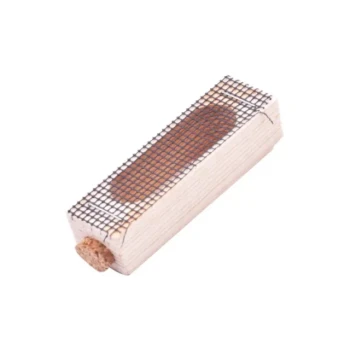
Professional Isolation Cages serve as rigorous physical barriers designed to establish a strictly controlled environment for agricultural research. By isolating plants, these cages allow researchers to either completely exclude insects to test self-pollination or confine specific bee colonies to a defined area, ensuring that external factors do not contaminate data regarding seed set, grain quality, and crop yield.
By eliminating interference from random external insects, these cages transform a variable field environment into a precise setting, enabling the accurate quantification of how specific pollination methods contribute to production traits.
Mechanisms of Control
To understand the utility of isolation cages, one must look at how they manipulate the environment to test specific biological hypotheses.
Establishing Control Pollination (CP) Treatments
In Control Pollination (CP) scenarios, the primary function of the cage is total exclusion.
The structure isolates the crop from all potential pollinating insects.
This allows researchers to determine the baseline for self-pollination, measuring the crop's ability to produce yield without any external assistance.
Facilitating Bee Pollination (BP) Treatments
In Bee Pollination (BP) treatments, the function shifts from exclusion to containment.
The cages restrict specific bee colonies to a defined activity area surrounding the target plants.
This allows for the direct observation and quantification of that specific pollinator’s impact on the crop, independent of wild or neighboring insect populations.
Material Integrity and Construction
The effectiveness of these functions relies heavily on the construction material.
Professional cages typically utilize high-density muslin nets to form the physical barrier.
This material is critical for ensuring that the isolation is absolute, preventing even small insects from breaching the experimental area while maintaining a breathable environment for the plants.
Critical Considerations for Data Integrity
When designing a study, it is vital to understand the "all-or-nothing" nature of these tools.
Eliminating External Interference
The primary value of the isolation cage is the removal of variables.
If the barrier is compromised, external insects introduce interference, rendering the quantification of specific pollinator impacts impossible.
Therefore, the quality of the data is directly proportional to the integrity of the exclusion barrier throughout the study duration.
Optimizing Your Research Strategy
To get the most out of controlled pollination studies, align your cage usage with your specific data requirements.
- If your primary focus is establishing a yield baseline: Utilize the cages for Control Pollination (CP) to strictly exclude all insects and measure self-pollination capacity.
- If your primary focus is measuring pollinator efficiency: Deploy Bee Pollination (BP) setups to confine specific colonies and quantify their direct influence on seed set and grain quality.
Precision in isolation is the only path to clarity in pollination data.
Summary Table:
| Feature | Function in CP (Control Pollination) | Function in BP (Bee Pollination) |
|---|---|---|
| Primary Goal | Measure baseline self-pollination | Quantify specific pollinator efficiency |
| Mechanism | Total exclusion of all insects | Containment of specific bee colonies |
| Material | High-density muslin netting | High-density muslin netting |
| Key Outcome | Accurate yield baseline without aid | Clear impact on seed set & grain quality |
Elevate Your Agricultural Research with HONESTBEE
At HONESTBEE, we understand that data integrity in pollination studies depends on superior equipment. As a leading provider for commercial apiaries and global distributors, we supply high-quality isolation cages, beekeeping tools, and specialized machinery designed for rigorous professional use.
Whether you are scaling your research or expanding your wholesale portfolio, our comprehensive range—from muslin isolation barriers to honey-filling machines—is engineered to deliver precision and efficiency.
Ready to optimize your yield and research outcomes? Contact us today to discuss our wholesale offerings and discover how HONESTBEE can support your industry success.
References
- Madhusudan Man Singh. Foraging Behaviour of the Himalayan Honeybee (<i>Apis cerana</i> F.) on Flowers of <i>Fagopyrum esculentum</i> M. and its Impact on Grain Quality and Yield. DOI: 10.3126/eco.v15i0.1940
This article is also based on technical information from HonestBee Knowledge Base .
Related Products
- Professional Bamboo Queen Isolation Cage
- Hexagonal Direct Comb Introduction Queen Bee Cage
- Durable Galvanized Steel Spring Queen Bee Cage
- Premium Wood and Steel Push In Queen Cage
- Durable Plastic Push In Queen Bee Cage
People Also Ask
- Why are specialized queen bee cages used for the banking of mated queen bees? Maximize Commercial Apiary Storage Efficiency
- What is the mechanism of action for using temporary queen bee cages? Master Successful Queen Introduction
- How does the side ventilation design of a queen bee cage impact the safety of the queen during long-distance transport?
- What should you do if the queen is still in the cage and the worker bees have not accepted her? Protect Your Colony from Queen Rejection
- What technical precaution must be taken regarding the mesh or grill side of a queen bee cage? Ensure Queen Survival