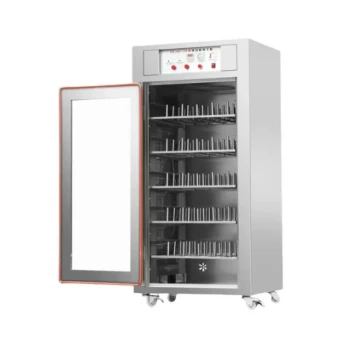
Professional pollen drying equipment serves a critical dual purpose: it rapidly reduces moisture content to prevent spoilage while strictly regulating temperature to protect delicate nutrients. By creating a controlled environment, this technology transforms raw, highly perishable pollen into a stable, commercially safe product without sacrificing its biological value.
Core Insight The essence of professional drying is precision: it reduces water activity to a specific level (typically 0.3) to inhibit microbial growth, yet maintains temperatures low enough to preserve the heat-sensitive enzymes and antioxidants that give stingless bee pollen its market value.
The Science of Stabilization
Arresting Microbial Growth
Freshly collected stingless bee pollen is rich in nutrients and moisture, making it an ideal breeding ground for mold and bacteria.
Professional equipment functions to rapidly lower the water activity of the pollen from approximately 0.7 to 0.3. This physical change creates an environment where yeasts and molds cannot survive, effectively "locking" the pollen in a stable state.
Preventing Biological Degradation
Beyond simple spoilage, moisture allows for biodegradation that breaks down the pollen's chemical structure.
By removing excess water, the equipment ensures the physical integrity of the pollen is maintained. This is crucial for preventing the deterioration of sensory characteristics (taste and smell) and ensuring the product remains safe for long-term storage.
Protecting Nutritional Integrity
Controlled Thermal Treatment
The most distinct function of professional equipment is the ability to dry at strict, constant temperatures (e.g., 55°C).
Unlike uncontrolled sun drying, these machines ensure that the heat level never exceeds the threshold that would destroy bioactive components. This preservation is vital for retaining the enzymes, vitamins, and amino acids that consumers expect from bee products.
Enhancing Antioxidant Concentration
Research indicates that proper dehydration does more than just preserve; it can actually enhance the product.
Effective drying concentrates the antioxidant substances within the pollen. This ensures that the final dried commodity delivers a potent nutritional profile comparable to, or in some metrics better than, the unstable raw material.
Consistency and Commercial Viability
Uniformity Through Convective Drying
Industrial convective drying equipment circulates heated air to create a uniform thermal field.
This function eliminates "wet spots" in the batch, ensuring that every granule of pollen is dried to the exact same standard. This consistency is a prerequisite for commercial distribution and prevents batch-wide spoilage caused by a few damp granules.
Standardization for Research
For scientific analysis, drying cabinets allow for the homogenization of samples.
By bringing samples to a stable, dry state, researchers can perform chemical lysis and DNA purification efficiently. This prevents residual water from diluting reagents, ensuring accurate and reproducible data.
Understanding the Trade-offs
Balancing Efficiency and Investment
While professional equipment guarantees quality, it introduces a cost variable.
Convective drying systems are often the core choice for small to medium enterprises because they offer a balance between production speed and equipment cost. However, higher-end technologies may offer faster drying times but come with significantly higher capital requirements.
The Human Element
It is important to note that the equipment is only as effective as its settings.
While the machine provides the capability for control, the operator must set the optimal parameters. Setting the temperature even slightly too high in a professional dryer will still result in nutrient loss, negating the benefit of the equipment.
Making the Right Choice for Your Goal
To select or utilize drying equipment effectively, consider your primary objective:
- If your primary focus is Commercial Sales: Prioritize convective drying equipment to ensure a uniform thermal field that guarantees shelf stability and safety compliance for mass distribution.
- If your primary focus is Nutritional Potency: Ensure your equipment allows for strict low-temperature control to maximize the retention of enzymes and concentrate antioxidants.
- If your primary focus is Scientific Research: Utilize a constant-temperature drying cabinet to standardize moisture levels, preventing reagent dilution during DNA or chemical analysis.
Ultimately, professional drying equipment is not just about removing water; it is a tool for stabilizing biological value against the inevitability of decay.
Summary Table:
| Feature | Function in Pollen Processing | Key Benefit |
|---|---|---|
| Moisture Reduction | Lowers water activity from 0.7 to 0.3 | Arrests mold, yeast, and bacterial growth |
| Thermal Control | Maintains constant low temperatures (e.g., 55°C) | Preserves bioactive enzymes and antioxidants |
| Convective Airflow | Creates a uniform thermal field | Eliminates wet spots for batch consistency |
| Dehydration | Concentrates chemical compounds | Enhances nutritional potency and shelf life |
| Standardization | Homogenizes samples for analysis | Prevents reagent dilution in lab research |
Elevate Your Bee Product Quality with HONESTBEE
Are you a commercial apiary or a distributor looking to scale your production? HONESTBEE provides the professional-grade tools you need to transform raw harvest into premium, market-ready commodities. From high-precision pollen drying systems and honey-filling machines to specialized hive-making equipment, we offer a comprehensive wholesale portfolio designed for industry leaders.
Why partner with us?
- Maximize Value: Preserve the delicate bioactives of your pollen with our advanced thermal technology.
- Full Spectrum Supply: Access everything from heavy machinery to essential industry consumables.
- Global Distribution: We cater specifically to large-scale operations and wholesale partners.
Contact HONESTBEE today to optimize your processing facility!
References
- I Gusti Ayu Widari, Aditya Krisnawan Gusti Ngurah. Marketing Strategy of Honey in Sarining Trigona Pertiwi Beekeeper Bongkasa Pertiwi Village. DOI: 10.22225/seas.6.2.5730.94-101
This article is also based on technical information from HonestBee Knowledge Base .
Related Products
- Stainless Steel Pollen Shovel with Wooden Handle
- Heavy-Duty Ergonomic Stainless Steel Pollen Shovel
- Heavy-Duty Ergonomic Grip Galvanized Pollen Shovel
- Removable Plastic Pollen Trap With Ventilated Tray for Bees Pollen Collector
- Plastic Bee Pollen Trap Strips Comb Catcher Collector
People Also Ask
- How do bee pollen collection tools affect the quality of bee pollen used in functional dairy ice cream production?
- Why should commercial apiaries focus on the collection of diversified bee products? Maximize Your Hive’s Profit Potential
- How does a specialized pollen collector facilitate the harvesting of diverse bee products? Automate High-Value Yields
- What is the impact of pollen collectors and associated equipment on the cost structure of pollen production? Maximize ROI
- What is the technical significance of using specialized cutting tools for propolis? Master Precision Pollen Harvesting