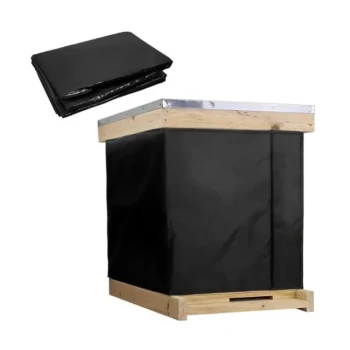
The outer cover functions as the primary roof for a Langstroth hive, acting as the first line of defense against the elements. Its specific purpose is to shield the colony and internal components from rain, snow, and wind, ensuring the environment within the hive remains dry and controlled. This component typically sits atop an inner cover and is usually constructed from wood, metal, or polystyrene.
While the outer cover’s basic job is weatherproofing, the specific design you choose—telescoping or migratory—fundamentally changes how you insulate the hive and how easily you can transport it.
The Mechanics of Hive Protection
Deflecting Precipitation
The primary role of the outer cover is to prevent moisture intrusion. Most wooden covers are topped with a sheet of metal, specifically galvanized steel or aluminum. This durable surface ensures rain and snow run off the sides rather than soaking into the wood or leaking into the hive body.
Thermal Regulation
In addition to stopping water, the cover aids in temperature management. By capping the stack, it traps heat rising from the cluster during winter and shields the colony from direct overhead sun in summer. Materials like polystyrene offer higher insulation values than standard wood.
Wind Resistance
Because the cover sits at the very top of the stack, it is vulnerable to wind. Beekeepers commonly place a heavy object, such as a brick or rock, on top or use straps to secure the cover. This prevents the lid from blowing off during storms, which would be catastrophic for the colony.
Two Distinct Cover Styles
The Telescoping Cover
Common in higher latitudes and hobbyist apiaries, this cover features a rim that extends down over the sides of the hive (telescopes). This overhang provides superior weather protection by keeping rain away from the gap between the cover and the top box. It is designed to fit loosely over the inner cover and the top super.
The Migratory Cover
This is a simple, flat cover that does not extend beyond the edges of the hive body. It is the standard for commercial beekeepers. The flush design allows hives to be pushed tightly against one another on pallets for transport, maximizing space on trucks.
Understanding the Trade-offs
Protection vs. Portability
The telescoping cover offers the best protection against driving rain and drafts, making it ideal for stationary hives in climates with four seasons. However, it is heavier, bulkier, and makes moving hives more difficult because the overhang prevents stacking hives side-by-side.
Ease of Access vs. Security
Migratory covers are lightweight and easy to pop off for rapid inspections. However, because they lack the overhanging rim, they are more prone to blowing off in high winds if not heavily weighed down, and they offer slightly less protection against water wicking into the top seam.
Integration with the Inner Cover
The Two-Part System
The outer cover is rarely used alone; it works in tandem with the inner cover. Think of the outer cover as the roof of a house and the inner cover as the ceiling. The inner cover insulates the hive and prevents the bees from gluing the outer cover down with propolis.
Managing Colony Defense
This two-part system provides a tactical advantage for the beekeeper. You can gently remove the heavy outer cover without immediately exposing the colony. This allows you to smoke the bees through the hole in the inner cover, keeping the colony calm before you fully open the hive.
Making the Right Choice for Your Goal
When selecting an outer cover, consider your climate and your management style.
- If your primary focus is stationary, backyard beekeeping: Choose a telescoping cover for maximum weather protection and durability in varied climates.
- If your primary focus is mobility or high-volume management: Choose a migratory cover to save weight, reduce cost, and allow for dense packing of hives during transport.
- If your primary focus is thermal efficiency: Consider a polystyrene cover, which offers high insulation value but requires care to prevent physical damage.
The outer cover is not just a lid; it is the shield that secures the controlled environment your bees need to survive.
Summary Table:
| Feature | Telescoping Cover | Migratory Cover |
|---|---|---|
| Primary Use | Backyard & Stationary Apiaries | Commercial & Mobile Beekeeping |
| Design | Overhanging rim (telescopes) | Flush, flat edges |
| Weather Protection | Superior (deflects rain from seams) | Standard (requires tight fit) |
| Portability | Lower (bulky, prevents side-by-side packing) | High (optimized for pallet transport) |
| Best For | Extreme climates and four seasons | High-volume management & pollination |
Secure Your Apiary with Premium Hive Components
At HONESTBEE, we understand that a durable outer cover is the first line of defense for a healthy colony. We provide commercial apiaries and distributors with high-quality, wholesale beekeeping solutions tailored to every climate and management style.
From heavy-duty telescoping covers to space-saving migratory designs, our comprehensive portfolio includes:
- Advanced Machinery: Hive-making and honey-filling equipment.
- Essential Hardware: Tools, smokers, and durable hive components.
- Industry Consumables: Everything needed to sustain a professional apiary.
Contact us today to discover how HONESTBEE can streamline your operations and provide the wholesale equipment you need to grow!
Related Products
- Telescopic Beehive Outer Cover Lid Roof with Galvanised Sheeting for Langstroth Hive and Beehive Outer Cover
- Solid Bottom Board Australian Pine Wood Langstroth Bottom Board for Wholesale
- Plastic Bee Hive Stand for Beekeeping
- High-Performance Langstroth Bee Hives for Global Professional Beekeeping
- Langstroth Honey Bee Box Hive Boxes for Different Depths
People Also Ask
- What is a telescoping outer cover and what are its advantages? Maximize Hive Protection in Harsh Climates
- What is the function of an outer telescoping cover on a beehive? Ultimate Weather Protection for Your Colony
- What is the purpose of the outer telescoping cover in a beehive? The Key to Weatherproofing Your Hive
- What are the benefits of the telescoping outer cover? Essential Protection for Hive Health & Longevity
- How should a telescoping outer cover be removed? Expert Techniques for Smooth Beekeeping Operations