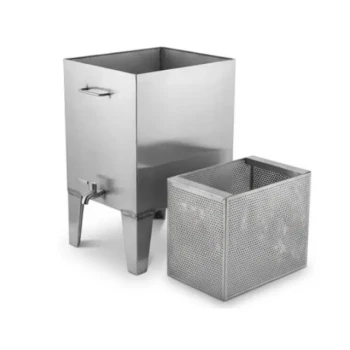
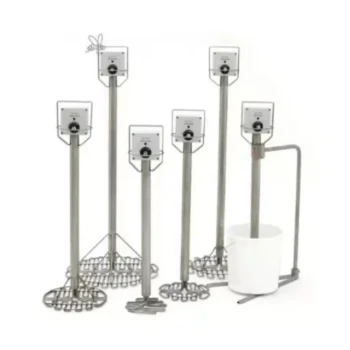
To ensure optimal performance during the concentration process, the ideal temperature for cooling water is below 25°C. You must actively monitor this temperature throughout the operation; if the water temperature rises above this threshold, the water should be replaced immediately to maintain full cooling capacity.
Efficiency in concentration relies heavily on maintaining a specific thermal gradient. To guarantee full cooling and process stability, the cooling water acts as a critical heat sink and must be kept consistently below 25°C.
The Critical Role of Temperature Control
Ensuring Full Cooling Capacity
The effectiveness of the concentration process is directly tied to the ability of the cooling water to absorb heat.
Using water below 25°C ensures that the system operates at its designed "full cooling" potential.
The Physics of Heat Exchange
As the concentration process proceeds, energy is transferred from the product to the cooling water.
If the starting temperature of the water is too high, the temperature differential decreases, and heat transfer becomes sluggish.
Operational Protocols
Continuous Monitoring
Temperature is a dynamic variable, not a set-and-forget parameter.
Operators must continuously monitor the cooling water temperature as the process runs, as the water will naturally warm up over time.
The Replacement Mandate
When the monitoring indicates a rise in temperature, action is required.
The guidelines dictate that warmed water must be replaced to restore the temperature to the sub-25°C range.
Understanding the Trade-offs
The Risk of Temperature Drift
Allowing the cooling water to drift above 25°C is the most common pitfall in this process.
Failure to replace warm water leads to incomplete cooling, which can stall the concentration process or result in inconsistent final products.
Resource Management vs. Performance
Adhering strictly to the 25°C limit requires active resource management, specifically the willingness to cycle water frequently.
While replacing water requires effort and resources, attempting to "stretch" the use of warm water will invariably result in sub-optimal performance.
Making the Right Choice for Your Goal
To maximize the efficiency of your concentration process, adhere to the following:
- If your primary focus is process speed: Aggressively cycle the cooling water to keep it well below the 25°C maximum to maximize heat transfer rates.
- If your primary focus is process consistency: Implement a strict monitoring schedule to ensure the temperature never drifts above the 25°C threshold unnoticed.
maintaining cooling water below 25°C is the single most effective variable you can control to ensure a successful concentration process.
Summary Table:
| Variable | Requirement | Operational Impact |
|---|---|---|
| Target Temperature | Below 25°C | Ensures maximum heat transfer and full cooling capacity. |
| Monitoring Frequency | Continuous | Prevents performance stalling due to natural water warming. |
| Action Threshold | > 25°C | Requires immediate water replacement to restore thermal gradient. |
| Primary Risk | Temperature Drift | Leads to incomplete cooling and inconsistent final product quality. |
Elevate Your Honey Processing Efficiency with HONESTBEE
At HONESTBEE, we specialize in empowering commercial apiaries and distributors with the professional-grade machinery needed for superior product quality. Whether you require high-precision honey-filling machines or specialized honey processing equipment designed to maintain perfect thermal gradients, our comprehensive wholesale portfolio has you covered.
From industrial-scale beekeeping tools to custom hive-making machinery and honey-themed cultural merchandise, we provide the essential hardware and consumables to scale your operation. Contact us today to discover how our specialized equipment can streamline your concentration process and boost your production yields!
Related Products
- Solar Beeswax Melter Easy Solar Wax Melter for Beeswax
- HONESTBEE AC Powered Wire Embedder with Alligator Clips
- Professional Thermostatic Conical Honey Melter
- Stainless Steel Heated Honey Tank Warming Heating Tank
- Precision Honey Refractometer Instrument for Quality Assessment
People Also Ask
- How does a solar melter work to process beeswax? The Eco-Friendly Way to Pure Wax
- What is a solar wax melter and how does it work? Harness the Sun for Pure Beeswax
- What are the benefits of using a solar wax melter? Harness the Sun for Pure, Cost-Effective Beeswax
- What is the purpose of a solar wax melter in beekeeping? Sustainable Wax Processing for Modern Apiaries
- How does a solar-powered frame wax melter work? Harness the Sun for Sustainable Beekeeping