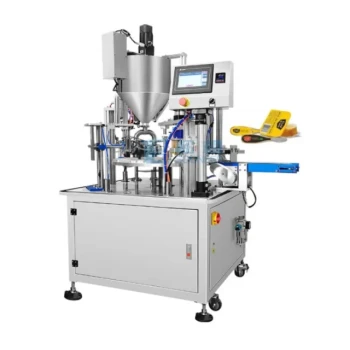
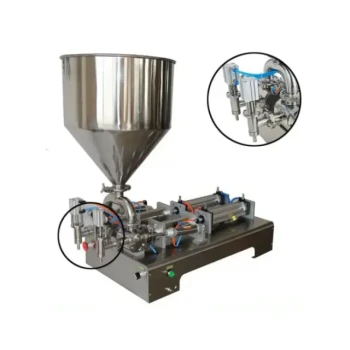
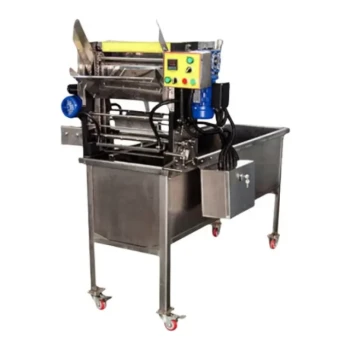
Automated honey filling and processing machinery is the cornerstone of modern production standardization. It ensures rigorous hygiene and measurement precision that manual processing cannot achieve. By increasing processing speeds, it minimizes the time from hive to market, stabilizing product quality and securing consumer trust.
The true value of this technology lies in transforming raw, variable honey into a standardized commercial commodity; by enforcing strict hygiene and precision, it minimizes environmental exposure and ensures consistent quality for the mass market.
Achieving Commercial Standardization
Precision Quantitative Control
To enter the commercial market, honey producers must meet strict regulatory net weight requirements. Automated machinery is critical here because it utilizes high-precision fluid control technology. This ensures that every jar is filled to the exact same volume, eliminating the variances inherent in manual filling and ensuring compliance across batches.
Handling Variable Densities
Honey is not a uniform fluid; its density changes based on the floral source, such as thick forest honey versus lighter varieties. Advanced filling equipment is designed to handle these varying viscosities without compromising speed or accuracy. This adaptability allows producers to maintain consistent filling volumes regardless of the honey type being processed.
Elevating Hygiene and Product Stability
The Closed-Loop Advantage
One of the most significant innovations in automated processing is the creation of a closed-loop environment. Honey is highly hygroscopic, meaning it absorbs moisture from the air, which can lead to fermentation and spoilage. Automated machines perform sealing in an enclosed space, significantly reducing contact between the honey and the surrounding air.
Preventing Oxidation and Contamination
Beyond moisture, exposure to air causes oxidation, which degrades the nutritional integrity and flavor of the honey. By mechanizing the transfer from storage tanks to retail packaging, automation minimizes human contact. This reduction in manual handling eliminates the risk of secondary contamination, preserving the honey's natural physicochemical properties.
Acceleration and Market Scalability
Reducing Time-to-Market
Speed is a quality control factor. Automated machinery increases processing velocity, reducing the time honey spends in the "middle ground" between the hive and the consumer. This rapid processing stabilizes product quality, ensuring the honey reaches the shelf while it is still fresh and chemically stable.
Meeting Export Standards
For producers aiming for international markets, automation is often a prerequisite. The precision and sterility provided by these machines ensure that packaging meets high-level international quality standards. This capability allows producers to manage large-volume export orders efficiently without sacrificing the consistency required by high-end retail markets.
Understanding the Risks of Environmental Exposure
The Pitfall of Moisture Absorption
A common oversight in honey processing is underestimating how quickly honey degrades when exposed to the environment. Without the closed-loop operation provided by automated machinery, honey will pull moisture from the humidity in a processing plant. This moisture absorption is the primary cause of spoilage and shelf-life reduction in non-automated setups.
Preserving Visual and Physical Quality
Premium honey varieties rely on specific physical characteristics, such as transparency and viscosity, to command higher prices. Manual handling or open-air processing can alter these traits through oxidation or temperature fluctuations. Automation is necessary not just for safety, but to maintain the visual appeal that drives consumer confidence in premium products.
Making the Right Choice for Your Goal
When integrating automated machinery into your processing line, consider your primary business objective:
- If your primary focus is Mass Market Retail: Prioritize machinery with high-precision quantitative control to strictly meet regulatory net weight requirements and ensure batch consistency.
- If your primary focus is Export and Long-Term Storage: Focus on equipment that offers a fully enclosed, sterile filling environment to prevent oxidation and maximize shelf life for long-distance transport.
- If your primary focus is Premium/Varietal Honey: Select equipment capable of handling specific viscosities (like forest honey) to preserve the natural texture and transparency of the product.
Automated processing is the essential bridge that transforms raw apiary output into a stable, trustworthy, and high-value commercial brand.
Summary Table:
| Feature | Manual Processing | Automated Processing | Business Impact |
|---|---|---|---|
| Filling Precision | High variance | High-precision fluid control | Regulatory compliance & cost savings |
| Hygiene Level | Open exposure risk | Closed-loop environment | Prevents fermentation & contamination |
| Viscosity Handling | Labor-intensive | Adaptive to floral densities | Versatile production for various honey types |
| Market Speed | Slow & inconsistent | Rapid processing velocity | Faster time-to-market & fresher product |
| Export Readiness | Low consistency | Meets international standards | Scalable for global distribution |
Elevate Your Honey Production with HONESTBEE
Transitioning from manual labor to automated excellence is the key to scaling your brand and securing consumer trust. At HONESTBEE, we specialize in empowering commercial apiaries and distributors with high-performance honey-filling machines, advanced processing equipment, and a full spectrum of beekeeping tools.
Whether you need specialized hardware like hive-making machinery or a complete wholesale supply of industry consumables, we provide the technical edge you need to meet global standards.
Ready to transform your honey into a premium commercial commodity?
Contact HONESTBEE Today to discuss our wholesale solutions and discover how our technology can maximize your efficiency and product shelf-life.
References
- Miroslav Čavlin, Sara Kostić. Research on the Determination of the Factors Affecting Business Performance in Beekeeping Production. DOI: 10.3390/agriculture13030686
This article is also based on technical information from HonestBee Knowledge Base .
Related Products
- Fully Automatic Honey Filling Packaging Machine for Processing Line
- Automatic Honey Filling and Filtering Machine for Beekeeping Bottle Filling
- Precision Durable Efficient HONESTBEE Rotary Honey Filling Machine
- Precision Automated Packaging Turntable Honey Spoon Filling Sealing Packing Machine
- Semi Automatic Small Honey Bottle Filling Machine Honey Filler
People Also Ask
- Why are fully automatic honey filling and packaging lines essential? Boost Your Honey's Market Value and Quality
- What is a fully-automatic honey filler? Streamline Your Production with High-Precision Automation
- How do automated honey filling and packaging machines affect profitability? Boost Margins with HONESTBEE Technology
- How do automated honey filling and packaging machines contribute to the market value of honey products? Maximize Your ROI
- How do industrial-grade automated honey filling and packaging machines mitigate the risk of physical contamination?