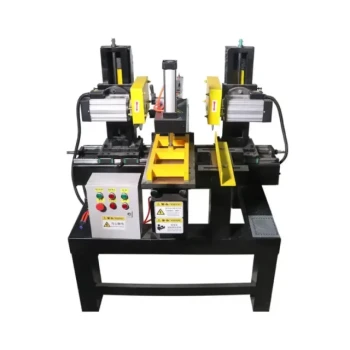
Industrial-grade hive-making machinery is the cornerstone of scalable commercial beekeeping. It utilizes high-precision cutting and automated assembly processes to mass-produce consistent, weather-resistant hive components. By eliminating the dimensional inaccuracies common in manual construction, this machinery ensures a rapid, reliable supply of equipment necessary for large-scale colony management and mechanized honey harvesting.
The fundamental value of this technology is absolute standardization. By guaranteeing that every frame and box is dimensionally identical, industrial machinery transforms beekeeping from a manual craft into a streamlined industrial process capable of supporting thousands of colonies.
The Critical Role of Standardization
For a commercial apiary, the physical hive is not just a shelter; it is a standardized unit of production. Industrial machinery ensures that this unit is replicable without error.
Enabling Component Interchangeability
In a large operation, you must be able to move frames and boxes between colonies instantly. Industrial machines produce components with precise dimensions, allowing for the seamless exchange of combs.
This capability is vital for balancing colony strength or managing resources during a honey flow. If components vary by even a few millimeters, they become incompatible, halting operations.
Supporting Mechanized Extraction
Modern commercial apiaries rely on automated extraction lines to process honey efficiently. These automated systems require hives to meet exact specifications to function without jamming or damaging equipment.
Industrial-grade manufacturing guarantees the "total compatibility" required for these systems. Without this hardware standardization, high-speed, mechanized harvesting is impossible.
Operational Efficiency and Logistics
Beyond the biology of the bees, commercial beekeeping is a logistics challenge. The precision of industrial machinery directly impacts the bottom line by streamlining how equipment is handled.
Streamlining Transportation
Migratory beekeeping requires moving thousands of hives on pallets across great distances. Standardized, machine-cut hives stack perfectly, maximizing truck space and ensuring stability during transport.
This uniformity reduces the labor required for loading and unloading. It ensures that hives fit securely together, minimizing the risk of shifting or toppling during transit.
Reducing Maintenance Costs
When hive bodies are uniform, maintenance becomes a simple assembly-line task rather than a custom repair job. Replacement parts purchased or manufactured years later will fit perfectly with existing stock.
This drastically lowers the acquisition cost of individual units over time. It simplifies inventory management, as specialized parts for "odd-sized" hives are no longer necessary.
Biological and Quality Implications
The quality of the cut and assembly impacts the longevity of the equipment and the health of the colony residing within it.
Enhancing Weather Resistance
Industrial machinery utilizes standardized assembly processes that create tighter, more consistent joints. As noted in the primary documentation, this results in superior weather resistance compared to manually built hives.
Better sealing protects the colony from elements and extends the lifespan of the woodenware, reducing the frequency of capital equipment replacement.
Minimizing Bee Stress
Precision manufacturing ensures a perfect fit between frames and hive bodies. This eliminates improper gaps that bees would otherwise fill with propolis or burr comb.
By maintaining proper "bee space," you reduce the stress on the colony. It also facilitates smoother inspections, as frames are less likely to be glued down by the bees due to poor fit.
Understanding the Trade-offs
While industrial machinery is essential for scale, it introduces specific constraints that operators must recognize.
High Initial Capital Expenditure
Transitioning to or acquiring industrial-grade machinery requires significant upfront investment. It shifts the cost structure from variable labor costs (manual building) to fixed capital costs.
Rigidity in Design
The efficiency of these machines relies on mass production of a single standard (often Langstroth specifications). This creates a dependency on that specific standard, making it difficult to experiment with non-standard hive designs or dimensions once the infrastructure is in place.
Making the Right Choice for Your Goal
The decision to invest in industrial-grade equipment depends on your specific operational targets.
- If your primary focus is rapid expansion: Prioritize machinery that emphasizes high-volume output to eliminate supply bottlenecks as your apiary grows.
- If your primary focus is automation: Prioritize machinery known for extreme dimensional precision to ensure seamless integration with extraction lines.
Ultimately, industrial hive-making machinery is not merely a woodworking tool; it is the prerequisite infrastructure for achieving economies of scale in modern agriculture.
Summary Table:
| Feature | Impact on Commercial Operations | Benefit |
|---|---|---|
| Dimensional Precision | Ensures component interchangeability | Faster colony management |
| Standardization | Supports automated extraction lines | Increased harvesting efficiency |
| Uniform Sizing | Optimizes pallet stacking and transport | Reduced logistics costs |
| Precision Joints | Enhances weather resistance & durability | Lower equipment replacement rates |
| Consistent Fit | Maintains proper "bee space" | Reduced bee stress and propolis buildup |
Scale Your Apiary with Industrial Precision
At HONESTBEE, we understand that for commercial apiaries and distributors, efficiency is the foundation of profitability. Our comprehensive wholesale offering provides the industrial-grade hive-making and honey-filling machinery you need to transform manual processes into a high-performance industrial operation.
Why Partner with HONESTBEE?
- Total Solutions: From specialized hardware to essential industry consumables.
- Built for Scale: Equipment designed for high-volume output and absolute standardization.
- Diverse Portfolio: We supply everything from heavy machinery to honey-themed cultural merchandise.
Ready to eliminate bottlenecks and achieve true economies of scale? Contact our expert team today to discuss how our tools and machinery can empower your business growth.
References
- Mustafa Bahadır ÇEVRİMLİ, Engin Umut Sakarya. Arıcılık işletmelerinin yapısal özellikleri ve sorunları; Ege Bölgesi örneği. DOI: 10.15312/eurasianjvetsci.2018.187
This article is also based on technical information from HonestBee Knowledge Base .
Related Products
- High-Efficiency Pneumatic Bee Hive Making Machine for Rapid Box Assembly
- Beehive Handle and Frame Rest Cutting Machine: Your Specialized Hive Machine
- Beehive Machine Double End Saw for Precision Hive Component Manufacturing
- Automatic High-Speed Bee Hive Box Stapling Machine
- Mini Desktop Bee Hive Frame Forming Making Machine
People Also Ask
- How does the introduction of professional beehive-making machinery benefit sustainable beekeeping? Scale Your Apiary
- Why is specialized beehive-making machinery critical for low-defense breeding? Enhance Selection with Precision Tools
- How does the introduction of specialized beehive making machinery contribute to increasing the scale of regional beekeeping industries?
- What is the importance of specialized beehive making machinery in a circular bio-economy? Build Local Sustainability
- Why is specialized beehive-making machinery essential? Scale Your Apiary with Precision Industrial Standards