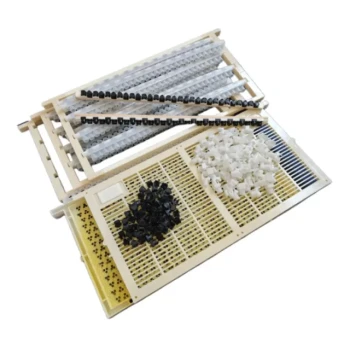
Specialized queen bee breeding equipment constitutes the technical backbone of modern commercial apiaries. It is essential for facilitating artificial queen rearing and systematic colony replacement, allowing beekeepers to actively secure superior genetic traits such as disease resistance and high honey productivity. Furthermore, this equipment is the linchpin for maintaining long-term sustainability and health within closed biosecurity systems, ensuring colonies are adapted to their specific environmental conditions.
The true value of this equipment lies in its ability to transform queen rearing from a random natural event into a controlled industrial process. By enabling precise genetic selection and consistent mass production, it safeguards the apiary against disease and ensures operational continuity.
The Driver of Genetic Superiority
Selecting for Resilience and Yield
The primary function of specialized breeding equipment is to enable artificial queen rearing. This process allows beekeepers to bypass natural selection and intentionally breed for specific, desirable traits.
By utilizing this equipment, operators can isolate and propagate genetics that demonstrate high disease resistance and superior honey productivity. This proactive selection creates a population that is robust rather than reactive.
Adaptation to Local Environments
Commercial beekeeping often occurs in diverse climates. Specialized equipment facilitates the breeding of queens that are specifically adapted to local environmental conditions.
This localized adaptation ensures that the bees are not just genetically strong in a vacuum, but are physically suited to the specific weather patterns and floral resources of their region.
Operational Stability and Scale
Ensuring Larval Survival
Breeding equipment, such as grafting tools, cell cups, and mating nucs, provides a controlled physical environment for developing larvae.
These tools are vital for ensuring the survival rate of larvae during the delicate manual grafting process. They minimize physical trauma and optimize the growth conditions required for a healthy queen.
The Queen as a Biological Asset
In a commercial setting, the queen is the central production unit. Her egg-laying rate determines the colony's strength and the operation's overall honey yield.
Specialized equipment transforms the queen from a variable factor into a standardized "biological asset." Standardized consumables allow for the large-scale supply of these assets, ensuring that high-yield genetics can be replicated across thousands of hives.
Biosecurity and Colony Health
The Closed Loop System
One of the most critical aspects of using specialized breeding equipment is the ability to operate a closed biosecurity system.
By rearing queens internally rather than importing them from external sources, beekeepers significantly reduce the risk of introducing foreign pathogens. This equipment empowers the apiary to become self-sustaining regarding its genetic stock.
Mitigating Colony Decline through Replacement
Regular replacement of aging queens is non-negotiable for commercial viability. Older queens suffer from poor brood quality and insufficient fertilization.
Professional rearing equipment enables the timely, systematic replacement of these weak queens with high-quality, reared successors. This practice reduces mortality rates—particularly during winter—and prevents the productivity dips associated with colony decline.
Understanding the Trade-offs
Technical Proficiency Required
While this equipment enables high-level control, it increases the operational complexity of the apiary.
Tools like grafting instruments require significant manual dexterity and technical skill to use effectively. The equipment is only as good as the operator; poor technique can lead to low acceptance rates regardless of the tool quality.
Dependence on Standardization
Reliance on specialized equipment necessitates a commitment to standardization.
Consumables must be compatible, and the workflow becomes rigid. While this creates efficiency, it also means the operation is less flexible to ad-hoc changes in management style compared to traditional, less equipment-intensive methods.
Making the Right Choice for Your Goal
To maximize the utility of queen breeding equipment, align your strategy with your specific operational targets:
- If your primary focus is Biosecurity: Utilize rearing equipment to establish a closed breeding program, eliminating the need to import vectors of disease from outside apiaries.
- If your primary focus is Productivity: Prioritize grafting tools and parental selection to aggressively breed for specific traits like high egg-laying capacity and nectar gathering.
- If your primary focus is Continuity: Use standardized mating nucs to create a consistent "bank" of replacement queens, ensuring zero downtime when older queens begin to fail.
Mastering specialized breeding equipment transforms the beekeeper from a manager of insects into an architect of genetic potential.
Summary Table:
| Feature | Purpose in Commercial Apiaries | Key Benefit |
|---|---|---|
| Grafting Tools & Cups | Controlled larval transfer | Higher survival rates & genetic precision |
| Mating Nucs | Queen development environment | Standardized production of biological assets |
| Internal Rearing | Closed biosecurity system | Reduced pathogen risk & localized adaptation |
| Systematic Replacement | Replacing aging queens | Maintained honey yield & lower winter mortality |
Elevate Your Apiary with HONESTBEE Professional Solutions
Maximize your colony's genetic potential and operational efficiency with HONESTBEE. As a premier provider for commercial apiaries and distributors, we offer a comprehensive wholesale range of beekeeping tools, specialized machinery, and essential consumables.
From high-precision queen rearing equipment and hive-making machines to automated honey-filling systems, our portfolio is designed to transform your beekeeping into a high-yield industrial process. We empower our partners to build self-sustaining, disease-resistant, and highly productive honey-themed enterprises.
Ready to scale your production?
Contact HONESTBEE Today to explore our wholesale catalogs and discover how our specialized hardware and industry expertise can secure your competitive edge.
References
- Vidushi Patel, Bryan Boruff. Using a social-ecological system approach to enhance understanding of structural interconnectivities within the beekeeping industry for sustainable decision making. DOI: 10.5751/es-11639-250224
This article is also based on technical information from HonestBee Knowledge Base .
Related Products
- Queen Bee Artificial Insemination Instrument Equipment for Instrumental Insemination
- Stainless Steel Beekeeping Queen Grafting Tool for Honey Bee Rearing
- Retractable Chinese Queen Rearing Grafting Tools Equipment
- Portable Queen Bee Incubator with 12V Car Adapter for Safe Transport
- Plastic Chinese Queen Grafting Tool for Bee Queen Rearing
People Also Ask
- Why is maintaining sanitary conditions important during artificial insemination? Protect Your Queen from Fatal Infections
- Why are artificial insemination instruments critical in bee hybridization? Master Genetic Control & Pure Breeding
- What is the core value of bee artificial insemination instruments in breed improvement? Achieve Precise Genetic Control
- Why is professional bee artificial insemination equipment considered a core tool for genetic control in honeybee breeding? Ensure 100% Purity
- Why is high-purity CO2 used for queen bee artificial insemination? Unlock Precision Breeding & Faster Egg-Laying