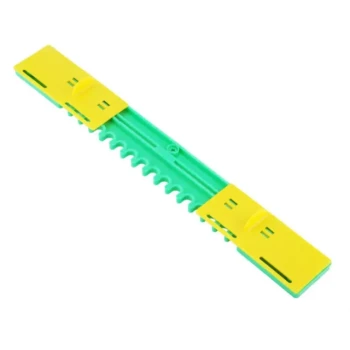
The mechanical principle relies on a physical actuation barrier. By installing a specialized, movable transparent plastic cover at the hive entrance, the device creates a "gate" that prevents passive entry. Accessing the hive requires the entrant to physically push the mechanism open, converting a simple opening into a conditional entry point.
The airlock functions as a specific behavioral filter. It exploits the bumblebee’s strength and ability to learn a complex motor task—pushing a barrier—while effectively blocking parasitic insects that lack the physical capability or cognitive adaptation to bypass the mechanism.
The Mechanics of Exclusion
The Movable Barrier
The core component of the airlock is a movable transparent plastic cover.
Unlike a standard open entrance, this cover rests in a closed position, sealing the nest box against the outside environment.
Active vs. Passive Entry
Standard hive entrances allow for passive entry, where an insect simply flies or crawls into the space.
The airlock transforms this into an active entry system. The mechanism demands a specific physical force to be applied against the cover to create an opening.
The Biological Selection Strategy
Bumblebee Adaptation
The system relies on the bumblebee’s capacity for learning and physical manipulation.
Bumblebees are robust enough to manipulate the cover and intelligent enough to learn the "push" mechanic required to enter their home.
Target Pest Limitation
The device is specifically designed to thwart pests like the bumblebee wax moth (Aphomia sociella) and parasitic wasps (Melittobia acasta).
These organisms rely on unimpeded flight or crawling to infiltrate a nest.
Because they cannot replicate the specific "push-to-enter" action, the airlock effectively renders the hive impenetrable to them.
Understanding the Trade-offs
The Necessity of Learning
The primary constraint of this mechanical principle is the adaptation period.
The reference notes that bumblebees are required to learn how to operate the cover. This is not an instinctive behavior, meaning there is a transition period where the colony must adjust to the new mechanism.
Specificity of Protection
While highly effective against specific pests, this mechanical principle is organism-specific.
It works because the targeted pests (moths and wasps) lack the specific motor skills of the bumblebee. It relies entirely on this physical disparity; if a pest evolved to mimic the pushing behavior or possessed similar strength, the mechanical principle would fail.
Making the Right Choice for Your Goal
If you are considering installing an airlock device, evaluate your hive's current status and pest risk profile.
- If your primary focus is excluding wax moths and parasitic wasps: Deploy the device proactively, as the physical barrier is the only effective deterrent against these specific flying and crawling infiltrators.
- If your primary focus is colony establishment: Monitor the hive closely after installation to ensure the bumblebees successfully navigate the learning curve and are not inadvertently locked out.
The success of this device lies in the simple fact that while pests can find the door, only the bumblebee can unlock it.
Summary Table:
| Feature | Mechanical Principle | Benefit for Hive Management |
|---|---|---|
| Barrier Type | Movable transparent plastic cover | Prevents passive entry by moths and wasps |
| Entry Mode | Active (Requires physical force) | Exploits bumblebee strength over smaller pests |
| Selection Filter | Behavioral/Cognitive task | Requires learning that pests cannot replicate |
| Target Pests | Aphomia sociella & Melittobia acasta | Renders hive impenetrable to specific flying/crawling pests |
| User Requirement | Adaptation/Learning period | Ensures only resident bees access the colony |
Secure Your Apiary with Professional Solutions
At HONESTBEE, we understand the complex needs of commercial apiaries and distributors. Whether you are managing bumblebee colonies or honeybee hives, our comprehensive wholesale offering provides the specialized tools you need to succeed.
From advanced beekeeping machinery and hive-making equipment to essential industry consumables and honey-themed cultural merchandise, we deliver quality hardware and expertise directly to you.
Enhance your efficiency and protect your investment today. Contact our expert team at HONESTBEE to discuss how our wholesale beekeeping equipment can optimize your operations.
References
- Antoine Gekière, Denis Michez. Monitoring of parasites in bumblebee colonies developed from controlled nesting of wild queens (Hymenoptera: Apidae: Bombus). DOI: 10.47446/osmia10.5
This article is also based on technical information from HonestBee Knowledge Base .
Related Products
- Steel Round Disc Entrance Reducer for Flexzion Bee Hive Nuc Box Gate
- Stainless Steel Round Beehive Air Vents for Ventilation
- Professional Reversible Beehive Hive Entrance
- Durable Plastic Interlocking Hive Connector for Beekeeping
- Beehive Entrance Discs Plastic Bee Entrance Disc for Bee Hives
People Also Ask
- What is the purpose of an entrance reducer for a beehive? Strengthen Colony Defense and Prevent Robbery
- Why are entrance reducers used to counter hornet infestations? Protect Your Hive with Strategic Choke Points
- Why is it critical to maintain a smaller entrance for a newly established bee hive? Boost Colony Growth and Security
- Under what conditions should a beekeeper adjust the size of a beehive entrance? Seasonal & Defense Management Tips
- What is the function of an entrance reducer on a beehive? Strengthen Colony Defense and Climate Control