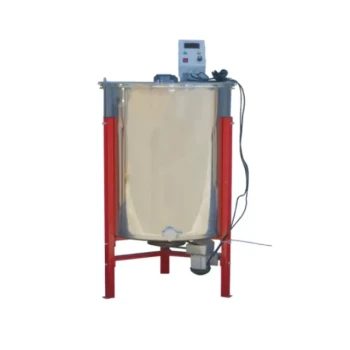
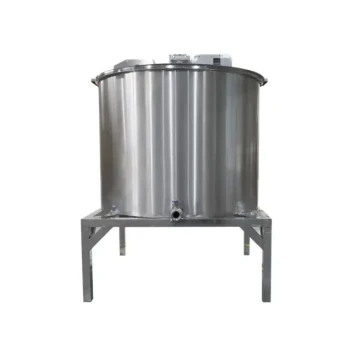
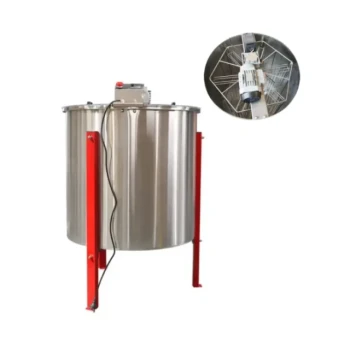
Centrifugation is the essential physical mechanism used to isolate Tylosin from the complex honey matrix during laboratory pretreatment. It utilizes high-speed rotation to generate thousands of times the force of gravity to achieve clear separation between the organic extraction solvent and the aqueous honey phase. This process ensures the clarity of the supernatant, which is critical for accurate optical detection of antibiotic residues.
A centrifuge enables high-efficiency phase separation by utilizing intense gravitational force to clarify honey samples. This process is critical for ensuring the purity of Tylosin extracts, directly impacting the accuracy and reliability of residue testing in commercial honey supply chains.
The Mechanism of Centrifugal Separation
High-G Force Phase Partitioning
Industrial-grade centrifuges generate thousands of times the force of gravity to drive the separation of immiscible liquids. In Tylosin extraction, this force physically pulls the dense aqueous phase—containing sugars, proteins, and waxes—away from the organic extraction liquid (typically acetonitrile).
This rapid rotation forces the heavier matrix components to settle at the bottom of the tube. The target analyte, Tylosin, remains in the lighter organic supernatant, allowing for clean recovery.
Maintaining Chemical Integrity
The centrifuge achieves this separation through purely physical means, ensuring the chemical composition of the honey and the target antibiotic remains unchanged. This is vital for B2B distributors who require high-purity samples to meet strict international regulatory standards for pollutant residue analysis.
By avoiding heat or chemical additives for separation, the process preserves the original physicochemical properties of the honey. This ensures that the analytical results are a true reflection of the product's quality.
The Purpose of Centrifugation in Pretreatment
Preventing Matrix Interference
Honey is a complex mixture of glucose, fructose, and various proteins that can interfere with sensitive laboratory equipment. The primary purpose of centrifugation is to produce a clear supernatant free from these matrix components.
Without this clarity, sugars and proteins can "blind" optical detection systems, leading to false negatives or inaccurate Tylosin concentration readings. This step is the foundation of reliable quality control in large-scale honey trading.
Optimizing Extraction Efficiency
Using high-speed centrifugal equipment significantly increases the recovery rate of the honey and the efficiency of the solvent extraction. Compared to natural gravity flow, mechanical centrifugation is exponentially faster, supporting the rapid response times required in global sourcing.
Efficiency in the pretreatment phase allows for high-throughput testing, which is a hallmark of professional industry expertise. This speed is essential for maintaining ultra-fast delivery schedules in the B2B sector.
Understanding the Trade-offs
Speed vs. Sample Stability
While higher speeds result in better clarity, excessive rotation can generate localized heat if the equipment is not properly calibrated. Heat-sensitive nutritional components or volatile compounds can be degraded if temperature control is not managed during high-speed runs.
Throughput vs. Equipment Wear
Operating centrifuges at maximum G-force for extended periods increases the maintenance requirements for the rotors and motors. Balancing high-efficiency fulfillment with equipment longevity is a key operational challenge for testing facilities.
Making the Right Choice for Your Goal
How to Apply This to Your Project
Ensuring accurate Tylosin detection is a cornerstone of maintaining a premium, full-spectrum product portfolio. Depending on your role in the supply chain, your focus on centrifugation technology should align with your specific business objectives.
- If your primary focus is Regulatory Compliance: Prioritize industrial-grade centrifuges that offer precise G-force control to ensure zero matrix interference during Tylosin optical detection.
- If your primary focus is Supply Chain Speed: Invest in high-throughput centrifugation systems that facilitate rapid sample pretreatment, enabling faster order fulfillment and export clearance.
- If your primary focus is Product Integrity: Utilize refrigerated centrifugation methods to ensure that high-speed separation does not compromise the heat-sensitive enzymes and nutritional profile of the honey.
By mastering these technical pretreatment processes, distributors can guarantee the safety and quality of their honey exports while maintaining the efficiency required for global trade.
Summary Table:
| Feature | Mechanism/Action | Key Benefit for Testing |
|---|---|---|
| Phase Partitioning | Uses thousands of Gs to separate organic solvent from honey matrix | Delivers a clear supernatant for accurate optical detection |
| Chemical Integrity | Purely physical separation without heat or chemical additives | Preserves the original physicochemical properties of the honey |
| Matrix Removal | Forces sugars, proteins, and waxes to settle at the bottom | Prevents "blinding" of sensors and eliminates false negatives |
| Processing Speed | Mechanical rotation replaces slow natural gravity flow | Enables high-throughput testing and faster supply chain response |
Elevate Your Honey Supply Chain with HONESTBEE
As a global leader in one-stop sourcing, HONESTBEE empowers commercial apiaries and B2B distributors with professional-grade equipment and industry-leading expertise. Whether you need high-precision honey-filling machines for high-efficiency production or specialized consumables to maintain international quality standards, we deliver the reliability your business demands.
Why Partner with HONESTBEE?
- Comprehensive Portfolio: Access a full spectrum of beekeeping tools, machinery, and honey-themed cultural merchandise.
- Rapid Fulfillment: Benefit from ultra-fast delivery and efficient order fulfillment to keep your supply chain moving.
- B2B Excellence: Premium trading services tailored for wholesalers, focusing on high profit margins, OEM/ODM support, and regulatory certifications.
Ensure your honey meets the highest global standards for purity and quality—contact our expert team today to explore wholesale opportunities!
References
- Sergei A. Eremin, Dmitriy V. Sotnikov. Разработка методики поляризационного флуоресцентного иммуноанализа для определения тилозина в мёде. DOI: 10.31857/s0044450224020041
This article is also based on technical information from HonestBee Knowledge Base .
Related Products
- Manual Hand Crank 4 Frame Honey Extractor Centrifuge for Beekeeping
- Professional 4 Frame Self Reversing Electric Honey Extractor for Beekeeping
- electric honey extractor honey centrifuge 3 frame honey extractor stainless steel honey frame extractor
- Honey Concentrating and Filtering Dehumidifier Machine 2T Capacity for Honey
- Honey Concentrating Vacuum Heating Thickening Machine Dehumidifier for Honey
People Also Ask
- What are some tips for achieving efficient honey extraction with a centrifuge extractor? Maximize Your Yield & Efficiency
- What is the proper procedure for maintaining a centrifuge honey extractor? Expert Tips for Longevity and Hygiene
- What are the advantages of using a centrifuge honey extractor? Maximize Yields and Protect Your Honeycombs
- Which type of honey extractor is generally more durable? Focus on Material & Build Quality for Longevity
- What is a manual honey extractor? The Essential Guide to Cost-Effective Beekeeping for Beginners