The mechanism relies on generating continuous mechanical vibrations. By rhythmically striking wooden stakes with hammers, standardized protocols simulate the specific impact disturbances associated with human physical labor near an apiary. This activity serves as a deliberate trigger for defensive bee behavior, enabling a controlled measurement of colony aggression.
The core purpose of this method is to replicate the vibrational signature of manual work, allowing for a quantitative assessment of safety risks and barrier efficacy without direct hive manipulation.
The Role of Mechanical Vibration
Simulating Real-World Disturbance
The primary goal of using stakes and hammers is to mimic human physical labor.
Bees are highly sensitive to environmental changes. This method specifically replicates the ground-borne impact vibrations that occur during construction, landscaping, or agricultural work near a hive.
Triggering Defensive Behavior
The rhythmic striking of the stakes creates a continuous wave of mechanical vibrations.
These vibrations act as a catalyst. They alert the colony to a potential threat, prompting guard bees to initiate defensive responses to protect the hive.
Quantitative Safety Assessment
Measuring Sting Attacks
Once the defensive behavior is triggered, researchers can perform a quantitative evaluation.
By counting the number of sting attacks induced by the vibrations, experts can gather hard data on the colony's aggression levels under specific conditions.
Verifying Barrier Effectiveness
This protocol is essential for testing apiary management designs.
It allows safety inspectors to determine if physical barriers effectively contain or mitigate the defensive response of the bees during nearby disturbances.
Understanding the Trade-offs
The Requirement for Consistency
For this test to be valid, the rhythm and force of the striking must be standardized.
Inconsistent striking can lead to variable vibration levels, making it difficult to compare data between different hives or barrier setups.
Simulation vs. Direct Intrusion
It is important to note that this is a simulated disturbance, not a direct attack on the hive structure.
While effective for measuring vibration sensitivity, it may not perfectly replicate the defensive response to visual stimuli or direct predation.
Making the Right Choice for Your Goal
To apply this understanding effectively, consider your specific objective:
- If your primary focus is safety certification: Use this protocol to stress-test physical barriers against the specific vibration frequencies caused by nearby labor.
- If your primary focus is behavioral research: Ensure the rhythmic striking is strictly controlled to isolate vibration as the sole variable triggering the defensive response.
Effective apiary safety relies on accurately predicting how bees respond to the invisible but agitation-inducing vibrations of human activity.
Summary Table:
| Component | Role in Protocol | Mechanism of Action |
|---|---|---|
| Wooden Stakes | Impact Target | Transmits ground-borne vibrations to the hive |
| Hammer Strikes | Stimulus Source | Generates rhythmic mechanical disturbance |
| Vibration Wave | Behavioral Trigger | Mimics human labor to prompt defensive responses |
| Sting Count | Quantitative Metric | Measures colony aggression levels and barrier efficacy |
Secure Your Apiary with Industrial-Grade Solutions
At HONESTBEE, we understand that managing commercial apiaries requires more than just tools—it requires precision and safety. Whether you are a distributor or a commercial beekeeper, we provide the full spectrum of equipment needed to manage colony behavior and operational safety. From specialized hive-making and honey-filling machinery to high-durability hardware and essential industry consumables, our portfolio supports every stage of your business.
Ready to elevate your apiary's efficiency and safety? Contact us today to explore our comprehensive wholesale offerings and discover how our expertise can benefit your operations.
References
- Mihail Garbuzov, Francis L. W. Ratnieks. Lattice fence and hedge barriers around an apiary increase honey bee flight height and decrease stings to people nearby. DOI: 10.3896/ibra.1.53.1.06
This article is also based on technical information from HonestBee Knowledge Base .
Related Products
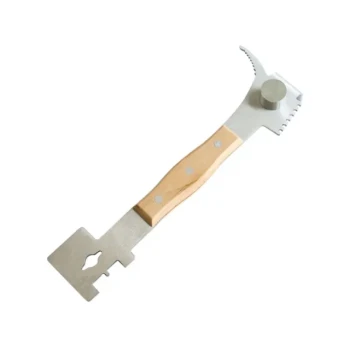
- Multi-Function Hive Tool with Integrated Hammer for Beekeeping
- HONESTBEE 15-in-1 Beekeeper Multi-Tool with Hammer and Pliers for Beekeeping
- HONESTBEE Wooden Bar Copper Prong Wire Embedder for Battery Operation
- Modern Honeycomb Pattern Wooden Honey Dipper for Stirring and Drizzling
People Also Ask
- What are the benefits of a multi-functional hive tool? Streamline Your Apiary Workflow with One Tool
- What advantages do multi-functional hive tools offer? Maximize Your Apiary Efficiency and Workflow
- What specific challenges do beekeeping hive tools address during hive maintenance? Essential Solutions for Apiaries
- What specific functions does a multi-functional Hive Tool perform? Essential Lever & Scraper Roles for Hive Care
- How does the genetic identification of honeybee populations influence the selection of beekeeping tools? Precision Gear Guide