Specialized honey bee marking pens are a necessity in semi-field ecological trials to ensure the precise identification of specific study cohorts. By applying distinct, durable colors to bees, researchers can visually distinguish between control and treatment groups, enabling the tracking of age-specific populations for up to 28 days after their reintroduction to the colony.
The core value of this technique is the ability to turn a dynamic, complex hive into a source of controlled, longitudinal data. It allows for the accurate measurement of how agricultural chemicals affect insect survival over time, rather than just observing immediate mortality.
The Role of Marking in Ecological Data
Visual Differentiation of Cohorts
In a semi-field trial, a colony contains thousands of insects that look identical to the naked eye. Specialized marking pens solve this by creating distinct visual categories.
Technicians apply specific color codes to separate batches of bees. This is critical for distinguishing the "treatment" population (exposed to a chemical) from the "control" population (unexposed) within the same environment.
Tracking Longevity and Survival
Ecological trials often aim to measure the chronic or delayed effects of substances. Marking pens provide a durable identifier that remains visible for an extended period.
This durability allows researchers to track specific age cohorts for up to 28 days. Without this long-lasting mark, it would be impossible to verify if a specific bee survived the full duration of the study or if it drifted in from a different colony.
Assessing Real-World Impact
The ultimate goal of these trials is to understand the impact of agricultural chemicals on beneficial insects.
By tracking marked individuals within a complex, "real-world" ecological environment, researchers can gather data that is far more relevant than laboratory isolation. The marking acts as the link between the chemical application and the biological outcome.
Understanding the Operational Constraints
Duration Limitations
While these pens are designed for durability, they are not permanent solutions for the bee's entire potential lifespan. The primary reference notes effectiveness for up to 28 days.
For studies requiring data beyond this window, re-marking or alternative tracking methods would be necessary, as the visual identifier may degrade or become unreliable.
Scope of Identification
In ecological trials, the focus is generally on cohort identification (identifying the group) rather than the individual.
While supplementary data suggests these tools are used for individual identification in queen breeding (tracking birth weight and insemination), in semi-field trials, the mark typically signifies the batch or treatment group rather than a unique ID for every single worker bee.
Making the Right Choice for Your Research
If you are designing a semi-field ecological trial, selecting the correct identification method is pivotal for data integrity.
- If your primary focus is Ecotoxicology: Use color-coded marking pens to establish clear control and treatment groups that can be tracked for survival rates over a 28-day period.
- If your primary focus is Breeding Management: Utilize these tools to mark queens individually, allowing for the recording of granular data such as egg-laying start dates and total lifespan.
Reliable data in ecological studies begins with the ability to consistently identify your subjects in a chaotic environment.
Summary Table:
| Feature | Importance in Semi-Field Trials | Research Benefit |
|---|---|---|
| Visual Differentiation | Distinguishes treatment vs. control groups | Prevents data contamination between cohorts |
| Durability | Remains visible for up to 28 days | Enables long-term longitudinal survival studies |
| Cohort Identification | Groups thousands of identical insects | Facilitates batch tracking in complex environments |
| Ecotoxicology Link | Connects chemical exposure to biological outcomes | Provides accurate real-world impact assessments |
Elevate Your Beekeeping Operation with HONESTBEE
At HONESTBEE, we understand that precision is the foundation of success for commercial apiaries and beekeeping distributors. Whether you are conducting rigorous ecological trials or managing large-scale honey production, we provide the professional-grade tools you need to excel.
Our Comprehensive Wholesale Portfolio Includes:
- Precision Hardware: From advanced hive-making machinery to high-efficiency honey-filling systems.
- Specialized Equipment: A full spectrum of beekeeping tools, including durable marking supplies for research and breeding.
- Industrial Consumables: Essential supplies designed for the rigors of commercial honey production.
- Cultural Merchandise: Unique honey-themed products to expand your brand's market reach.
Partner with a supplier that values your productivity as much as you do. Contact HONESTBEE today to discuss your bulk requirements and discover how our integrated equipment solutions can streamline your operations.
References
- J. Arnold Vosloo, Marina Rautenbach. Tolerance of honey bee adults and larvae toward tyrothricin peptides derived from Brevibacillus parabrevis. DOI: 10.1007/s13592-017-0528-0
This article is also based on technical information from HonestBee Knowledge Base .
Related Products
- Queen Bee Marking Pen POSCA Queen Marking Pens for Beekeeping Bee Markers
- Queen Bee Marking Pen UNI Medium Point for Queen and Bee Marking
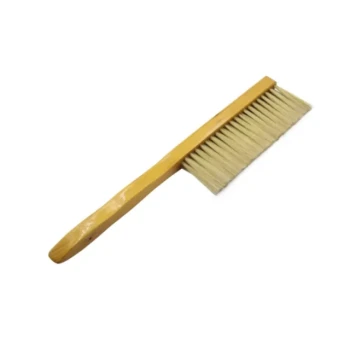
- Classic Wooden Bee Brush with Double-Row Boar Bristles
- Plastic Long Marker Device for Catching and Marking Bees Queen Bee Marking Tube and Cage
- One Hand Yellow Queen Marking Catcher Tube Cage Beekeeper Tool Accessory for Queen Bee
People Also Ask
- What role do specialized marking pens and color-coding systems play in honeybee tracking? Enhance Research Precision
- Why are specialized marking pens used for stingless bee queens? Essential Tools for Large-Scale Breeding Success
- How should a new paint pen be primed before marking a queen bee? Essential Tips for Safe & Clear Markings
- How should a queen bee marking pen tip be properly primed? Master the Art of Safe Queen Marking
- What specifications are required for a high-quality queen bee marking pen? Ensure Safety and Precision for Your Colony